
This time, we’re introducing Gin no Kuni—a soothing slice-of-life manga perfect for anyone who wants to experience gentle Japanese conversations set against Japan’s snowy countryside.
Work Information
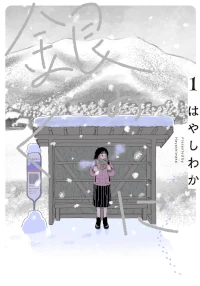
Gin no kuni (銀のくに)
Author: Hayashi Waka
Publisher: HEROs
Amount of text: sparse
Challenge level: ★
Latest volume : Vol.3(Aug.2025 / Ongoing)
Story overview
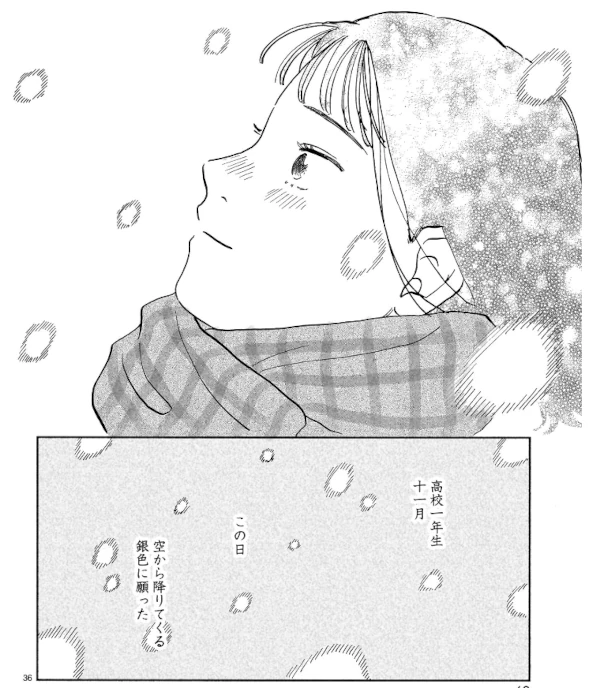
Amagoi Town, a snowbound village tucked into the mountains of Niigata Prefecture, lies so close to the prefectural border that it takes forty-five minutes by bus to reach the nearest train station—and there isn’t even a convenience store. In this quiet, snow-covered town, first-year high school student Fuuka Igarashi lives an ordinary life with her parents and grandparents. One day, when Fuuka returns home from school, she finds two cousins she’s never even heard of before—Kenshin and Yukie, who have come all the way from Kanagawa.
The Appeal of This Manga
Due to unexpected circumstances, Fuuka begins living together with her cousins. As they adjust to this sudden change in their family, the story gently portrays the awkward misunderstandings, clumsy interactions, and tender bonds that arise between them. Against the backdrop of a quiet, snowy countryside, the poetic scenery and honest, down-to-earth characters offer readers a sense of calm and warmth.
Why this manga is suitable for learning Japanese
This manga is not only entertaining but also highly recommended for Japanese learners for several reasons.
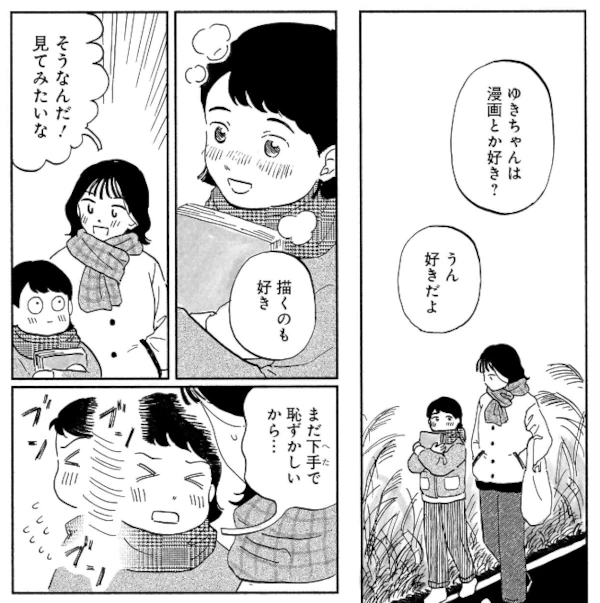
Rich in everyday conversation
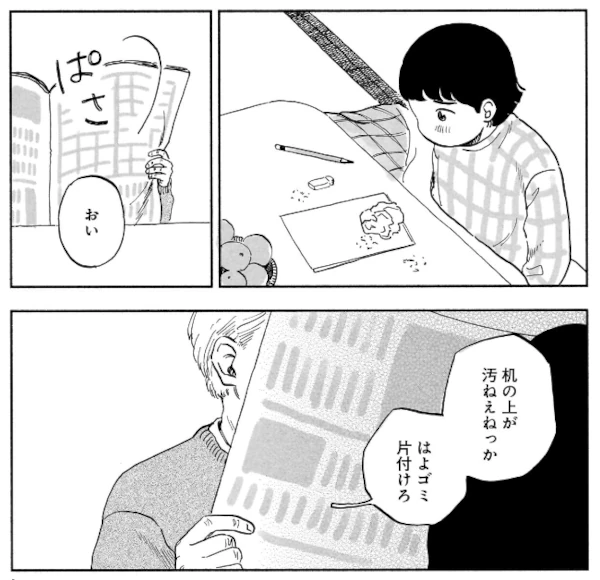
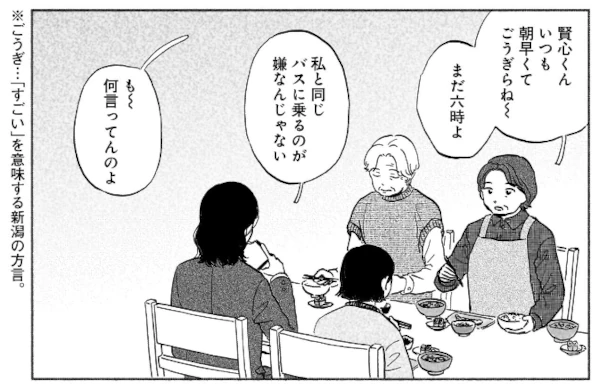
Most scenes take place at home or school, making the dialogue deeply grounded in daily life—perfect for Japanese learners, especially beginners. Some characters, like Fuuka’s grandfather and mother, speak in a local dialect, but it’s used sparingly and shouldn’t pose much difficulty.
Manageable text volume
The amount of text is just right—not overwhelming for beginners. Lines are naturally woven into the poetic background art, allowing readers to enjoy the flow of the story without feeling overloaded.

Culture Spotlight
Accents of Emotion: The Warmth of Dialects in Japanese Entertainment方言
In many Japanese manga and anime, characters don’t all speak the same kind of Japanese. Some use standard Japanese (標準語 hyōjungo), while others speak in local dialects like Kansai-ben, Hakata-ben, or Tohoku-ben. These dialects aren’t just about regional color—they express identity, emotion, and even humor. For learners of Japanese, they can be both fascinating and challenging.
What Are Japanese Dialects?
Japan has a wide range of regional dialects (方言 hōgen), shaped by geography and history. While the standard language is based on the Tokyo dialect, local variations developed in regions that were once relatively isolated. Kansai-ben, for example, is widely recognized through Osaka’s comedy and entertainment culture, while Tohoku-ben or Kagoshima-ben may sound almost like different languages to some native speakers.
In everyday life, dialects often signal where someone comes from, their social background, or their personality. A cheerful Osaka character may speak in lively, rhythmic Kansai-ben, while a calm and stoic person from northern Japan might use the soft, measured tones of Tohoku-ben. In manga and anime, these linguistic differences help writers bring characters to life instantly.
Why Dialects Appear in Manga and Anime
Dialects are powerful storytelling tools. They can convey warmth, humor, or authenticity. In slice-of-life and family dramas, a character’s regional speech can make their background feel more real. In comedies, the sharp tone and punchy rhythm of Kansai-ben naturally lend themselves to humor and banter. Even fantasy or historical stories sometimes use dialect-like speech to suggest a rural or traditional atmosphere.
Creators also use dialects to emphasize individuality. A character who continues to speak in their local dialect—even after moving to Tokyo—shows pride in their roots or a refusal to conform. In this way, dialects express more than words: they express identity.
The Appeal—and Challenge—for Learners
For Japanese learners, encountering dialects can be exciting but also intimidating. Words may differ, grammar can change, and even familiar expressions may sound completely new. For example:
・Kansai-ben: 「おおきに」 instead of 「ありがとう」 (“thank you”)
・Hiroshima-ben: 「じゃけえ」 instead of 「だから」 (“so/because”)
Yet, learning dialects offers valuable insight into how living languages evolve. It helps learners appreciate the cultural and emotional nuance behind speech. Even if you don’t aim to speak a dialect, recognizing one deepens your listening comprehension and cultural literacy.
What It Means for Learners
Dialect speech in Japanese entertainment reveals how language and culture intertwine. It shows that “Japanese” is not a single uniform system, but a rich mosaic of local voices. Understanding dialects—at least at a recognition level—lets learners experience a more authentic Japan, where every region, tone, and phrase carries its own story.
So next time you hear a character say 「なんでやねん!」 instead of 「どうして?」, don’t panic—smile. You’re not just learning Japanese; you’re hearing Japan itself, in all its colorful variety.
A Little Warning
Occasional adult humor
Conversations involving Fuuka’s grandfather and mother include local expressions from the Niigata region. These phrases and endings differ slightly from standard Japanese and might be a bit tricky to understand. However, some of the more difficult words may come with notes or explanations, making them easier to follow.
Work Information
Gin no kuni (銀のくに)
Author: Hayashi Waka
Publisher: HEROs
Amount of text: sparse
Challenge level: ★
Latest volume : Vol.3(Aug.2025 / Ongoing)
Here’s a safe and convenient way to purchase Japanese manga.
This Blog’s ConceptIn this blog, we are introducing manga that are not only highly captivating but also ideal for Japanese language learners. Studying Japanese through manga is both fun and effective. Manga allows you to understand the subtleties of keigo (honorifics), teineigo (polite speech), and casual conversation in Japanese. We hope you find works that match your interests and use them to enhance your Japanese learning journey.