
This time, we’re introducing She Loves to Cook, and She Loves to Eat—a relaxing, food-filled manga ideal for mastering natural keigo and building confidence in reading Japanese.
Work Information

She Loves to Cook, and She Loves to Eat (作りたい女と食べたい女)
Author: Yuzaki Sakaomi
Publisher: KADOKAWA
Amount of text: moderate
Challenge level: ★★
Latest volume : Vol.5(Feb.2024 / Ongoing)
Story overview
“As long as you’re here, I’ll never go hungry.” A heartwarming story of sisterhood × Girls’ Love that first gained popularity on Twitter.
Nomoto loves cooking, but living alone and having a small appetite means she can never finish what she makes. Still, she wants to cook more. One stressful day, she accidentally prepares a feast far too big for one person. Then she remembers Kasuga—the woman who lives a few doors down. Gathering her courage, she invites Kasuga over for dinner… and everything quietly begins from there.
Includes a 7-page bonus short created just for the comic release!
The Appeal of This Manga
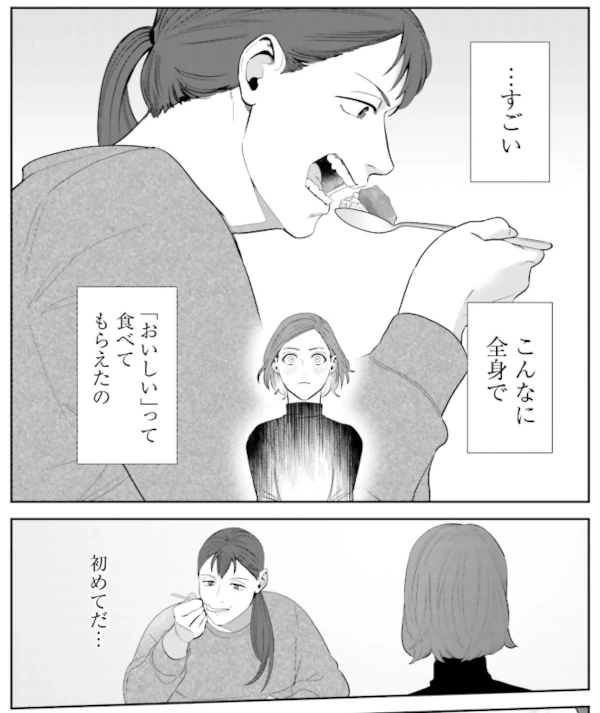
Although it falls under the Girls’ Love genre, the focus isn’t heavy romance. Instead, the story draws strength from the gentle connection between two women brought together through food—and from the rich, lovingly drawn cooking scenes themselves. Watching Nomoto prepare huge amounts of delicious dishes, and Kasuga happily devouring them, is deeply comforting.
The series became widely known after being adapted into a live-action drama on NHK, Japan’s national broadcaster. Its popularity led to a Season 2 adaptation as well.
Why this manga is suitable for learning Japanese
This manga is not only entertaining but also highly recommended for Japanese learners for several reasons.
The characters speak in polite Japanese
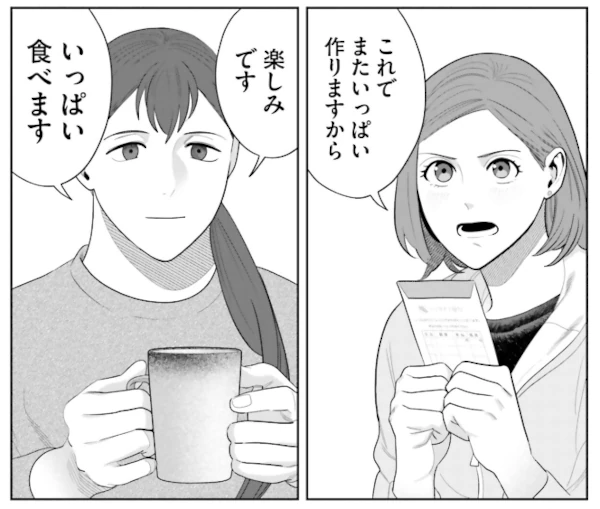
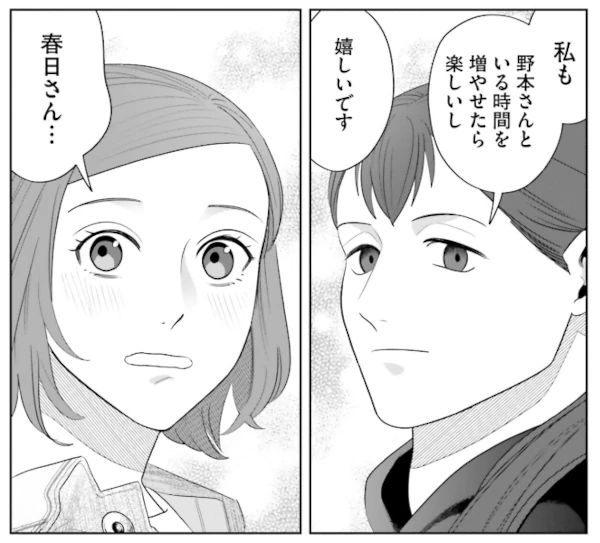
Conversations between Nomoto and Kasuga are almost always in 敬語 (keigo). Because the main characters consistently use polite speech, most of the dialogue throughout the series is written in keigo—making it ideal for beginners who want to learn natural, everyday politeness. Nomoto occasionally slips into casual speech as their relationship deepens, offering a realistic sense of how politeness levels shift between people.
Light text volume
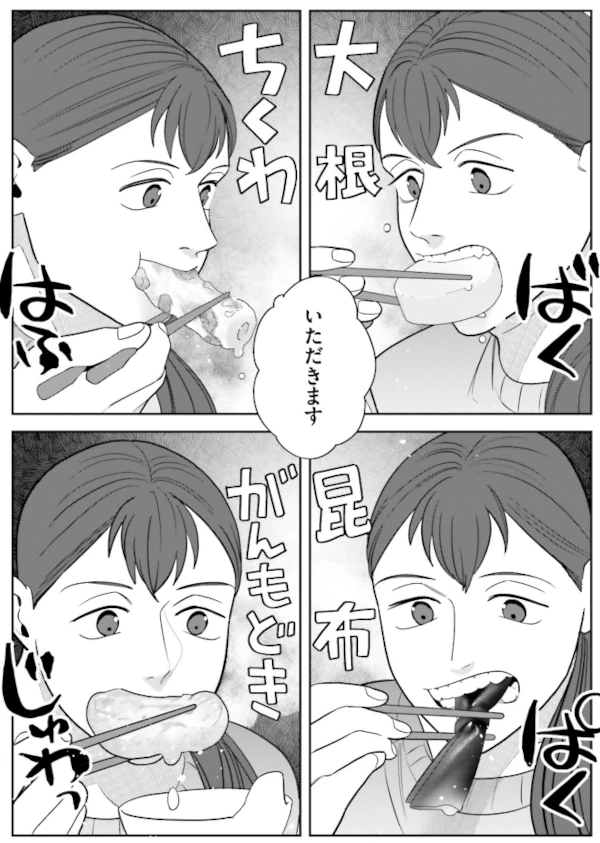
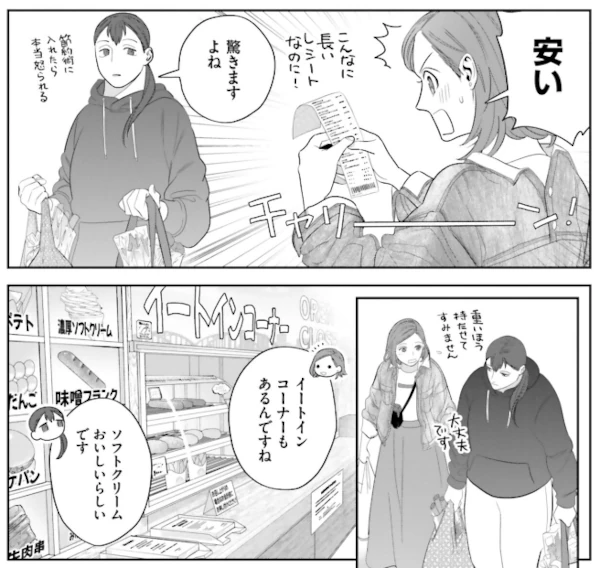
Because many scenes focus on food and eating, the overall amount of dialogue is relatively low. Even readers who aren’t used to reading Japanese will find it manageable and smooth to follow.
Culture Spotlight
Why Some Close Japanese Friends Keep Using Keigo: Understanding a Modern Shift in Politeness親しいのに敬語
In traditional Japanese culture, people would naturally drop 敬語 (keigo, polite speech) and shift to タメ口 (casual speech) as their relationship deepened—an expression of trust and equality. But since the 2000s, it has become increasingly common for close friends, coworkers, and even couples to continue speaking in polite language.
This shift reflects broader changes in Japan’s social psychology and communication norms. Below is a concise look at why this happens and what it reveals about modern Japanese relationships.
1. Traditional Norms: From Politeness to Intimacy
Historically, Japanese communication followed a predictable progression:
・First meeting → Polite language
・Growing closer → Gradual shift to casual speech
・Deep relationship → Fully casual speech
Dropping keigo meant:
“I trust you. I’m comfortable with you.”
Conversely, keeping keigo too long could feel cold or overly formal. This traditional model still exists—but it’s no longer the only one.
2. The New Trend: “Polite Intimacy” as a Relationship Style
Since the 2000s, a new pattern has appeared:
People stay close—even emotionally intimate—while continuing to use keigo.
This appears in many relationship types:
・Romantic couples who consistently use 丁寧語
・Best friends who met online and keep a soft-keigo tone
・Coworkers whose friendship deepens but who maintain workplace politeness
・GL/BL fiction where characters develop closeness without dropping keigo (and readers find this appealing)
For many young Japanese adults, keigo no longer blocks intimacy. Instead, it creates a gentle, respectful distance that feels comfortable.
3. Why This Change Happened: Social and Psychological Factors
a. Avoiding Pressure and Conflict
Casual speech in Japanese can feel:
・too direct
・too emotionally loaded
・too heavy in expectation (“We’re close now, right?”)
Keigo softens everything. It reduces the risk of misunderstandings and emotional friction, especially in urban settings where relationships are more fluid.
b. Respect as a Form of Affection
For some people today:
Keeping keigo = expressing constant respect for someone important.
Romantic partners may say:
「ずっと敬語の方が、相手を大切にしている感じがする。」
This “polite affection” contrasts with older norms where intimacy required dropping formality.
c. The Rise of Online Communities
Online friendships often begin with polite Japanese. But even after meeting offline and becoming close, many maintain that initial tone because:
・keigo feels “neutral” and safe
・switching to casual speech can feel awkward or forced
・the relationship was built without hierarchical assumptions
Digital-native communication favors “soft boundaries.”
d. Blurred Public/Private Boundaries
Work, private life, and hobbies now overlap more than ever. Many people prefer maintaining a stable polite tone across contexts, rather than switching constantly.
Keigo becomes a communication default, not a distance-marker.
4. Emotional Security: Why Polite Speech Feels Comfortable Today
Younger generations in Japan often describe casual speech as:
・pressure-heavy (“Do we have to be close now?”)
・too intimate
・potentially presumptuous
Meanwhile, keigo feels:
・safe
・kind
・non-demanding
・balanced
Instead of creating distance, polite Japanese provides emotional cushioning—a “soft shell” that allows closeness without vulnerability spikes. This aligns with broader cultural shifts toward gentle communication: やさしい日本語, あたりの柔らかい話し方, and the popularity of non-confrontational relationships in media.
5. What This Means for Learners of Japanese
Some takeaways for learners:
a. Keigo does not always mean “distant”
Modern Japanese allows:
・friendly keigo
・affectionate keigo
・romantic keigo
・keigo as a personal boundary
b. You may hear couples or best friends saying:
・「今日はなに食べます?」
・「大丈夫ですか?」
・「ありがとうございます〜」
This is normal and can even feel warm.
c. Switching to casual Japanese is no longer required
Some relationships never switch. Others mix polite and casual speech. The transition (or lack of transition) itself becomes a meaningful signal.
d. Media reflects this shift
Modern manga, anime, and dramas often portray:
・“keigo couples”
・roommates who stay polite
・GL/BL pairs whose keigo softens over time
It’s part of the emotional texture.
Conclusion: Keigo Is Evolving—And Intimacy Is Evolving With It
For learners, understanding this modern shift helps decode real-life relationships and contemporary Japanese dialogue.
Where traditional Japanese emphasized:
“Casual speech shows closeness.”
Modern Japanese often emphasizes:
“Respect and comfort create closeness—even in keigo.”
Polite intimacy is becoming one of the most distinctive and fascinating features of Japanese communication today.
A Little Warning
May not suit readers uncomfortable with GL themes
While it can certainly be enjoyed as a gourmet manga, the story gradually places more emphasis on the developing partnership between two women (though this is subtle in volumes 1–2). If you prefer to avoid Girls’ Love themes, this may not be the best fit.
Work Information
She Loves to Cook, and She Loves to Eat (作りたい女と食べたい女)
Author: Yuzaki Sakaomi
Publisher: KADOKAWA
Amount of text: moderate
Challenge level: ★★
Latest volume : Vol.5(Feb.2024 / Ongoing)
Here’s a safe and convenient way to purchase Japanese manga.
This Blog’s ConceptIn this blog, we are introducing manga that are not only highly captivating but also ideal for Japanese language learners. Studying Japanese through manga is both fun and effective. Manga allows you to understand the subtleties of keigo (honorifics), teineigo (polite speech), and casual conversation in Japanese. We hope you find works that match your interests and use them to enhance your Japanese learning journey.