This time, we’re introducing My Next Life as a Villainess: All Routes Lead to Doom!—a must-read manga for learners interested in refined dialogue and the classic villainess (reijo) genre.
Work Information
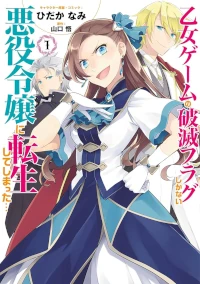
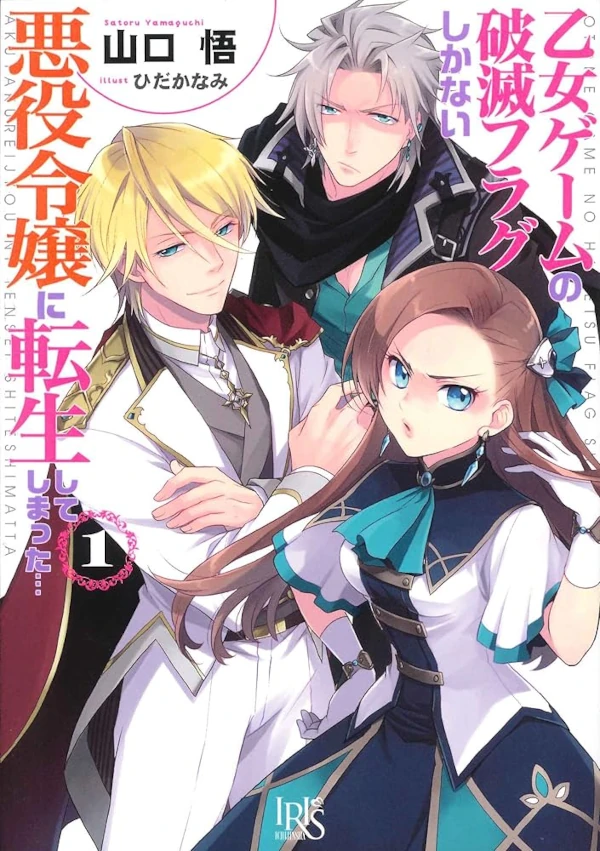
My Next Life as a Villainess: All Routes Lead to Doom! (乙女ゲームの破滅フラグしかない悪役令嬢に転生してしまった…)
Author: Hidaka Nami / Yamaguchi Satoru
Publisher: ICHIJINSHA
Amount of text: plentiful
Challenge level: ★★★
Latest volume : Vol.12(Aug.2025 / Ongoing)
Story overview
I was reincarnated as Catarina Claes—the villainess from the otome game I played in my past life. But the future of a villainess holds only two endings: exile or death!? That’s way too cruel, isn’t it!?
Desperate to avoid these doom flags, I work tirelessly to change my fate—but somehow, I end up triggering romance flags with everyone instead!? What on earth is going to happen to me!?
The long-awaited manga adaptation of the hugely popular novel by Satoru Yamaguchi is finally here in collected volume form!
The Appeal of This Manga
The “Villainess (悪役令嬢 / reijo)” genre has become firmly established as a female-oriented isekai subgenre. Today, it’s even recognized overseas under the name “reijo,” and has grown into a major global trend.
This series is the perfect introduction to the reijo genre. By accident, the heroine is reincarnated as a villainess in another world and struggles to prevent the story from following the original otome game’s tragic сценарio. However, things start unfolding differently from what she remembers…
The manga includes all the classic reijo tropes, executed flawlessly—and the adaptation itself is a major success, thanks in large part to its excellent artwork. It’s an easy recommendation for anyone curious about this genre.
Why this manga is suitable for learning Japanese
This manga is not only entertaining but also highly recommended for Japanese learners for several reasons.
Light, polished fictional dialogue
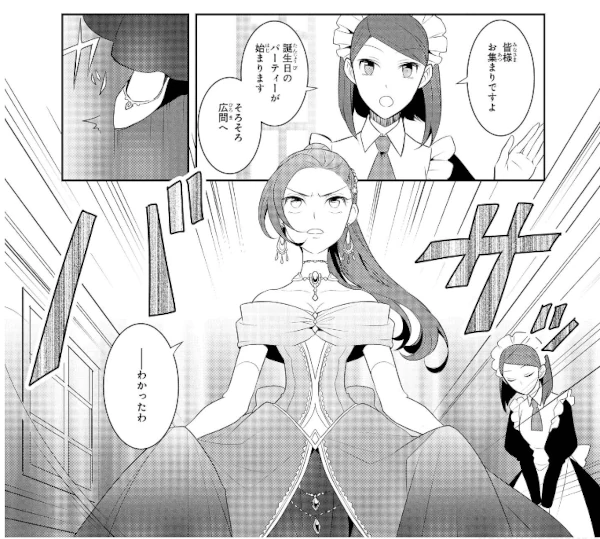
Although this is a manga adaptation of a light novel, the original’s brisk pacing and snappy dialogue are fully preserved. The vocabulary choice, rhythm, and phrasing are refined and expressive, enriching both the story and the characters’ world. Readers can naturally absorb the tempo and flow of polished modern Japanese.
Full furigana support
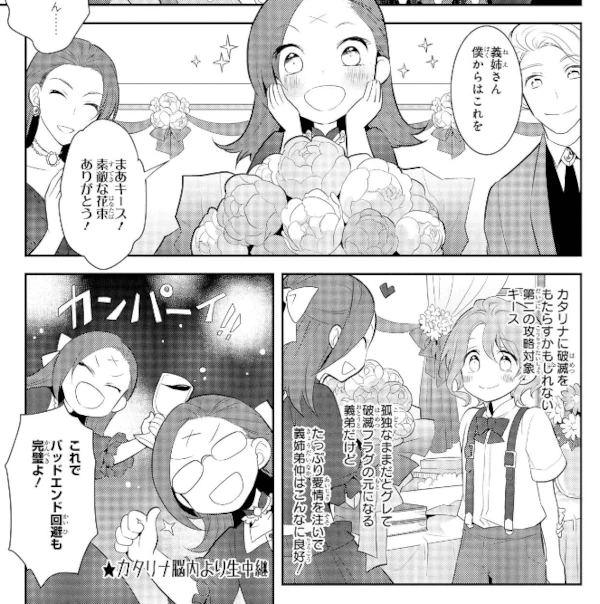
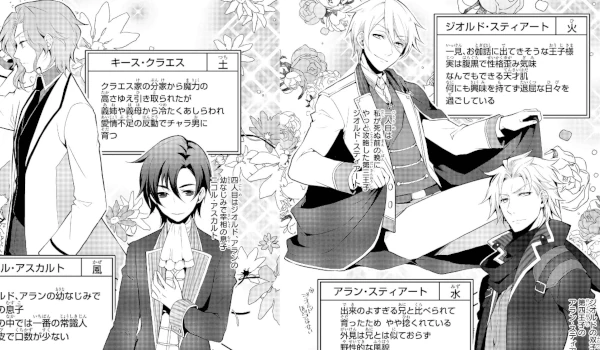
The manga contains a large amount of dialogue and information, making it less suitable for complete beginners. However, all kanji are accompanied by furigana, so learners who really want to read reijo stories don’t need to worry about kanji pronunciation.
Culture Spotlight
Why Readers Fall for the Villainess: The Psychology Behind Reijo Stories悪役令嬢
If you read manga or light novels in Japanese, you may encounter a genre called 悪役令嬢 (akuyaku reijō)—often referred to overseas as “Reijo.” At first glance, the term sounds contradictory: Why would anyone want to reincarnate as the villain? Yet today, Reijo stories are one of the most popular female-oriented isekai genres in Japan.
To understand why, we need to look at games, gendered fantasy, and how Japanese readers reimagined the idea of “success” in another world.
What Is a “Villainess” Story?
In a typical Reijo story, the protagonist is reincarnated into the world of an otome game (a romance simulation game aimed at women). She does not become the game’s heroine—but rather the villainess, a noble girl destined to:
・be exiled
・have her engagement broken
・or even die
These tragic endings are often referred to as 破滅フラグ (doom flags).
Armed with knowledge from her previous life, the protagonist desperately tries to avoid these bad endings—by studying harder, behaving kindly, or changing key events. Ironically, her efforts often make her more popular than the original heroine.
This structure—knowing the script and trying to escape it—is the core engine of Reijo stories.
Why “Villain,” and Why “Noble Lady”?
To learners, an obvious question arises: Why is the protagonist a villain, and why a noblewoman?
The answer lies in contrast.
In male-oriented isekai stories, protagonists are often:
・ordinary or powerless men
・transported to another world
・where they gain overwhelming strength, skills, or a harem
The fantasy is additive: gaining power, status, and recognition.
Reijo stories invert this logic.
A villainess begins with:
・high social status
・wealth and privilege
・but no future
Her challenge is not to gain power, but to avoid losing everything. This creates tension rooted in social systems, reputation, and emotional intelligence, rather than combat strength.
The “noble lady” setting also allows stories to explore etiquette, hierarchy, engagement politics, and gender expectations—areas that resonate strongly with female readers.
Why Otome Game Worlds?
Another defining feature is that Reijo stories often follow the structure of dating simulation games.
This works for three reasons:
1.Clear Routes and Endings
Otome games already have branching paths, flags, and bad endings—perfect for narrative tension.
2.Shared Cultural Knowledge
Many readers already understand these game mechanics, making the premise immediately intuitive.
3.Meta Enjoyment
Watching a character “break” the original scenario provides humor and satisfaction, especially when romance develops unintentionally.
The result is a genre that feels playful, self-aware, and emotionally engaging rather than purely escapist.
Why the “Beloved by Many” Pattern Resonates
Another core appeal of villainess (reijo) stories is the recurring pattern in which the heroine is deeply adored (溺愛される / dekiai sareru) by one or more attractive male characters. While these stories avoid the explicit sexualization or overt harem wish-fulfillment common in some male-oriented isekai, they still offer a powerful romantic fantasy—and this is a major source of their popularity among female readers.
This works for several reasons:
Emotional Safety, Not Sexual Competition
Rather than competing aggressively for affection, the male characters’ devotion is usually expressed through protection, respect, patience, and emotional support. This creates a sense of being chosen and cherished without the stress of rivalry or objectification.
Validation Without Self-Erasure
The heroine is loved not because she conforms perfectly to expectations, but often because she doesn’t. Her intelligence, kindness, awkwardness, or moral integrity—sometimes traits that make her seem “strange” in her world—are what draw admiration. Readers can project themselves without feeling they must become someone else to be worthy of love.
The Fantasy of Absolute Acceptance
Being “dotingly loved” offers a fantasy of unconditional acceptance: no need to perform, compete, or seduce. This kind of romance emphasizes emotional reassurance over conquest, which aligns strongly with many readers’ desires for stability and mutual understanding.
Together, these elements create a romantic atmosphere that feels soothing, affirming, and immersive—one where readers can relax into the story and quietly swoon, rather than chase excitement or dominance.
Variations on the Template: Beyond the Villainess
As the genre matured, writers began shifting the template slightly.
Common related subgenres include:
・Saintess (聖女) stories: focusing on girls with healing or divine powers
・Ex-villainess redemption arcs
・Political or slow-life Reijo stories
・Stories where the “villainess” label itself is questioned
These variations show how flexible the Reijo framework has become—less about a single trope, and more about reexamining roles assigned by society.
What Reijo Means for Japanese Learners
For learners of Japanese, the Reijo genre offers more than entertainment.
It reveals:
・how modern Japanese fiction reworks older social hierarchies
・how gendered expectations shape narrative fantasy
・how language adapts to express status, restraint, and inner conflict
Understanding Reijo helps learners read contemporary Japanese with greater cultural sensitivity—and recognize that even “light” genres often reflect deep shifts in values and storytelling.
In that sense, Reijo is not just a trend. It is a window into how modern Japan reimagines agency, romance, and self-determination.
A Little Warning
Beware of “ojō-sama” speech
For Japanese learners, Reijo stories provide distinctive and rewarding language exposure: polite and formal speech that reflects noble status, fictionalized yet internally consistent honorific patterns, and clear contrasts between inner monologue and spoken dialogue.
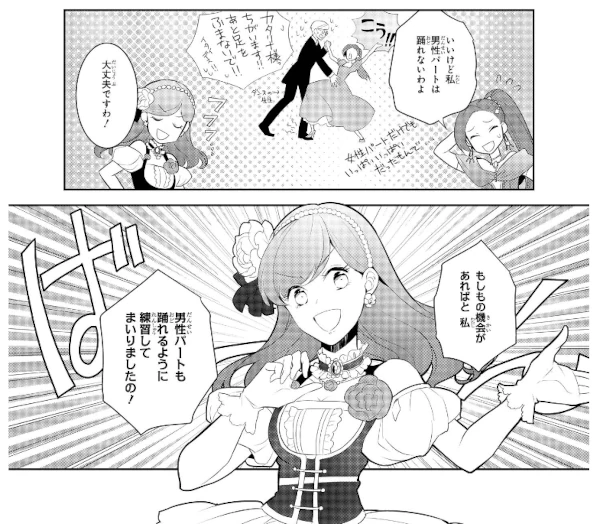
At the same time, learners should be aware that some expressions—especially stylized ojō-sama speech like 「〜ですわ」—are purely fictional and not appropriate for everyday conversation.
Work Information
My Next Life as a Villainess: All Routes Lead to Doom! (乙女ゲームの破滅フラグしかない悪役令嬢に転生してしまった…)
Author: Hidaka Nami/ Yamaguchi Satoru
Publisher: ICHIJINSHA
Amount of text: plentiful
Challenge level: ★★★
Latest volume : Vol.12(Aug.2025 / Ongoing)
Here’s a safe and convenient way to purchase Japanese manga.
This Blog’s ConceptIn this blog, we are introducing manga that are not only highly captivating but also ideal for Japanese language learners. Studying Japanese through manga is both fun and effective. Manga allows you to understand the subtleties of keigo (honorifics), teineigo (polite speech), and casual conversation in Japanese. We hope you find works that match your interests and use them to enhance your Japanese learning journey.