This time, we’re introducing Gals Can’t Be Kind to Otaku?!—a lighthearted school romance that lets Japanese learners enjoy both soft, non-intimidating敬語 and lively teenage casual expressions in context.
Work Information

Gals Can't Be Kind to Otaku?!(オタクに優しいギャルはいない!?)
Author: Norishirochan / Uozumi Sakana
Publisher: COAMIX
Amount of text: plentiful
Challenge level: ★★★
Latest volume : Vol.11(Oct.2025 / Ongoing)
Story overview
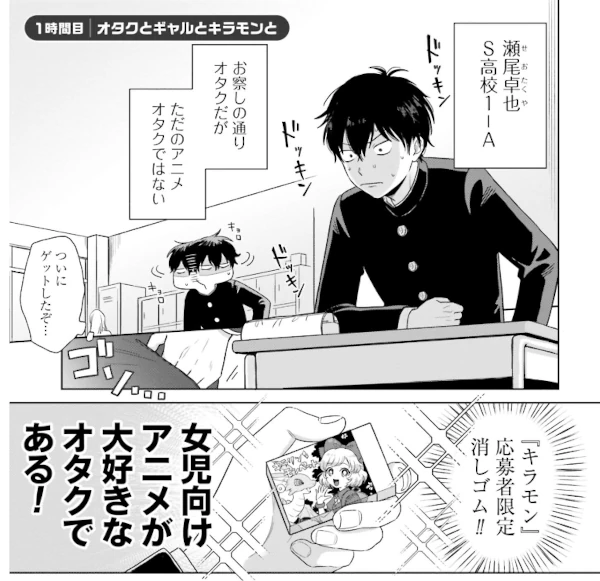
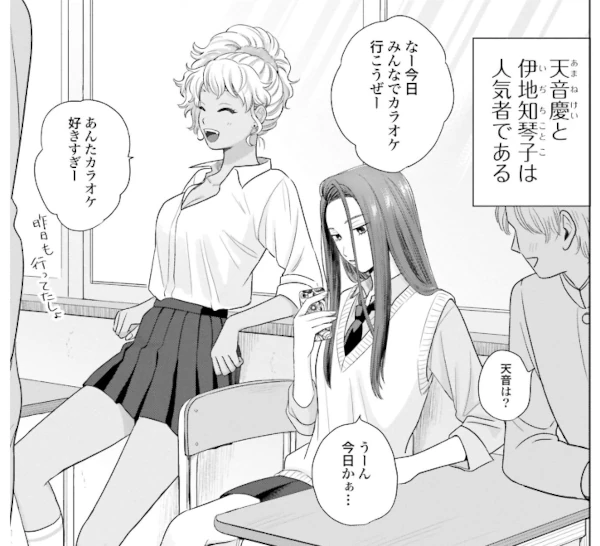
Takuya Seo is an otaku who loves anime aimed at young girls—a hobby he can’t exactly shout about in public. One day, he gets tangled up with two gyaru classmates, Amane and Ijichi. But to his surprise, Amane gives off some serious otaku vibes herself…?
Thus begins Volume 1 of a school-caste romantic comedy about an otaku boy and “gyaru who are kind to otaku”!
The Appeal of This Manga
This series embodies the recently emerged and much-adored concept in Japan of “gyaru who are kind to otaku.” The protagonist, Seo, is an otaku of girls’ anime—a niche interest that earns him zero social approval and firmly places him in the stereotypical “creepy otaku”(キモオタ) category.
By a twist of fate, he ends up growing close to two beautiful gyaru at the very top of the school’s social hierarchy, each with a very different personality. The story plays out a long-standing otaku fantasy in the most convenient way possible—while also delivering plenty of relatable otaku humor and high school romance moments.
With multiple points of enjoyment and no need to overthink, this is a light, feel-good read that’s perfect for relaxing and having fun.
Why this manga is suitable for learning Japanese
This manga is not only entertaining but also highly recommended for Japanese learners for several reasons.
The Otaku Boy’s Polite Speech
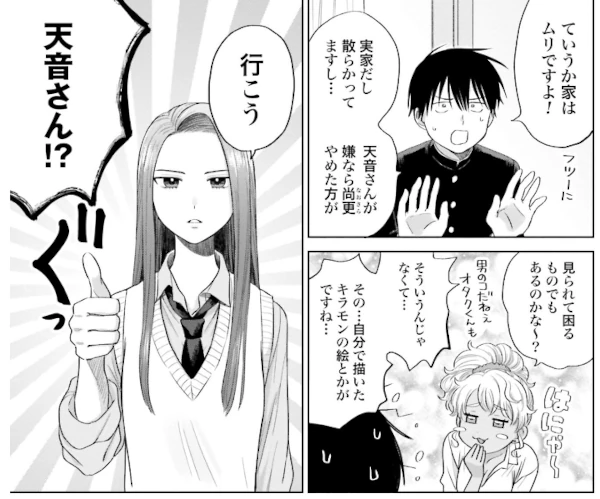
Seo always speaks to Amane and Ijichi in polite Japanese (敬語). Because he’s timid and lacks confidence, his keigo is gentle and non-pushy, making it feel natural rather than stiff. Since it reflects how teenagers actually use polite speech, it’s especially useful for younger Japanese learners.
Plenty of Casual Expressions
Set in a high school, most of the characters are teenagers. Amane and Ijichi never use keigo and speak casually to everyone, so readers are exposed to lots of natural, youthful casual Japanese expressions.
Culture Spotlight
Otaku-Friendly Gals”: How a Modern Manga Trope Grew from Real Japanese Youth Cultureオタクに優しいギャルという概念
If you read modern Japanese manga or watch anime, you may often encounter a popular trope: オタクに優しいギャル — “the gal who is kind to otaku.”
At first glance, it looks like a pure fantasy: a fashionable, socially powerful girl treating a shy nerd with warmth and affection. But this concept did not appear out of nowhere. To understand why it resonates so strongly in Japan—and why it has become a stable genre—you need to look at earlier youth culture, real social dynamics, and even subtle shifts in how people address one another.
Before Gyaru: The Pre-Culture of the “Rough-Edged Beauty”
Although the idea of “otaku-friendly gals” became popular mainly after the 2000s, it didn’t appear out of nowhere. There was an earlier, real-world pattern in Japanese youth culture that paved the way for it.
In many parts of Japan—especially outside major cities—people often noticed a familiar situation:
A girl who was considered “cute” or popular in elementary school would later adopt a tougher, more rebellious style in junior high and begin hanging out with more rough-edged peer groups (a type of youth often described in Japanese as 不良, meaning socially rebellious rather than criminal).
This wasn’t just a manga trope. It was a widely recognized, everyday reality—a classic “this happens a lot” situation remembered by many people.
Because of this, the image of a beautiful girl with a slightly intimidating or unapproachable aura felt grounded in lived experience, not pure fantasy.
From Roughness to Gyaru: A Cultural Shift
Over time, traditional Roughness culture began to fade. Delinquents, as a visible social group, mostly disappeared.
But they didn’t vanish completely—they were replaced.
Enter the Gyaru (ギャル)
Gyaru inherited several traits once associated with yankees:
・strong personalities
・visual dominance in the classroom
・distance from “serious” academic culture
As a result, the emotional memory of
“That cute girl who became unreachable” shifted naturally from yankees to gyaru.
This is crucial:
“Otaku-friendly gals” are not just fictional wish-fulfillment. They echo a half-real, half-lost possibility deeply imprinted in many people’s memories.
Why “Otaku-Friendly Gals” Hit So Hard
For many former—and current—otaku, this trope feels painfully close to reality.
It represents:
・the girl who could have existed
・the kindness that might have happened
・the warmth that was always just out of reach
That’s why this genre is not seen as absurd fantasy. It is a sweet, emotionally charged “what if”, grounded in shared experience.
This emotional realism is exactly why オタクに優しいギャル has stabilized into a major genre rather than a passing trend.
The Appeal of Gals in Otaku Romance Stories
In manga and anime, gals are not a single character type. They range from shy and quiet to friendly, direct, or caring, but all are portrayed as attractive and eye-catching.
Their fashion—such as short school skirts and relaxed, slightly sexy styling—often makes introverted otaku characters nervous, creating a familiar romantic contrast. Just as important is the dynamic itself: timid, socially awkward otaku paired with confident gals who take the initiative, tease lightly, and close emotional distance without hesitation.
Rather than being distant or intimidating, these gals feel warm and approachable. For readers, this creates a gentle fantasy in which someone confident and socially skilled reaches out to an insecure protagonist, offering excitement, comfort, and emotional reassurance.
From Distance to Intimacy: The Nuance of Being Called “Otaku-kun”
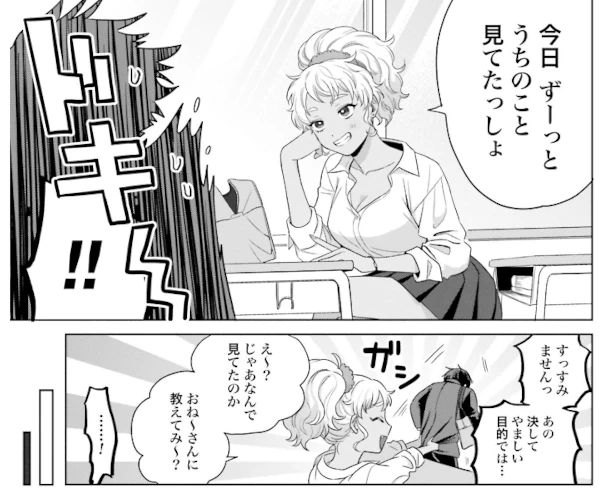
In the featured work, the protagonist Seo is called 「オタクくん」 by the two gals. At first, this form of address implies emotional distance. In Japanese social norms, not using someone’s name can suggest a lack of personal closeness, and from the otaku’s point of view, being labeled simply as “Otaku-kun” may feel impersonal.
What makes the term interesting is that its meaning can change without the words changing at all. As the characters grow closer, being called 「オタクくん」 gradually comes to signal familiarity and acceptance. The expression does not imply ownership, but rather reflects a quiet acknowledgment of the person as they are.
In modern manga culture, this shift has become a familiar trope. Being called 「オタクくん」 by a gal can carry a subtle, reward-like nuance—something that feels earned through interaction. This illustrates how Japanese terms of address can gain emotional meaning through context and relationship, rather than vocabulary alone.
What This Teaches Japanese Learners
For learners of Japanese, this genre is valuable not just as entertainment.
It demonstrates:
・how social labels change meaning through relationships
・how naming practices reflect emotional distance or closeness
・how youth culture shapes language in subtle ways
Understanding オタクに優しいギャル means understanding:
・post-2000s Japanese youth memory
・the emotional logic behind casual speech
・and how fantasy often grows from very real social history
Final Thoughts
The “otaku-friendly gal” is not merely a romantic cliché. She is a cultural echo—of yankees, of gyaru, of lost chances, and of unspoken kindness.
That is why this genre continues to thrive. And that is why, for many readers, it feels strangely believable, even when it is undeniably sweet.
For Japanese learners, recognizing these layers turns manga from “simple fun” into a window on how language, memory, and emotion intertwine in modern Japan.
A Little Warning
Heavy Otaku-Specific Content
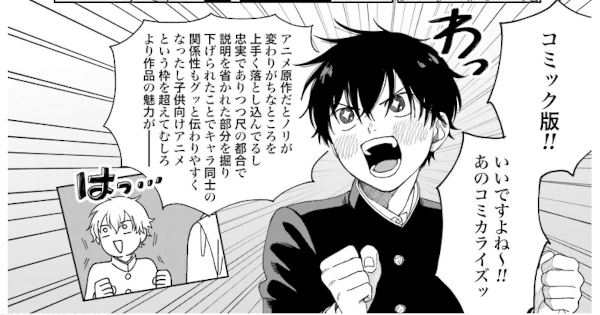
Because both Seo and Amane are hardcore otaku, the manga is packed with passionate commentary, niche references, and detailed discussions of otaku interests. For beginners who struggle with long passages of text, the sheer amount of information may make this a challenging read.
Work Information
Gals Can't Be Kind to Otaku?!(オタクに優しいギャルはいない!?)
Author: Norishirochan / Uozumi Sakana
Publisher: COAMIX
Amount of text: plentiful
Challenge level: ★★★
Latest volume : Vol.11(Oct.2025 / Ongoing)
Here’s a safe and convenient way to purchase Japanese manga.
This Blog’s ConceptIn this blog, we are introducing manga that are not only highly captivating but also ideal for Japanese language learners. Studying Japanese through manga is both fun and effective. Manga allows you to understand the subtleties of keigo (honorifics), teineigo (polite speech), and casual conversation in Japanese. We hope you find works that match your interests and use them to enhance your Japanese learning journey.