This time, we’re introducing Kimi no Sensō, Boku no Hebi—a sci-fi war romance that lets Japanese learners experience polite speech and raw emotional expression amid life-and-death battles.
Work Information

Kimi no senso, Boku no hebi(君の戦争、僕の蛇)
Author: Nakano Deichi
Publisher: HEROS
Amount of text: moderate
Challenge level: ★★
Latest volume : Vol.3(Feb.2023 / Completed)
Story overview
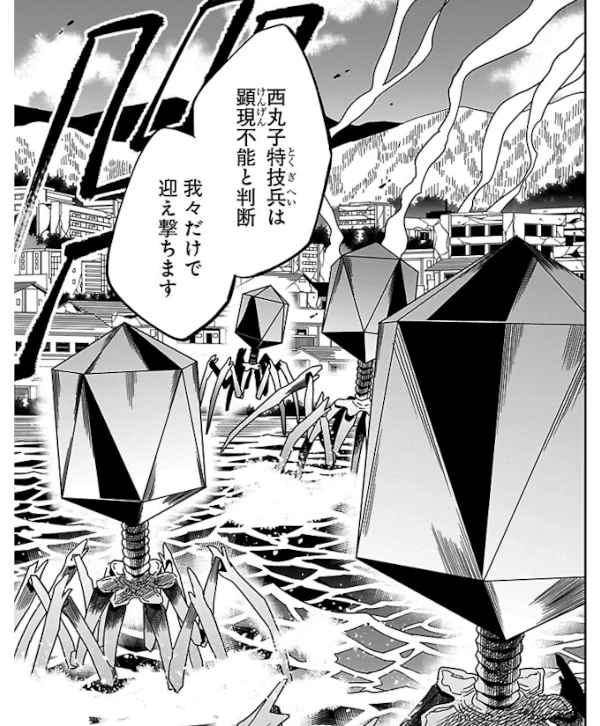
To fight a cosmic lifeform that has pushed humanity to the brink of extinction, Hideo Nishimaruko is implanted with a living biological weapon known as “Orochi.” Assigned to support him is Inori Tōkaichi, a special medical corps soldier.
As they endure the extreme conditions of wartime together, the emotional distance between the two slowly begins to close—but…
This is a battlefield boy-meets-girl story by the uniquely introspective creator Deichi Nakano, who continues to explore themes of self-awareness and inner conflict through his work.
The Appeal of This Manga
This work skillfully blends the essence of classic influences with a modern sensibility. If keywords like science fiction, alternate Taishō-era romanticism, the old Japanese military, monster invasions, and graphic violence catch your interest, this manga is well worth picking up.
Within its richly constructed world, the story powerfully depicts young people struggling through brutal combat, existential questions, love, and the way they choose to live under overwhelming circumstances.

Why this manga is suitable for learning Japanese
This manga is not only entertaining but also highly recommended for Japanese learners for several reasons.
Polite Speech Hidden in an Extraordinary World
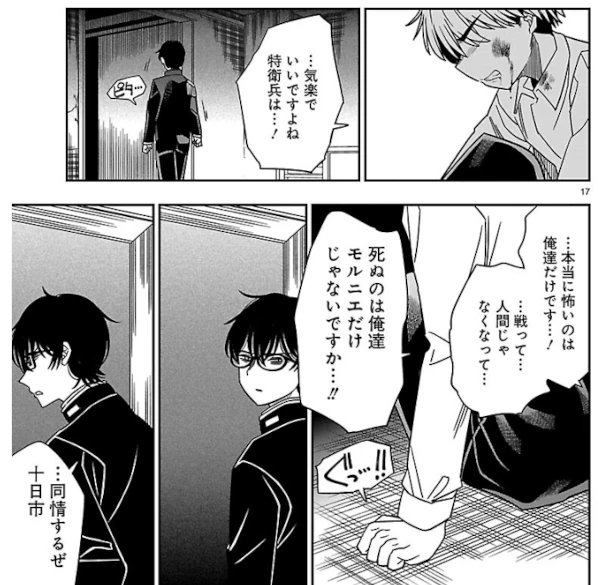
Despite its non-everyday setting, this manga features an unusually large amount of grounded, polite Japanese. Honorific speech reflecting hierarchical relationships within military organizations, as well as reserved and distant ways of speaking rooted in the characters’ personalities, are depicted in detail.
Finding such natural 丁寧語 (polite language) in a highly fantastical setting is relatively rare, making this series especially valuable for learners.
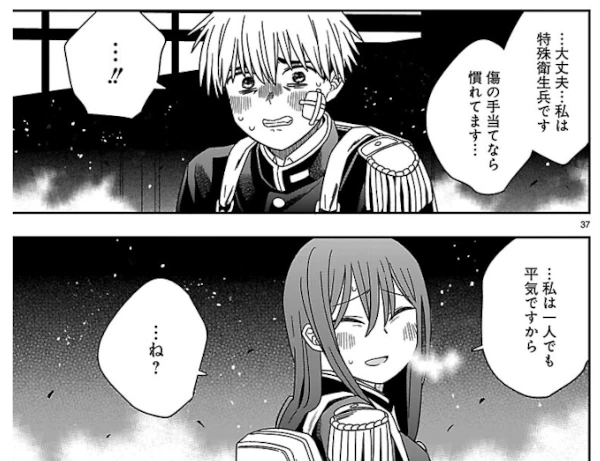
Sincere Dialogue on a Brutal Battlefield
The characters live under constant threat of death. The raw emotions and desperate thoughts expressed by teenagers burdened with heavy destinies are conveyed through straightforward, emotionally charged Japanese dialogue.
For learners, this offers a powerful example of how Japanese expresses deep feelings, resolve, fear, and vulnerability in moments of extreme tension.
Culture Spotlight
The Art of Naming: How Japanese Manga Uses Names to Shape Characters登場人物の名前について
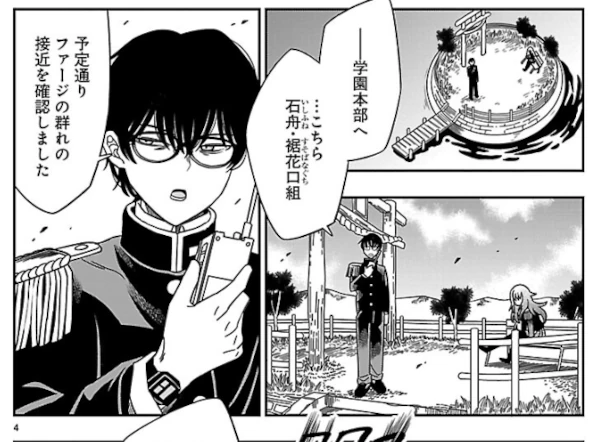
In the manga Kimi no Sensō, Boku no Hebi, readers encounter character surnames such as Nishimaruko (西丸子), Susobanaguchi (裾花口), and Tōkaichi (十日市). For native Japanese readers, these names immediately feel uncommon. They are not the kind of family names one encounters often in everyday life.
This is not accidental.
In fact, from novels and manga to light novels, character naming in Japanese fiction has undergone a major shift since the 2000s. With the rise of highly distinctive authors such as Nisio Isin (西尾維新) and others, names stopped being merely “realistic” identifiers and became tools for characterization, symbolism, and atmosphere.
To understand this change, it helps to look at what came before.
The Art of Naming: How Japanese Manga Uses Names to Shape Characters
Even before the 2000s, creators were already experimenting with non-standard naming—often by borrowing from outside everyday personal names.
A classic example is Neon Genesis Evangelion.
Characters such as Asuka Langley Soryu and Rei Ayanami carry surnames taken from Japanese naval warships. While these names are extremely rare or even non-existent as actual Japanese surnames, they possess a compelling sense of presence within the story. Behind these names lies a hidden historical and symbolic weight that adds profound depth to the series’ setting.
Other works have used:
・Place names
・Historical figures
・Mythological references
・Classical literature
In these cases, the names act as signals—quiet hints that the story is operating on more than one layer.
The Nisio Isin Shock: When Names Become Wordplay and Character Design
A decisive turning point in modern Japanese character naming came with Nisio Isin (西尾維新).
In his works, names are no longer just identifiers—they are verbal puzzles, character summaries, and sometimes outright jokes. A famous example is Senjōgahara Hitagi (戦場ヶ原ひたぎ) from the Monogatari series.
・戦場ヶ原 literally evokes an image like “battlefield plain”
・ひたぎ is not a typical given name and feels deliberately off-balance
・The name as a whole sounds heavy, sharp, and emotionally distant—perfectly matching her guarded personality
Other characters follow similar patterns:
Araragi Koyomi (阿良々木暦) – an intentionally awkward surname with repeated kanji, paired with “calendar,” hinting at time and cycles
Oshino Shinobu (忍野忍) – a near-palindrome with repeated 忍, emphasizing concealment and endurance
Many of these names rely on:
・Unusual or hard-to-read kanji
・Noun-like words forced into name form
・Pun-like sounds and layered meanings
For Japanese readers, encountering these names immediately signals:
“This story plays by different rules.”
After Nisio Isin’s success, character names in manga and light novels increasingly became part of the storytelling itself, rather than neutral background details.
They don’t just label characters—they frame how we perceive them from the very first page.
Place Names as Fate: What’s Happening in Kimi no Sensō, Boku no Hebi
The naming in Kimi no Sensō, Boku no Hebi is more restrained than Nisio Isin’s extreme style—but it is still highly intentional.
If the surnames feel like place names, that’s because they are. The characters’ surnames are taken from abandoned railway station names in Nagano Prefecture, the story’s setting.
For Japanese readers who notice this, the effect is quietly powerful:
・Abandoned stations suggest loss, stagnation, and forgotten paths
・The characters are young, yet trapped in an inescapably harsh fate
・Their names subtly echo a sense of no clear destination ahead
The result is a quiet melancholy embedded directly into the names themselves.
Why This Matters for Japanese Learners
For learners of Japanese, unusual character names can be intimidating—but they’re also revealing.
They teach us that:
・Not all “Japanese names” aim to reflect real life
・Kanji choices often carry emotional or symbolic meaning
・Names can hint at themes before the story even begins
If you can’t read a name smoothly, that’s okay—even native readers rely on furigana in these cases.
More importantly, learning to notice why a name feels strange gives you insight into how modern Japanese fiction communicates mood, destiny, and identity.
A Final Thought: Names as Quiet Storytelling
In contemporary Japanese manga and novels, names are no longer neutral. They are part of the narrative voice.
Whether borrowed from warships, twisted into wordplay, or lifted from abandoned places, character names now function as compressed storytelling devices.
Understanding this doesn’t just help you read manga more easily—it helps you read between the lines of modern Japanese culture itself.
A Little Warning
SF × Military Terminology
To enrich the story’s worldbuilding, the series introduces a number of original technical terms, including military and science-fiction jargon. Some of these are fictional terms created specifically for the setting, so you may not find clear meanings even if you search online or check a dictionary. Keep this in mind while reading.
Work Information
Kimi no senso, Boku no hebi(君の戦争、僕の蛇)
Author: Nakano Deichi
Publisher: HEROS
Amount of text: moderate
Challenge level: ★★
Latest volume : Vol.3(Feb.2023 / Completed)
Here’s a safe and convenient way to purchase Japanese manga.
This Blog’s ConceptIn this blog, we are introducing manga that are not only highly captivating but also ideal for Japanese language learners. Studying Japanese through manga is both fun and effective. Manga allows you to understand the subtleties of keigo (honorifics), teineigo (polite speech), and casual conversation in Japanese. We hope you find works that match your interests and use them to enhance your Japanese learning journey.