
Set in a small psychiatric clinic, Shrink portrays modern Japan’s hidden mental health struggles through calm dialogue and careful treatment. The protagonist’s gentle honorific speech makes it an excellent resource for learning natural, professional Japanese.
Work Information

Shrink 〜Seishinkai Yowai〜
Author: Nanami Jin / Tsukiko
Publisher: SHUEISHA
Amount of text: plentiful
Challenge level: ★★★
Latest volume : Vol.17(Jan.2026 / Ongoing)
Story overview
Panic disorder, depression, developmental disorders— Japan is sometimes called a “hidden mental illness superpower.” As the term suggests, the number of officially diagnosed psychiatric patients is actually lower than in countries like the United States.
Yet paradoxically, Japan’s suicide rate remains among the worst in the developed world.
Even when people are struggling, the belief that “psychiatry is a special or extreme place” discourages them from seeking help. Psychiatrist Yowai wants to change this reality in Japan and save as many hearts as possible. To that end, he makes a striking wish:
“I hope there will be more psychiatric patients in this country.”
The Appeal of This Manga
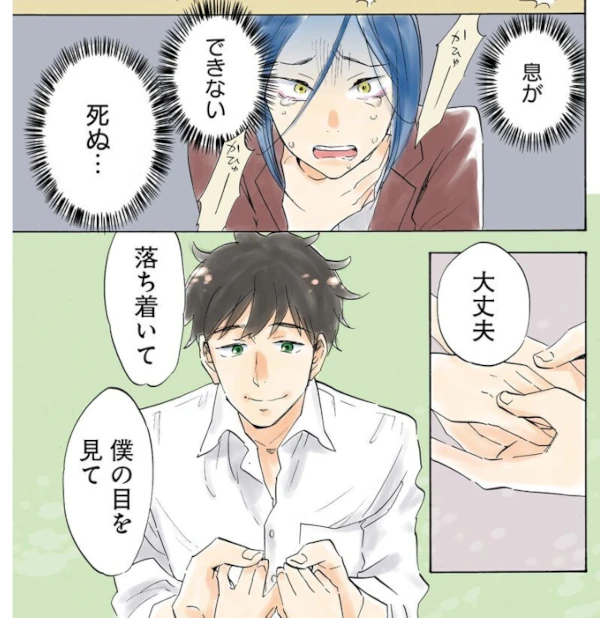
This manga follows the gentle, easygoing psychiatrist Yowai as he warmly cares for people with mental health struggles in a small clinic.
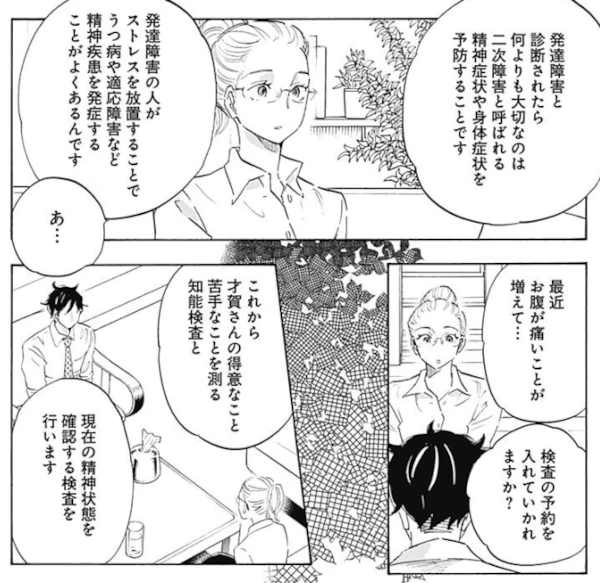
In Japan, a society often described as serious and conscientious, people are pushed to their limits by workplace scolding, ignore physical warning signs caused by overwork, or find that their natural temperament damages relationships with others. The story carefully depicts how these various forms of “difficulty living” gradually lead to both physical and mental breakdowns.
In response, Yowai provides careful, straightforward, and orthodox treatment to his patients. Although mental illness has become somewhat easier to discuss than in the past, it is still a topic many people avoid. This work takes on that often-shunned subject with clarity and optimism, making it an ambitious and meaningful manga.
Why this manga is suitable for learning Japanese
This manga is not only entertaining but also highly recommended for Japanese learners for several reasons.
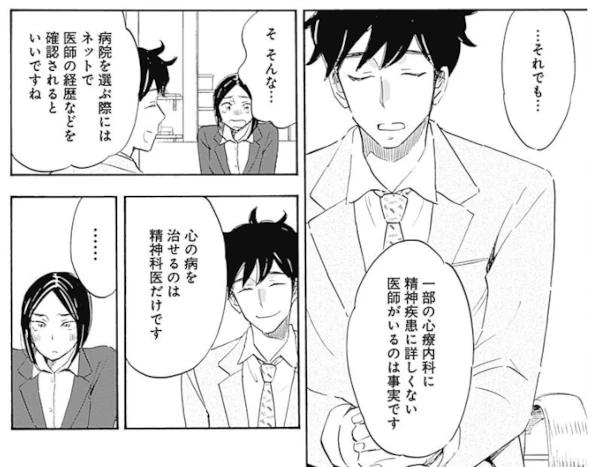
Polite and High-Quality Keigo (Honorific Speech)
The main character, Yowai, speaks in consistently polite and gentle keigo. This reflects not only his calm personality but also his profession as a psychiatrist. For learners of Japanese, his speech serves as an excellent model.
Because Japanese keigo has relatively little gender-based variation, this makes the manga accessible and useful for a wide range of learners.
Polite Speech from People Under Pressure
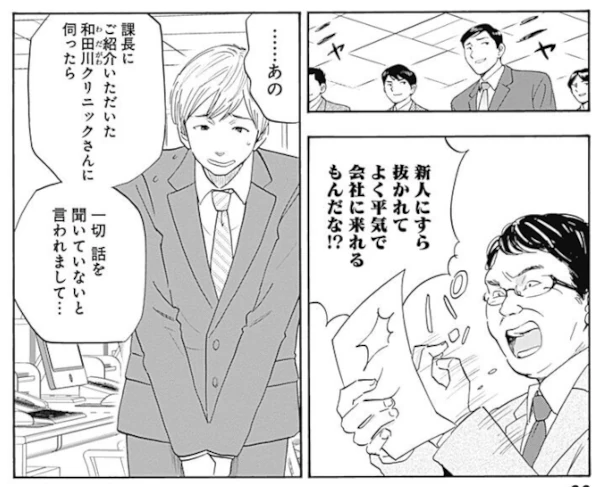
The patients who visit Yowai are experiencing mental distress caused by problems at work. Since workplace conversations in the manga are generally conducted in polite language, readers are also exposed to honorific speech used by people who are emotionally strained and under pressure.
Culture Spotlight
Behind the Clinic Door: Mental Health and Social Pressure in Japan日本における精神病事情
In the work introduced here, we see ordinary people visiting a psychiatrist for many different reasons—harsh working conditions, pressure and reprimands from superiors, or developmental disorders that have affected them since childhood.
Rather than depicting extreme or sensational cases, the story focuses on the quiet struggles of everyday individuals. This grounded portrayal offers readers insight not only into the characters themselves, but also into how mental health is perceived within Japanese society.
From Workplace Pressure to Clinical Care
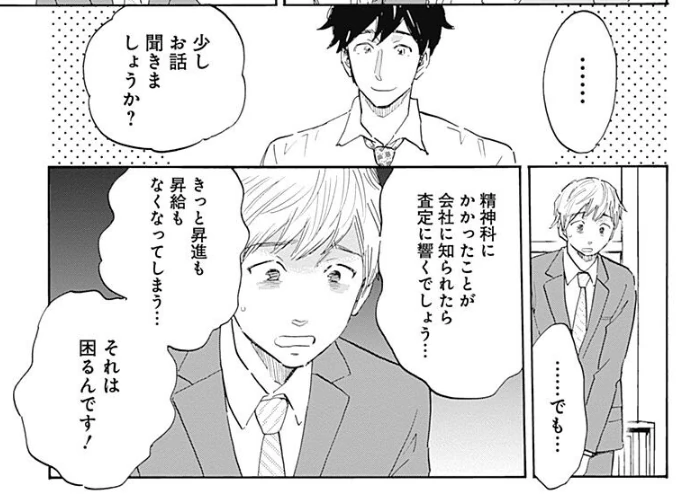
Many of the patients’ problems originate in the workplace. Long hours, strict hierarchies, and intense expectations can place workers under severe psychological strain.
In Japan, professional environments often emphasize endurance and perseverance. As a result, people may continue working even when their mental health is deteriorating. Seeking psychiatric help is frequently portrayed as a last resort—something people turn to only after reaching an emotional breaking point.
For learners of Japanese, this context also explains why workplace language in such scenes is heavily formal and polite, even when characters are internally distressed.
The Historical Weight of “Seishinbyō” (Mental Illness)
Historically, mental illness—精神病 (seishinbyō)—was treated as a powerful social taboo in Japan.
For much of the postwar era:
- It was rarely discussed publicly.
- Families often concealed diagnoses.
- Psychiatric institutions were socially and physically isolated.
Mental health conditions were not widely framed as medical issues, but rather as something shameful or frightening. This stigma shaped public perception for decades.
Gradual Change in the 21st Century
By 2026, awareness has improved compared with the past. Factors contributing to change include:
- Increased recognition of depression (鬱病, utsubyō)
- Corporate mental-health initiatives
- Media portrayals and public discussion
- Government campaigns on stress and overwork
Younger generations, in particular, are more open to discussing anxiety, burnout, and neurodiversity.
However, stigma has not disappeared.
Common lingering perceptions include:
- “It’s embarrassing.”
- “If you get diagnosed, your career is over.”
- “You should endure rather than seek help.”
This tension—between growing awareness and persistent stigma—is often reflected in contemporary fiction.
Comparison with English-Speaking Countries
While stigma exists everywhere, English-speaking countries (such as the U.S., U.K., Canada, and Australia) have followed a somewhat different trajectory.
Public Discourse
- Mental health is widely discussed in media and education.
- Celebrities and public figures openly share diagnoses.
- Terms like “therapy” and “self-care” are mainstream.
Workplace Culture
- Employee Assistance Programs (EAPs) are common.
- Mental-health days are increasingly normalized.
- Disclosure carries less automatic career risk (though not zero).
Medical Framing
- Conditions like ADHD, autism spectrum disorder, and depression are generally treated as clinical and manageable.
- Early diagnosis and accommodation are emphasized.
In contrast, Japan has historically leaned toward:
- Privacy over disclosure
- Endurance over accommodation
- Social harmony over individual vulnerability
Why This Context Matters for Learners
Understanding these cultural differences deepens how you read stories involving psychiatry or workplace stress in Japan.
When a character hesitates to seek help, hides a diagnosis, or apologizes for their condition, it reflects more than personal shame—it mirrors a broader social legacy.
Conversely, when a work portrays ordinary people calmly visiting a psychiatrist, it may signal a quiet cultural shift toward acceptance.
Literature as a Cultural Lens
Works like the one discussed do more than tell individual stories. They document a society in transition:
- From taboo to conversation
- From concealment to acknowledgment
- From isolation to tentative understanding
For learners of Japanese, such narratives offer valuable insight—not only into language use, but into the emotional and social realities that shape modern Japan.
A Little Warning
Abundance of Specialized Vocabulary
Since the theme centers on mental health, the manga contains a large amount of psychiatric and medical terminology. Overall, it is a dense and information-rich work, which may make it challenging for beginner-level Japanese learners.
Work Information
Yoki horitsuka ha ashiki rinjin
Author: Nanami Jin / Tsukiko
Publisher: SHUEISHA
Amount of text: plentiful
Challenge level: ★★★
Latest volume : Vol.17(Jan.2026 / Ongoing)
Here’s a safe and convenient way to purchase Japanese manga.
This Blog’s ConceptIn this blog, we are introducing manga that are not only highly captivating but also ideal for Japanese language learners. Studying Japanese through manga is both fun and effective. Manga allows you to understand the subtleties of keigo (honorifics), teineigo (polite speech), and casual conversation in Japanese. We hope you find works that match your interests and use them to enhance your Japanese learning journey.