
This time, we’re introducing Because I, the True Saint, Was Banished, That Country Is Done For!—a classic isekai fantasy that’s perfect for learning gentle敬語 and polite Japanese.
Work Information

Because I, the True Saint, was Banished, that Country is Done For! (真の聖女である私は追放されました。だからこの国はもう終わりです)
Author: Utsuzawa Shikiso / Matsu Mokuba
Publisher: KODANSHA
Amount of text: moderate
Challenge level: ★★
Latest volume : Vol.12(Feb.2026 / Ongoing)
Story overview
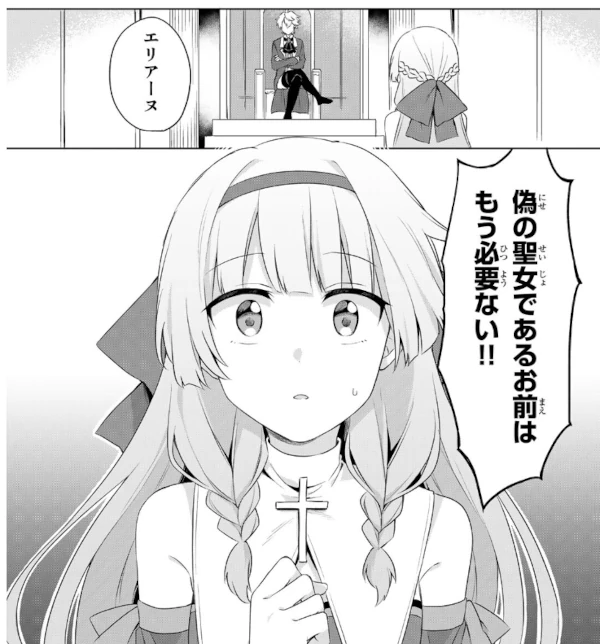
Eliane, a saint blessed with special powers, suddenly has her engagement broken off by Crown Prince Claude—her fiancé—and is banished from the kingdom.
Tired of Claude’s emotional abuse and infidelity, Eliane decides to start fresh and sets out for a neighboring country. There, she meets Nigel, a sincere and honorable man who is the complete opposite of Claude…!?
The Appeal of This Manga
This story belongs to the popular “saint” subgenre of isekai fantasy aimed at female readers, a category that is just as popular as the well-known “villainess” stories.
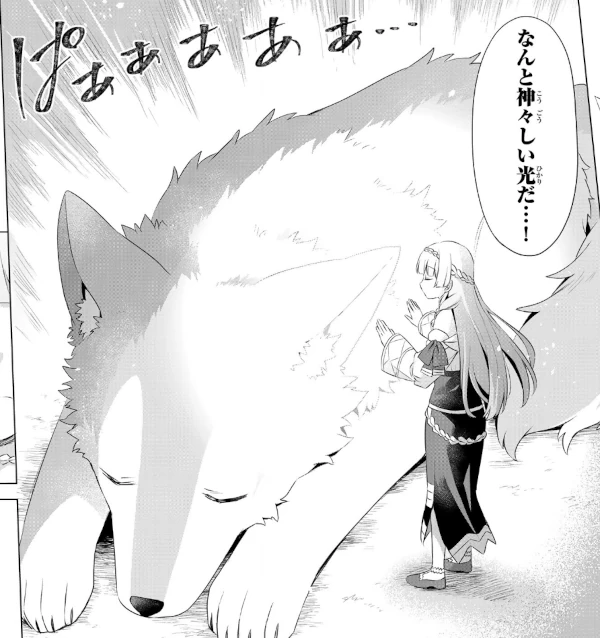
The protagonist is a saint who possesses classic abilities such as mastery of healing magic and the power to communicate with magical beasts. Although she is banished from her homeland, things begin to go smoothly for her in her new environment. She soon finds herself admired by many different kinds of attractive men.
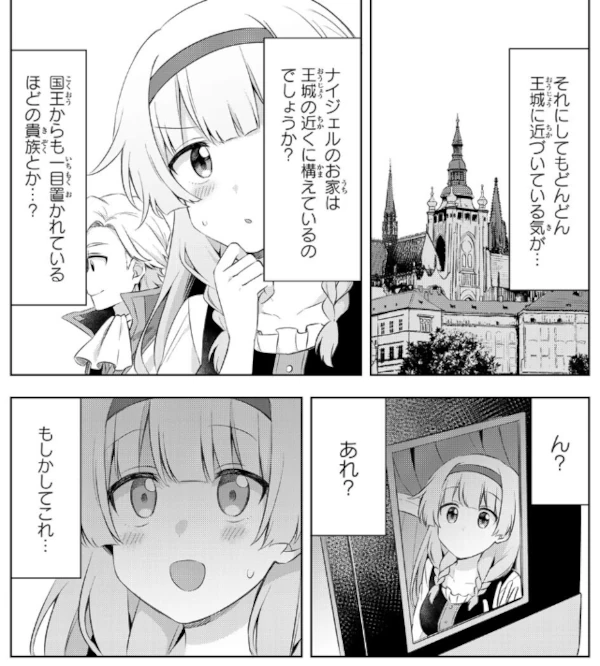
Despite all this attention, she remains modest, humble, and somewhat oblivious to their feelings, never losing her gentle and kind personality. In a positive sense, the story follows familiar and comforting genre conventions, making it an easy and reassuring read.
Even for readers who have never tried this genre before, it works well as an accessible introduction.
Why this manga is suitable for learning Japanese
This manga is not only entertaining but also highly recommended for Japanese learners for several reasons.
Gentle and Polite Language
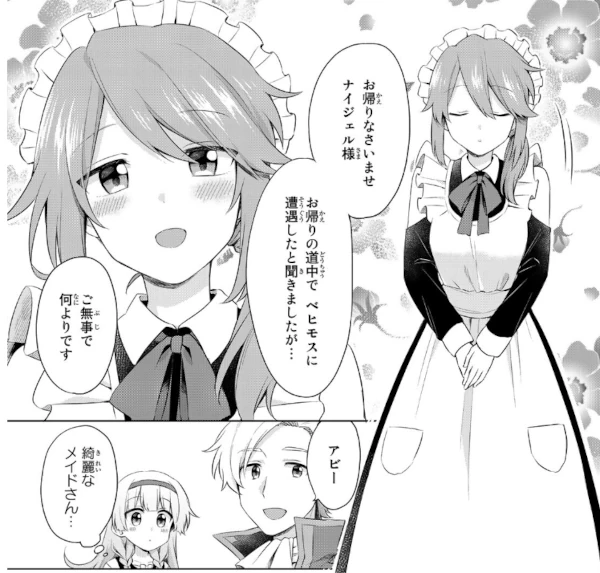
Because Eliane is a saintly figure, she is consistently polite and respectful toward everyone she meets.
As a result, readers can learn calm and gentle forms of polite Japanese (teineigo and keigo) with soft and refined nuances throughout the story.

Politeness Reflecting Social Hierarchy
The story is set in a medieval-style world where social hierarchy is clearly defined. Knights and maids often speak politely when addressing Eliane or their masters.
Because of this, polite speech appears frequently in the dialogue, giving readers many opportunities to see how keigo is used in hierarchical relationships.
Culture Spotlight
The Healing Heroine: How the “Saint” Genre Works in Japanese Fantasy聖女
The manga introduced this time belongs to a subgenre of Japanese fantasy often called the “Saint” (聖女, seijo) genre.
In recent years, many international fans have become familiar with stories about the “villainess” (悪役令嬢, akuyaku reijō), where a noble girl originally cast as the antagonist changes her fate. While villainess stories are now popular worldwide, the “saint” genre has also been traditionally popular in Japan, especially in manga and light novels aimed at female readers.
Understanding this genre can help Japanese learners better appreciate the themes and vocabulary that appear in many modern fantasy stories.
Saint Stories vs. Villainess Stories
Both genres often appear in isekai fantasy—stories set in another world that resembles a medieval European kingdom. However, the roles of the protagonists are quite different.
Villainess stories usually focus on:
- A noble girl who was originally destined to become the villain.
- A plot where she avoids her tragic fate through intelligence or strategy.
- Political intrigue, social competition, and clever maneuvering.
In contrast, saint stories usually focus on:
- A gentle, kind-hearted heroine chosen as a “saint.”
- Special powers related to healing, purification, or divine protection.
- A narrative centered on kindness, relationships, and emotional growth.
While villainess stories often highlight cleverness and rebellion, saint stories emphasize kindness and virtue.
A Modern Genre with Classic Roots
At first glance, saint stories may look like a modern form of entertainment created for web novels and light novels. However, their structure actually contains many very traditional storytelling elements.
The typical saint protagonist often resembles classic fairy-tale heroines such as Cinderella.
Like Cinderella, the saint is often:
- Gentle and kind despite being treated poorly
- Forced to leave her original home or status
- Eventually rewarded with recognition, love, and success
In other words, although the setting may involve magic and fantasy worlds, the emotional structure of the story is quite old and familiar.
The “Cheat Ability” Structure in Isekai Stories
Another important feature of isekai stories is the idea of a “cheat ability.”
In Japanese fan culture, a “cheat” (チート) refers to an overpowered skill that gives the protagonist an overwhelming advantage.
In male-oriented isekai stories, this often means:
- Extremely powerful combat abilities
- Knowledge from the modern world
- Magic or technology that allows the hero to dominate enemies
The saint genre follows a similar structure, but the abilities are different.
The Unique Powers of a “Saint”
Instead of battlefield strength, saints typically possess abilities such as:
- Exceptional healing magic
- The ability to purify curses or dark magic
- Special bonds with sacred or magical creatures
- Divine protection or blessings
Sometimes, simply being recognized as a saint is itself a special power that attracts allies and respect.
These abilities create a different kind of “cheat.” Rather than conquering enemies through force, the saint changes the world through kindness, healing, and moral authority.
Why This Genre Is So Popular
The saint genre combines several appealing elements:
- A classic “kind girl rewarded for her goodness” narrative
- Fantasy adventure and magical powers
- Romantic relationships with noble or heroic characters
- Emotional comfort through familiar story patterns
Because of this combination, saint stories feel both new and traditional at the same time.
What This Means for Japanese Learners
For learners of Japanese, understanding the saint genre provides useful cultural context when reading manga, light novels, or web fiction.
You may encounter words such as:
- 聖女 (seijo) – saint
- 浄化 (jōka) – purification
- 回復魔法 (kaifuku mahō) – healing magic
- 追放 (tsuihō) – exile or banishment
These terms appear frequently in fantasy stories and can help learners recognize common narrative patterns in modern Japanese entertainment.
By learning about genres like the saint story, readers can enjoy not only the language of the manga—but also the storytelling traditions behind it.
A Little Warning
Very Formulaic Storytelling
The story follows familiar genre conventions almost exactly. While this makes it easy and comfortable to read, it also means the series may not feel especially unique or surprising. Readers who are already very familiar with this type of story might find it somewhat predictable.
Work Information
Because I, the True Saint, was Banished, that Country is Done For! (真の聖女である私は追放されました。だからこの国はもう終わりです)
Author: Utsuzawa Shikiso / Matsu Mokuba
Publisher: KODANSHA
Amount of text: moderate
Challenge level: ★★
Latest volume : Vol.12(Feb.2026 / Ongoing)
Here’s a safe and convenient way to purchase Japanese manga.
This Blog’s ConceptIn this blog, we are introducing manga that are not only highly captivating but also ideal for Japanese language learners. Studying Japanese through manga is both fun and effective. Manga allows you to understand the subtleties of keigo (honorifics), teineigo (polite speech), and casual conversation in Japanese. We hope you find works that match your interests and use them to enhance your Japanese learning journey.