This time, we’re introducing Gozen 2ji ha Shokutaku de—a quietly chilling manga that’s great for learning natural, everyday Japanese.
Work Information

Gozen 2ji ha Shokutaku de (午前二時は食卓で)<
Author: Kondo Tomoyo
Publisher: KADOKAWA
Amount of text: moderate
Challenge level: ★★
Latest volume : Vol.2(Feb.2026 / Completed)
Story overview
A horror story that begins with a girl-meets-girl encounter.
Every day, the dinner table is full— even though her mother is supposed to be dead.
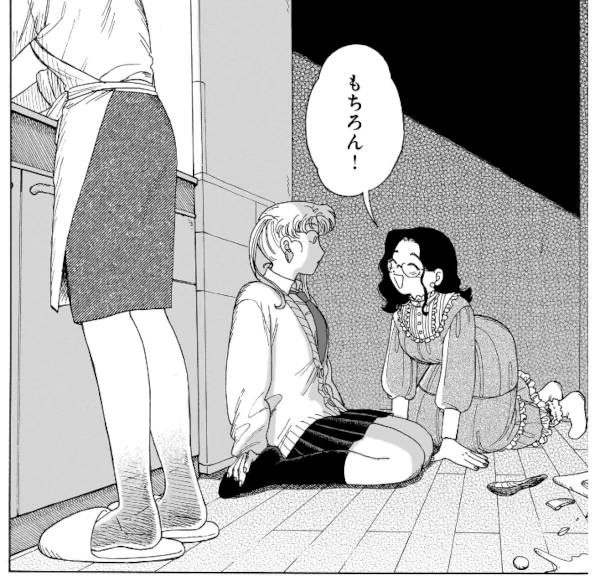
One day, Maria, a gyaru high school girl haunted by her mother’s ghost, encounters a doll-like, eerily beautiful girl who suddenly appears before her…
A chilling horror story by rising talent Tomoyo Kondo.
The Appeal of This Manga
Everyday life suddenly reveals a different face. What begins as an ordinary setting slowly becomes something unsettling, as a high school girl encounters strange, otherworldly beings.
The artwork is friendly and approachable, which makes it easy to let your guard down—but before you realize it, a creeping sense of fear begins to build.
It’s a uniquely atmospheric work that could be described as “soft horror,” blending warmth with unease. As you follow the actions of its mysteriously charming characters, you may find yourself completely drawn into its world.
Why this manga is suitable for learning Japanese
This manga is not only entertaining but also highly recommended for Japanese learners for several reasons.
Natural Japanese Used by Teenagers
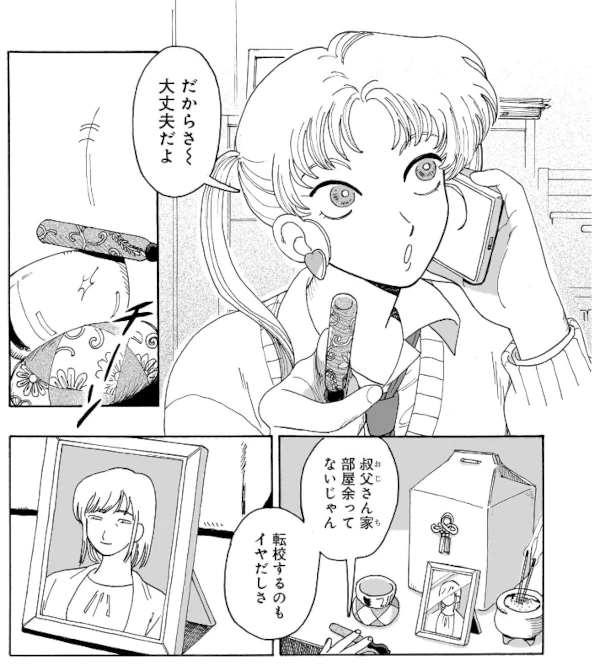
Maria, the protagonist, is a high school student. She speaks in a natural, casual way typical of teenagers.
This makes the manga a great choice for experiencing the slightly relaxed and modern style of Japanese used by today’s high school girls.
Everyday Conversations in Familiar Settings
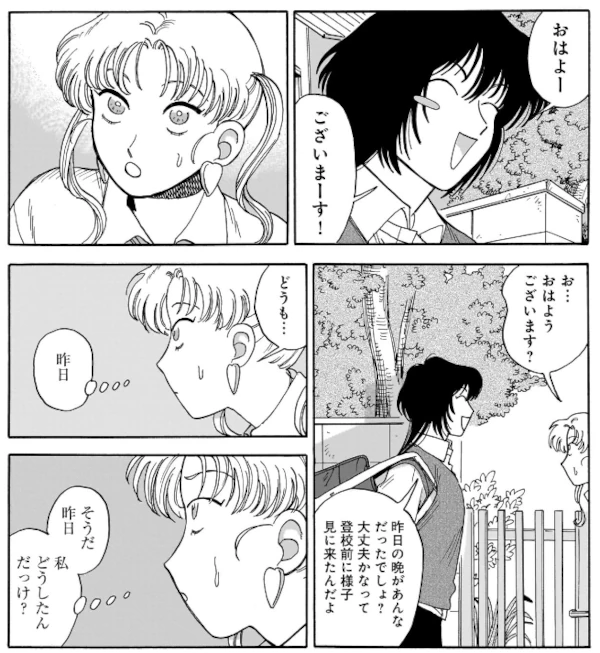
Although the story itself is supernatural horror, the setting is grounded in everyday life—school, home, and the neighborhood.
Because of this, most conversations between characters are based on realistic daily interactions, making them useful for learners.
Culture Spotlight
Why Every Story Needs an Occult Club: A Japanese Pop Culture Trope Explainedオカルト研究会
In many manga and anime, you’ll often see a group called 「オカルト研究部(オカルト研究会)」—an “Occult Club.”
At first glance, it may sound unusual. But in Japanese fiction, this kind of club appears again and again as a convenient and effective way to introduce supernatural events.
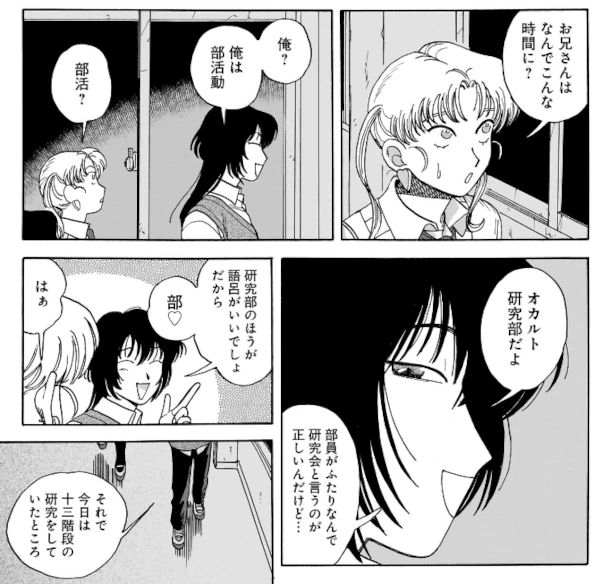
Where Did Occult Clubs Come From?
Interest in the occult—ghosts, UFOs, psychic powers—became especially popular in Japan after World War II, particularly from the 1960s to 1970s.
During this period:
- Books and magazines about mysteries and paranormal phenomena gained popularity
- TV shows began featuring ghost stories and unexplained events
- Young people became fascinated with the unknown and the mysterious
As a result, student-led groups began forming under names like:
- オカルト研究会 (Occult Research Club)
- 超常現象研究会 (Paranormal Phenomena Club)
- 心霊研究会 (Psychic Research Club)
These clubs were often informal and driven by curiosity rather than serious academic study.
Real Life vs. Fiction
In reality, such clubs are not very common in high schools.
Why?
High school students in Japan are generally:
- Seen as minors under adult supervision
- Expected to participate in safe, structured activities
Because occult-related activities could be associated with:
- Dangerous locations (abandoned buildings, nighttime exploration)
- Psychological stress or fear
schools tend not to officially encourage them.
However, at the university level, where students have more freedom, similar clubs do exist more frequently.
Why Are Occult Clubs So Common in Fiction?
Even though they are rare in real life, occult clubs are extremely common in manga, anime, and novels.
A famous example is Jujutsu Kaisen,where the protagonist initially belongs to an Occult Research Club.
This kind of club is useful in storytelling because it:
- Creates a natural reason for characters to investigate strange events
- Allows supernatural encounters to feel less forced
- Brings together characters who are already interested in the unknown
In other words, it’s a perfect narrative shortcut.
A Perfect Match with Classic School Mysteries
Occult clubs are especially compatible with another famous trope:
「学校の七不思議」—the “Seven Mysteries of the School.”
These include stories like:
- A ghost in the music room
- A moving statue at night
- A hidden staircase that appears only after dark
Because of this, occult clubs often serve as the gateway to:
- Horror stories
- Supernatural encounters
- Coming-of-age narratives (青春)
Why This Trope Still Works Today
From the Showa era to the present, the “occult club” remains popular because it combines:
- Curiosity about the unknown
- The emotional intensity of youth
- A familiar school setting
It’s flexible enough to support:
- Horror
- Comedy
- Romance
- Mystery
That versatility makes it a “universal tool” in Japanese storytelling.
What It Means for Learners of Japanese
Understanding the idea of an “occult club” helps you:
- Recognize a common setting in manga and anime
- Understand how Japanese stories introduce supernatural elements naturally
- Learn culturally specific terms like
- オカルト (occult)
- 研究部 / 研究会 (club / society)
So next time you see an 「オカルト研究会(オカ研)」 in a story, you’ll know— something strange is probably about to happen.
A Little Warning
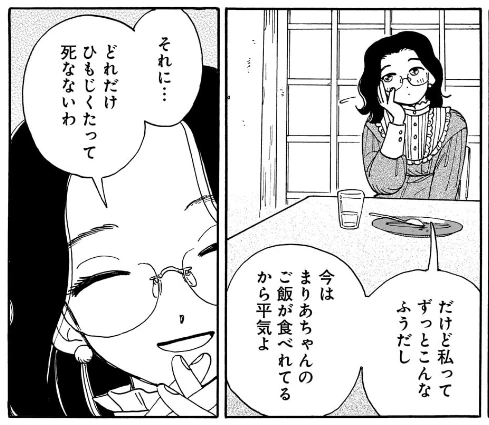
Be Careful with Tamami’s Speech Style
Tamami, a key character in the story (whose true identity is a spoiler), uses sentence endings such as “〜だわ” and “〜よ.”
These expressions have a strong fictional or stylized feel and are not commonly used in real everyday conversation. Learners should be careful not to imitate them too literally.
Work Information
Gozen 2ji ha Shokutaku de (午前二時は食卓で)<
Author: Kondo Tomoyo
Publisher: KADOKAWA
Amount of text: moderate
Challenge level: ★★
Latest volume : Vol.2(Feb.2026 / Completed)
Here’s a safe and convenient way to purchase Japanese manga.
This Blog’s ConceptIn this blog, we are introducing manga that are not only highly captivating but also ideal for Japanese language learners. Studying Japanese through manga is both fun and effective. Manga allows you to understand the subtleties of keigo (honorifics), teineigo (polite speech), and casual conversation in Japanese. We hope you find works that match your interests and use them to enhance your Japanese learning journey.