
This time, we’re introducing Salaryman Z—a unique business manga full of tension and authentic keigo.
Work Information

SalarymanZ (サラリーマンZ)<
Author: Ishida Ten / NUMBER8
Publisher: KODANSHA
Amount of text: plentiful
Challenge level: ★★★
Latest volume : Vol.6(Feb.2026 / Ongoing)
Story overview
Yusaku Maeyamada, a 40-year-old salaryman, continues to uphold a traditional, old-fashioned work ethic in the Reiwa era.
Guided by the words and philosophies of great business leaders from the past, he goes about his daily life with sincerity and discipline—until everything collapses due to the outbreak of an unknown viral pandemic.
A state of emergency meets workplace philosophy in this shocking business survival story, Volume 1.
The Appeal of This Manga
At first glance, this may seem like a new kind of business ethics story—but it quickly takes an entirely unexpected turn, evolving into a unique blend of business and (spoiler omitted).
Maeyamada, a dedicated salaryman who lives by the words of legendary postwar Japanese business leaders, treats both clients and colleagues with honesty and respect. When faced with a sudden and overwhelming crisis, his calm and sincere response is deeply moving.
Japan once rose from the devastation of defeat after World War II. The principles that guided the great leaders of that era are revived in the Reiwa age through Maeyamada’s struggle.
Through his actions, readers witness a distinctly Japanese ideal of the salaryman’s path—where aesthetics and business are harmonized at a higher level.
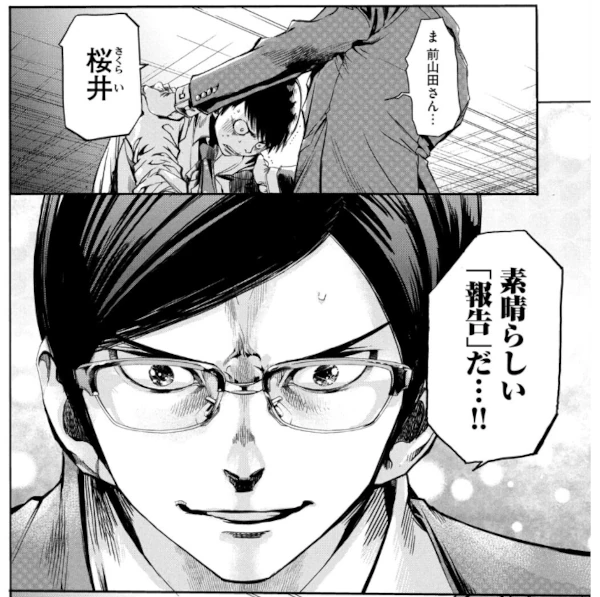
Why this manga is suitable for learning Japanese
This manga is not only entertaining but also highly recommended for Japanese learners for several reasons.
Authentic Business Keigo
The story features a wide range of business Japanese, including polite language used with clients and superiors.
Because the setting is a large corporation, the keigo used throughout the workplace is formal and well-structured, making this manga especially suitable for learners interested in business Japanese communication.
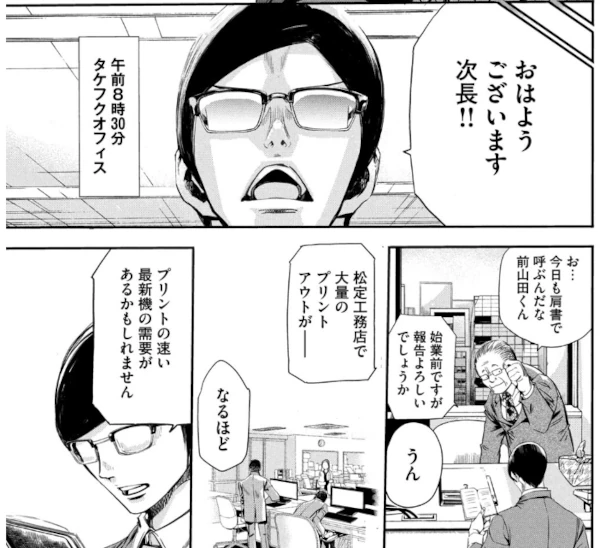
Entertainment Meets Business Japanese
Despite its business theme, the story is highly entertaining and full of tension.
This makes it a rare work where readers can enjoy an exciting narrative while also being exposed to a large amount of keigo in context.
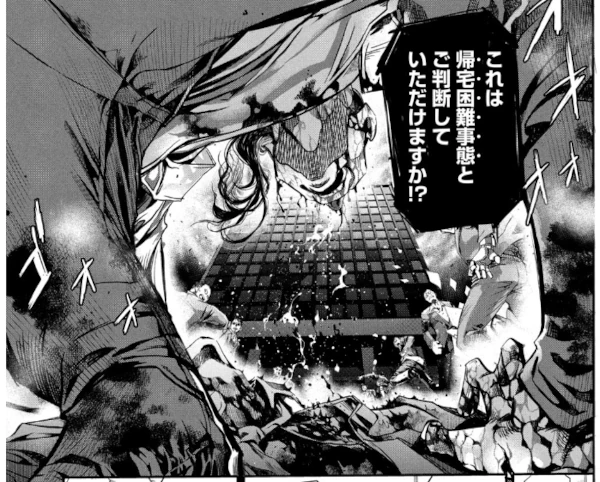
Culture Spotlight
What Is “The Customer Is God”? A Guide to Japanese Service Cultureお客様は神様です
In a business-themed manga, you might come across the phrase: 「お客様は神様です」 “The customer is God.”
This expression is widely known in Japan—but its meaning is often misunderstood, even by native speakers.
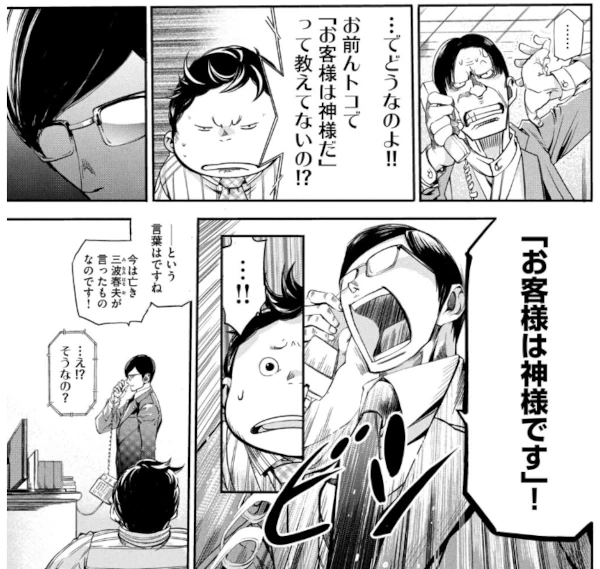
Where Did This Phrase Come From?
The phrase was originally used by Haruo Minami, a famous enka singer.
However, he did not mean:
- “Customers are superior to workers”
- “You must obey customers no matter what”
Instead, his intention was closer to:
- Treat the audience (customers) with deep respect and sincerity
- Approach your work with the same mindset as serving something sacred
In other words, it was about the attitude of the performer, not the power of the customer.
From Philosophy to Misunderstanding
Over time, the phrase spread beyond entertainment into:
- Retail
- Hospitality
- Service industries
But its meaning gradually shifted.
Instead of: 👉 “Serve with sincerity”
It became: 👉 “The customer is always right” (in an extreme sense)
This change transformed a philosophical ideal into a social expectation.
A Reflection of Japanese Business Ethics
At its core, the phrase reflects a key idea in Japanese culture:
- おもてなし (omotenashi) — wholehearted hospitality
This includes:
- Anticipating customer needs
- Providing careful, detailed service
- Maintaining politeness at all times
In this sense, 「お客様は神様です」 represents an ideal vision of service: a harmony between professionalism, pride, and respect.
When It Becomes a Problem: Customer Harassment (カスハラ)
n recent years, the phrase has also been used to justify problematic behavior known as:
- カスタマーハラスメント (customer harassment, or “kasuhara”)
This refers to situations where customers:
- Make unreasonable demands
- Speak abusively to staff
- Expect excessive service beyond normal limits
Common Examples
- Demanding refunds without valid reasons
- Forcing staff to apologize repeatedly
- Insisting on impossible services or special treatment
In these cases, the phrase “the customer is God” is often misused as a weapon.
The Hidden Cost of Over-Service
Excessive service culture can lead to:
- Employee stress and burnout
- Mental health issues
- A workplace where staff cannot say “no”
This creates an unhealthy imbalance where: 👉 The customer holds all the power 👉 The worker must endure everything
A Shift in Modern Japan
Recently, there has been a growing awareness of this issue.
More companies are beginning to:
- Emphasize that customers and staff are equals
- Set clear boundaries for acceptable behavior
- Refuse unreasonable demands
In other words, the mindset is shifting from: 👉 “The customer is absolute” to 👉 “Respect goes both ways”
What It Means for Learners of Japanese
Understanding 「お客様は神様です」 helps you:
- Grasp an important concept in Japanese service culture
- Recognize how language can change meaning over time
- Understand modern social issues like customer harassment
It’s a great example of how a single phrase can carry:
- Cultural ideals
- Historical background
- And ongoing social debate
So when you hear this phrase, remember— it’s not just about customers. It’s about how people think about respect, work, and fairness in Japan.
A Little Warning
References to Famous Business Leaders
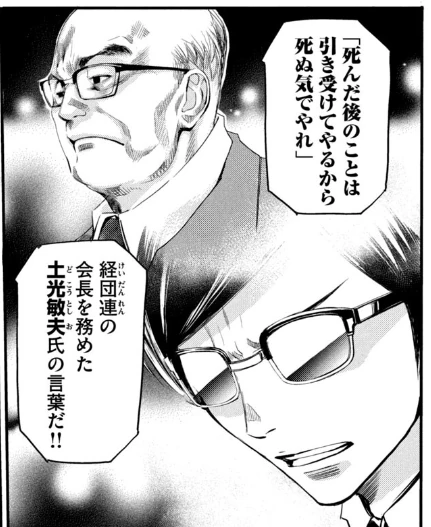
Maeyamada often quotes well-known Japanese business leaders (including historical figures) when encouraging or persuading others.
International readers may not always recognize these figures, but even among Japanese readers, not everyone is familiar with them—so there’s no need to worry too much about understanding every reference.
Work Information
SalarymanZ (サラリーマンZ)<
Author: Ishida Ten / NUMBER8
Publisher: KODANSHA
Amount of text: plentiful
Challenge level: ★★★
Latest volume : Vol.6(Feb.2026 / Ongoing)
Here’s a safe and convenient way to purchase Japanese manga.
This Blog’s ConceptIn this blog, we are introducing manga that are not only highly captivating but also ideal for Japanese language learners. Studying Japanese through manga is both fun and effective. Manga allows you to understand the subtleties of keigo (honorifics), teineigo (polite speech), and casual conversation in Japanese. We hope you find works that match your interests and use them to enhance your Japanese learning journey.