
This time, we’re introducing Dorama na Koi wa Kihon Kara—a perfect manga for learning practical and polite Japanese conversation.
Work Information
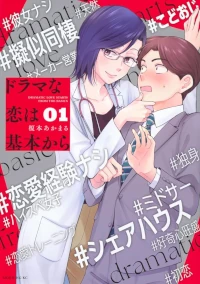
Drama na koi ha kihon kara (ドラマな恋は基本から)
Author: Enomoto Akamaru
Publisher: KODANSHA
Amount of text: moderate
Challenge level: ★★
Latest volume : Vol.7(Jan.2026 / Ongoing)
Story overview
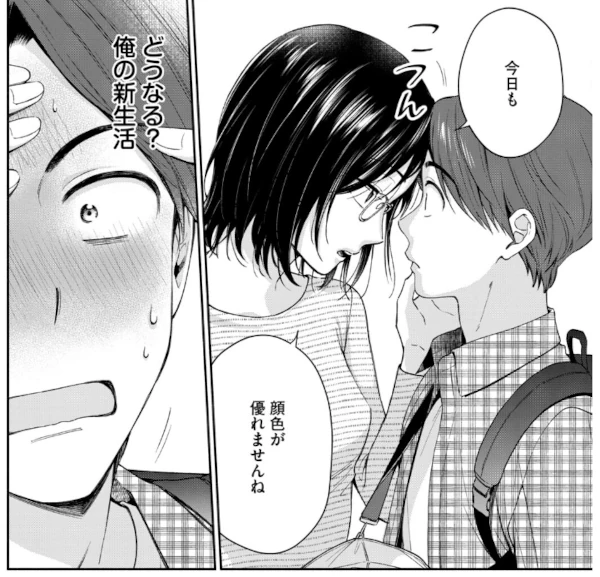
Shinji Yuki, 35 years old—single and still living with his parents. His life is completely ordinary… until one day, something dramatic happens. After helping someone in need, he suddenly finds himself living in a luxury high-rise apartment with five other people—three men and three women! As he struggles to adjust to this unfamiliar shared life, one of his housemates, Eriko Ban, proposes something unexpected: “romance training”…
A pure and awkward step-by-step romantic comedy between two beginners in love begins!
The Appeal of This Manga
This story comically portrays a unique relationship between two people in their mid-30s:
- A man lacking confidence, often described as a “man-child”
- A female doctor who doesn’t quite understand romance
Their unusual dynamic—“romance training”—creates a quirky and engaging premise.
The setup of six unrelated adults living together in a shared house, combined with the rule that romance between housemates is forbidden, adds a sense of excitement and unpredictability to the story.
Overall, it’s a light and easy read that you can enjoy without overthinking.
Why this manga is suitable for learning Japanese
This manga is not only entertaining but also highly recommended for Japanese learners for several reasons.
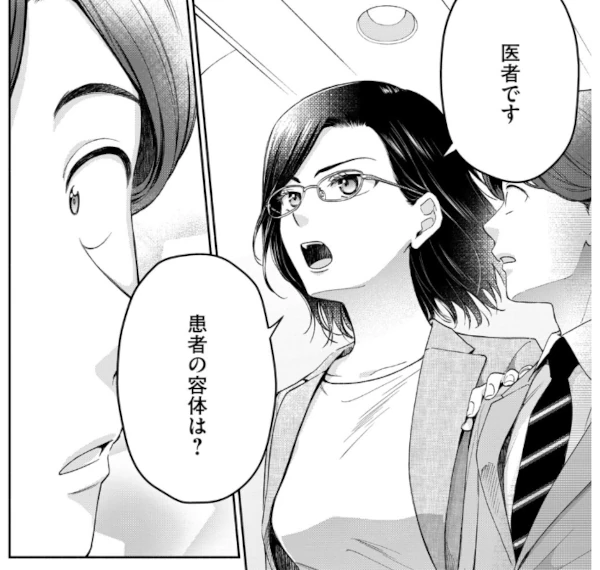
Polite Speech Reflecting Subtle Distance
Since the main characters are in their mid-30s with solid working experience, they don’t suddenly become close.
They maintain polite speech (teineigo) in their conversations, resulting in a high frequency of polite Japanese throughout the story. This makes it especially recommended for beginner learners.
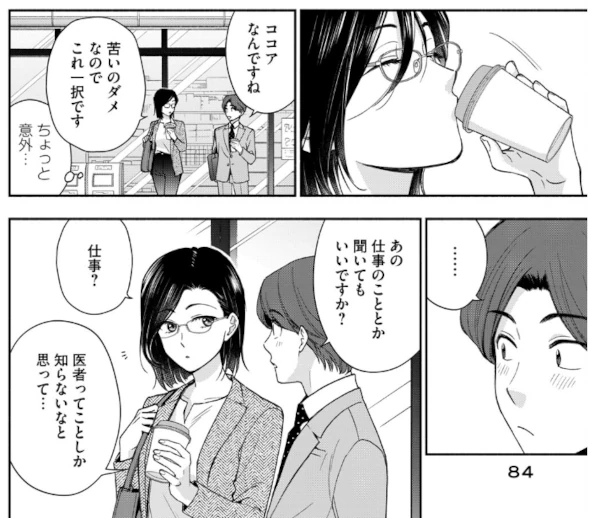
Everyday, Practical Conversations
Because the story focuses on the romantic lives of housemates, most situations are rooted in everyday life.
This means the dialogue is highly practical and can be directly applied to real-life Japanese conversations.
Phrase Spotlight
What Does “Kodooji(こどおじ)” Mean? A Modern Japanese Social Term Explainedこどおじ = 子供部屋おじさん
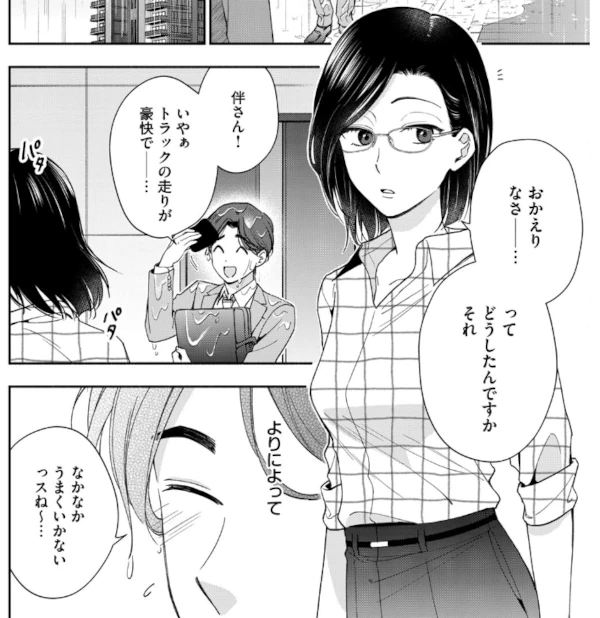
In one scene of the manga, the term 「こどおじ(子供部屋おじさん)」 appears—a word that may puzzle Japanese learners at first glance. What exactly does it mean, and why has it become such a widely recognized expression in Japan?
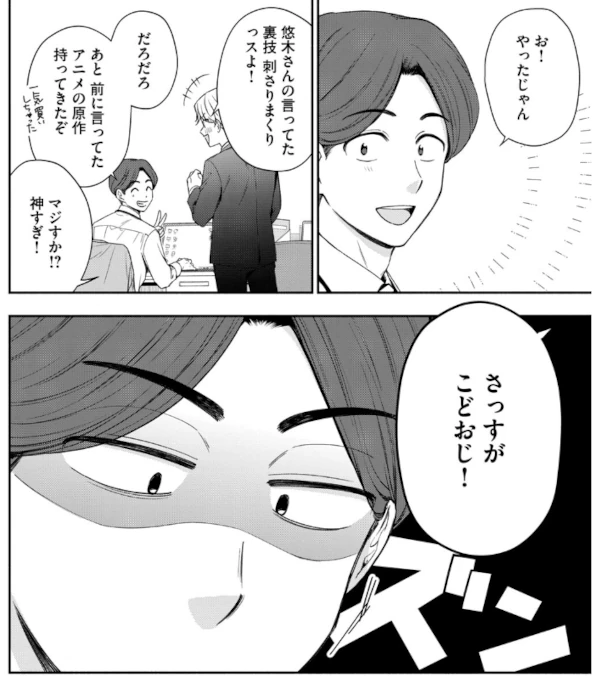
From Internet Slang to Social Label
「こどおじ」 is a shortened form of 「子供部屋おじさん」 (kodomo-beya ojisan), which literally means “a middle-aged man living in his childhood room.” Notably, the term is written in just four hiragana characters, which gives it a slightly childish, playful tone—subtly reinforcing the image it describes.
The term began spreading on Japanese internet forums and social media in the late 2010s. It was often used humorously—or sometimes critically—to describe adult men who continue living with their parents, especially without major changes to their lifestyle since youth.
Over time, it became a widely recognized label, often carrying a slightly negative nuance depending on context.
What “Childhood Room” Means in Japan
To understand this term, it’s important to look at the idea of the 「子供部屋」 (child’s room) in Japanese homes. In Japan, many houses—especially suburban family homes—have a designated room for each child. This room often remains largely unchanged even after the child becomes an adult.
So, when someone is described as living in their “childhood room,” it can imply:
- They are still physically in the same space they grew up in
- Their lifestyle hasn’t fully transitioned into independent adulthood
- They may rely on their parents for daily support (meals, chores, etc.)
However, it’s important to note that living with one’s parents is not unusual in Japan, especially due to economic factors like high living costs or cultural norms around family support.
Social Background: Why the Term Emerged
The rise of 「こどおじ」 reflects several modern social realities in Japan:
- Economic pressure: High rent and unstable employment can make independent living difficult
- Late marriage trends: More people remain single into their 30s and beyond
- Changing values: Traditional expectations about independence are shifting
Because of these factors, more adults live with their parents than in previous generations. The term “kodooji” emerged as a way to comment—sometimes jokingly, sometimes critically—on this situation.
Variations: “Kodoo-ba” and Beyond
There is also a female equivalent:
「子供部屋おばさん」 (kodomo-beya obasan)
This term refers to adult women who, like “kodooji,” continue living in their childhood room at their parents’ home. However, it is used less frequently and does not have as fixed or widely recognized a nuance as 「こどおじ」.
In some cases, it can sound harsher or more sensitive, since expectations around independence and lifestyle can differ for women in Japanese society. Because of this, the term is not used as casually and may feel more critical depending on context.
Overall, expressions like these reflect a broader trend in Japanese of labeling social types with short, memorable phrases—often blending humor with subtle social commentary.
A Word with Humor—and Sensitivity
While 「こどおじ」 is often used humorously in manga, anime, and online culture, it can also be sensitive.
Depending on context, it may:
- Be used jokingly among friends
- Carry a critical or mocking tone
- Reflect real social pressures and anxieties
For Japanese learners, it’s best to understand the nuance—but be cautious about using it casually in real-life conversation.
What This Means for Learners
「こどおじ」 is a great example of modern Japanese slang that reflects both language creativity and social change.
By learning this term, you can:
- Better understand contemporary dialogue in manga and media
- Gain insight into Japanese living situations and generational shifts
- Recognize how humor and criticism often blend in everyday language
Just like 推し (oshi), it shows how Japanese evolves alongside culture—capturing complex social ideas in a single, memorable word.
A Little Warning
A Bit Unrealistic?
The story tends to progress quite smoothly and conveniently at times.
If you prefer more realistic developments, the somewhat idealized, “convenient” plot may feel a bit too fictional.
Work Information
Drama na koi ha kihon kara (ドラマな恋は基本から)<
Author: Enomoto Akamaru
Publisher: KODANSHA
Amount of text: moderate
Challenge level: ★★
Latest volume : Vol.7(Jan.2026 / Ongoing)
Here’s a safe and convenient way to purchase Japanese manga.
This Blog’s ConceptIn this blog, we are introducing manga that are not only highly captivating but also ideal for Japanese language learners. Studying Japanese through manga is both fun and effective. Manga allows you to understand the subtleties of keigo (honorifics), teineigo (polite speech), and casual conversation in Japanese. We hope you find works that match your interests and use them to enhance your Japanese learning journey.