This time, we’re introducing Akuma Nisei—a nostalgic yet eerie manga ideal for Japanese learners.
Work Information
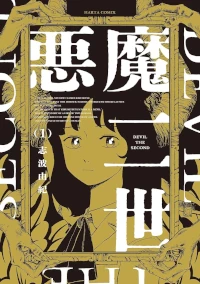
Akuma 2sei(悪魔二世)<
Author: Shiba Yuki
Publisher: KADOKAWA
Amount of text: moderate
Challenge level: ★★
Latest volume : Vol.2(Jul.2025 / Ongoing)
Story overview
“There was no heart in my mother’s body.”
Kikumitsu, a high school student who has just lost her mother, is treated as an unwelcome burden by the relatives she now lives with. The reason? Her father is a “devil.” A story about a second-generation girl who possesses both the overwhelming power of a demon and the gentle heart of a human.
The debut work of rising talent Yuki Shiba!
The Appeal of This Manga
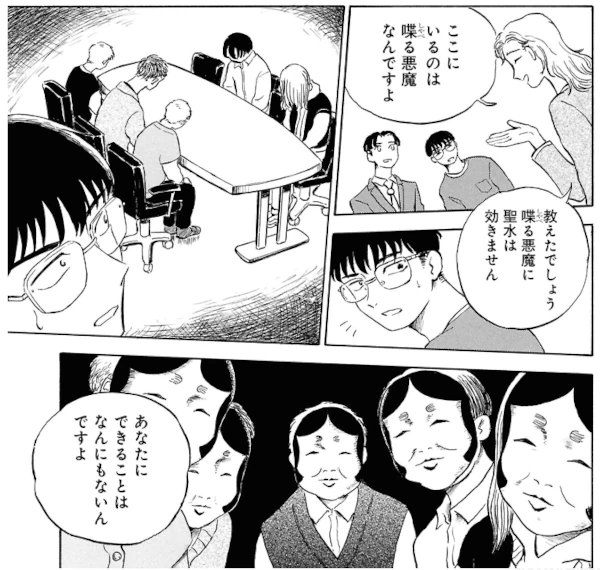
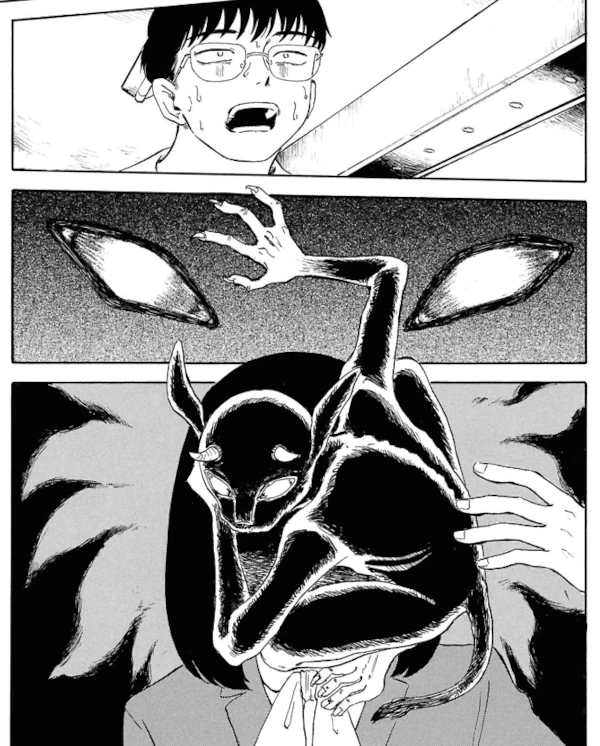
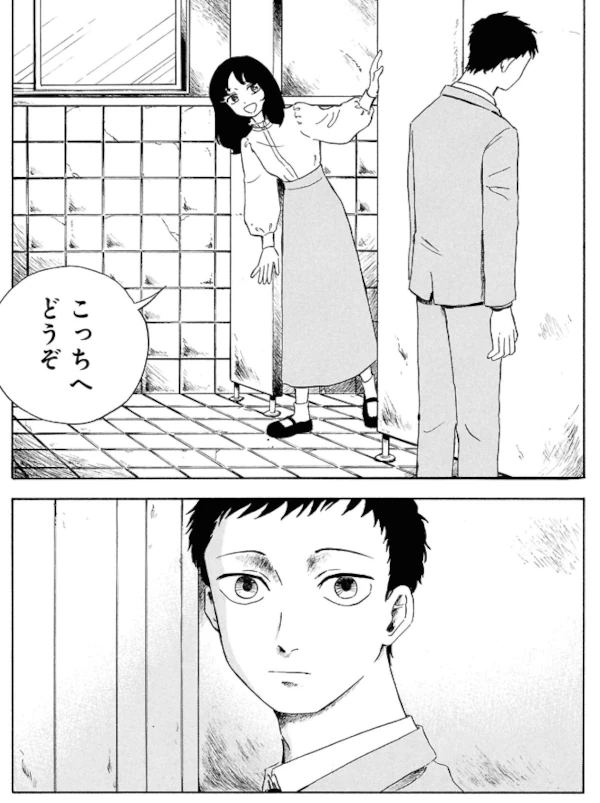
The title and art style evoke a nostalgic yet eerie atmosphere reminiscent of manga from the 1960s–70s (Showa era).
The artwork brings to mind the legendary Shotaro Ishinomori, whose style greatly influenced the history of Japanese manga—and even tokusatsu hero series. Its deliberately old-fashioned feel, uncommon in modern works, gives the manga a strangely compelling and emotionally stirring quality.
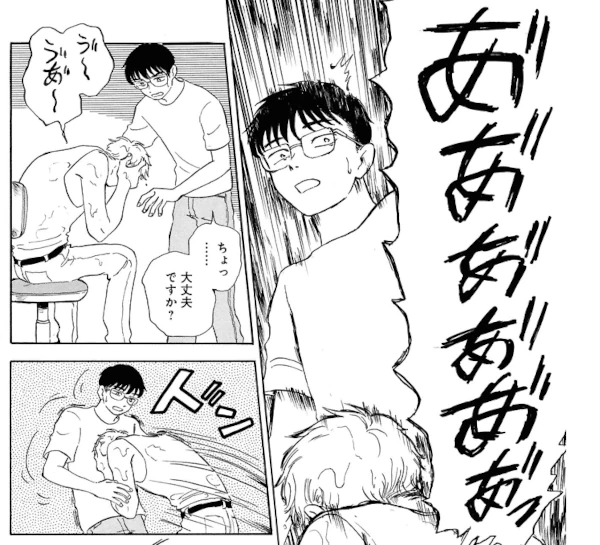
Why this manga is suitable for learning Japanese
This manga is not only entertaining but also highly recommended for Japanese learners for several reasons.
Calm, Matter-of-Fact Dialogue
Despite the intense situations unfolding before them, both Kawashiro and Genma maintain a low-key tone and rarely speak in an overly dramatic or emotional way.
This results in steady, natural-sounding everyday dialogue throughout the story. The conversations avoid exaggerated intensity, offering a sense of realism and many examples of calm, grounded Japanese.
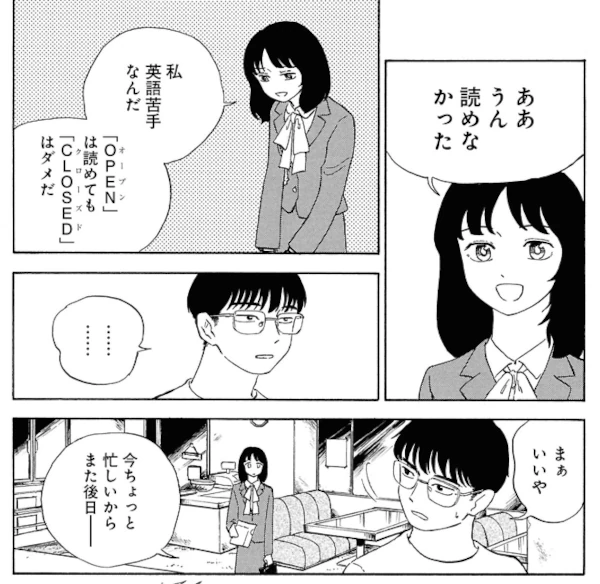
Moderate Amount of Text
Because many scenes focus on building an eerie atmosphere, the overall amount of text is relatively light. This makes the manga approachable and easier to read, especially for beginner Japanese learners.
Culture Spotlight
Why “Evil” Fights for Good: A Guide to Demons and Yokai in Japanese Manga日本マンガにおける悪魔、妖怪、怪物の主人公化
In many stories around the world, demons are clear villains. However, in Japanese manga and anime, it’s surprisingly common for “evil-side” beings to stand on the protagonist’s side.
Instead of being pure enemies, they become complex heroes with dangerous power and inner conflict—a pattern that has been especially popular in Japan for decades.
Giving the Hero “Evil Power”
One key storytelling technique is this:
Give the protagonist the power of the “enemy side.”
This creates two layers of drama:
- Overwhelming strength (because the power is originally “evil”)
- Inner conflict (because the character exists between different worlds or values)
Classic examples include:
Devilman A human who gains the power of a demon to fight other demons—while struggling not to lose his humanity.
Yokai Ningen Bem Humanoid beings who are not human, yet fight for justice while being feared and rejected by society.
GeGeGe no Kitaro A yokai protagonist who stands between humans and supernatural beings, protecting the balance between the two worlds.
Kaibutsu-kun A prince from the monster world who interacts with humans, combining comedy with the perspective of an outsider.
In all of these, the protagonist is:
- Not fully human (or not human at all)
- Not purely “evil”
- Positioned somewhere in between different worlds
This in-between identity is what gives Japanese stories their unique emotional depth.
Why This Works So Well in Japan
This pattern is not just a coincidence—it connects to how “evil” is understood in Japanese culture.
In many Western (especially Christian-influenced) contexts:
- “Demon” = absolute evil
- A clear moral opposition (good vs evil)
In Japan, the situation is different:
- There is no single dominant religious definition of “evil”
- Spiritual beings are often morally ambiguous
As a result:
- A “demon” can be scary, but also sympathetic
- A “monster” can harm people, but also protect them
This flexibility makes it easy to place “evil-side” characters on the protagonist team.
Not All “Monsters” Are the Same
For Japanese learners, it’s important to understand that several similar words exist—but they are not identical.
悪魔 (Akuma – Demon)
- Influenced by Western concepts (especially Christianity)
- Often associated with temptation, contracts, or dark power
- Used frequently in modern fantasy
鬼 (Oni – Ogre/Demon)
- Traditional Japanese folklore creature
- Often depicted with horns, red or blue skin
- Represents punishment, fear, or brute force
妖怪 (Yokai – Supernatural beings)
- Very broad category
- Includes ghosts, spirits, shapeshifters, and strange phenomena
- Can be scary, funny, or even friendly
怪物 (Kaibutsu – Monster)
- More general term (like “monster” in English)
- Often used for creatures that are physically or morally abnormal
Blending Traditions in Modern Manga
Modern manga freely mixes these concepts.
For example:
- A character may be called a “demon” (悪魔)
- But behave more like a yokai (妖怪)
- And have emotional depth like a human
This blending allows creators to:
- Use familiar archetypes
- While adding new interpretations
Why This Theme Never Gets Old
he “demon on the hero’s side” structure continues to be popular because it explores universal themes:
- What does it mean to be human?
- Can someone with dangerous power still be kind?
- Is good vs evil really so simple?
By placing “evil” inside the protagonist, Japanese stories turn external conflict into internal struggle—which is often more compelling.
What This Means for Learners
When you encounter words like:
- 悪魔 (akuma)
- 鬼 (oni)
- 妖怪 (yokai)
Try not to translate them all simply as “demon” or “monster.”
Instead, think about:
- Their cultural background
- Their role in the story
- Whether they are truly “evil” or something more complex
Understanding these nuances will help you:
- Read manga more deeply
- And better grasp how Japanese storytelling works
A Little Warning
Slow-Building Horror
While the manga avoids extreme or graphic imagery, it creates a creeping, lingering sense of fear. If you are not comfortable with subtle, eerie horror, this may not be the best fit for you.
Work Information
Akuma 2sei (悪魔二世)<
Author: Shiba Yuki
Publisher: KADOKAWA
Amount of text: moderate
Challenge level: ★★
Latest volume : Vol.12(Feb.2026 / Ongoing)
Here’s a safe and convenient way to purchase Japanese manga.
This Blog’s ConceptIn this blog, we are introducing manga that are not only highly captivating but also ideal for Japanese language learners. Studying Japanese through manga is both fun and effective. Manga allows you to understand the subtleties of keigo (honorifics), teineigo (polite speech), and casual conversation in Japanese. We hope you find works that match your interests and use them to enhance your Japanese learning journey.