This time, we’re introducing The Lines You Draw Again—a manga perfect for learning natural workplace Japanese and the subtle communication styles of modern Japanese adults.
Work Information
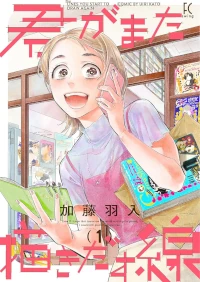
Kimi ga mata kakidasu sen (君がまた描きだす線)<
Author: Katou Uiri
Publisher: SHODENSHA
Amount of text: moderate
Challenge level: ★★
Latest volume : Latest volume : Vol.2(Apr.2026 / Ongoing)
Story overview
The dreams and realities of women fighting through the world of manga.
Glass Candy is a manga editorial production company specializing in comics for women. The people who find their way there include a former voice actress turned editor, a shōjo manga artist who doesn’t want to draw romance stories, and a veteran creator whose emotions rise and fall with every fan letter she receives.
Whether chasing their dreams or giving them up, they are adults who have struggled to remain true to themselves.
Will their feelings ever reach their readers…?
No matter where we are, manga connects us all. This is the story of people who chose “manga” as their way to survive — and now, their story begins.
The Appeal of This Manga
This is a story about characters burdened by the difficulties of living in modern society, portrayed through many different roles connected to shōjo manga — readers, editors, artists, business owners, and more — as they struggle, suffer, and gradually heal.
Its omnibus format is also unusual, as the same characters do not necessarily appear in every chapter.
Some characters are too serious, some cannot navigate social situations gracefully, and others simply find it difficult by nature to fit into society. The manga vividly portrays people exhausted by the hardships of modern life, making it especially relatable for readers who carry similar feelings themselves.
Why this manga is suitable for learning Japanese
This manga is not only entertaining but also highly recommended for Japanese learners for several reasons.
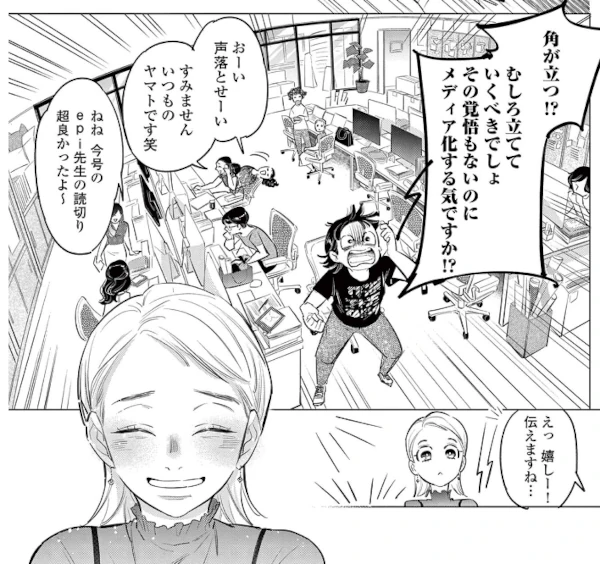
A Lot of Workplace Conversation
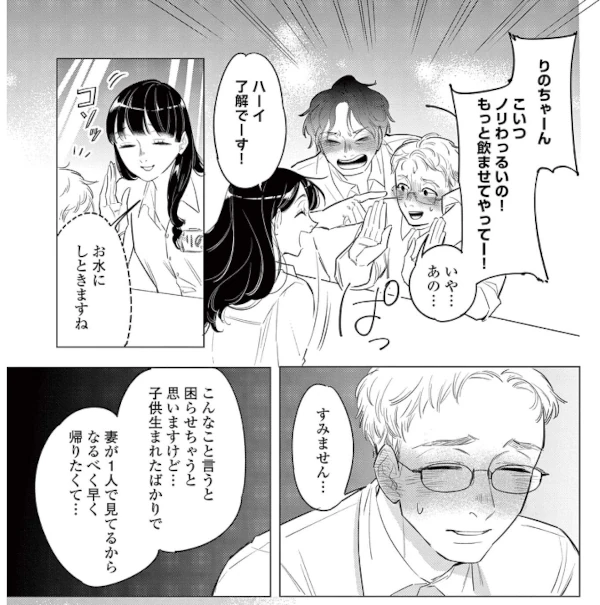
Because most of the characters are working adults — editors, manga artists, and others in the publishing industry — the series contains a high amount of workplace dialogue.
The conversations are generally casual, but not overly informal. It captures the subtle nuance of Japanese business communication: polite, yet relaxed enough to avoid sounding stiff or overly formal.
For Japanese learners, this makes the manga an excellent reference for understanding the natural balance of business politeness used in everyday professional settings.
More Than Just Artists and Editors
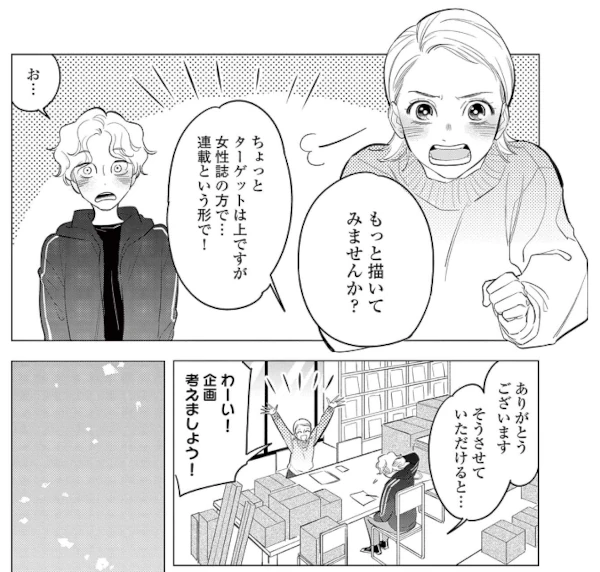
The story also features people outside the immediate manga industry, such as ordinary fans of certain artists or struggling voice actors juggling multiple side jobs.
As a result, readers are exposed not only to the world of shōjo manga, but also to a wide range of conversations exchanged between adults in modern Japanese society.
Culture Spotlight
From Twitter Posts to Cultural Phenomena: Understanding SNS Manga in JapanSNSマンガ
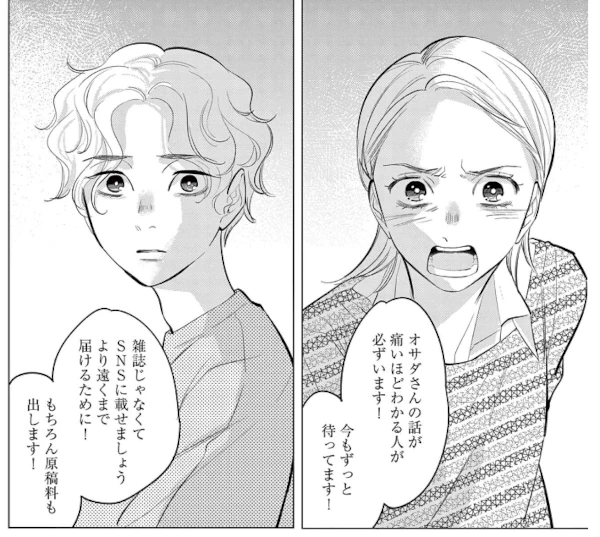
In The Lines You Draw Again, an editor suggests that a manga which may not become a mainstream hit could still strongly resonate with certain readers if it were released on SNS instead of in a traditional manga magazine.
This scene reflects a major change in modern Japanese manga culture.
From Manga Magazines to SNS
For many years, most manga in Japan followed a traditional system:
- artists worked with publishers
- manga was serialized in magazines
- popular series became collected volumes
However, this system often favored works with broad commercial appeal. As a result, more personal, emotionally heavy, or niche stories sometimes struggled to find a place in mainstream magazines.
SNS manga emerged partly as an alternative to this structure.
From Online Posts to Major Hits
Over time, some SNS manga became major cultural phenomena in Japan.
One famous example is 100 Nichigo ni Shinu Wani (“The Crocodile Who Dies in 100 Days”), a manga posted daily on X (Twitter). Readers followed the ordinary daily life of a crocodile character while knowing from the title that he would die in 100 days. The shared countdown experience created enormous online discussion and emotional engagement.
Another well-known SNS manga is Getsuyoubi no Tawawa (“Tawawa on Monday”), which began as weekly illustrations posted online and became widely discussed for its combination of office-worker culture, internet fandom, and controversy over gender representation.
A very different example is Miichan to Yamada-san, a quieter and more emotionally grounded work that resonated strongly with readers who related to feelings of loneliness, awkwardness, and difficulty fitting into society.
These works are all very different in tone, but they share an important characteristic:
They found passionate audiences online before fitting neatly into traditional manga industry categories.
Today, publishers actively watch social media for works that generate strong reader reactions organically.
Why SNS Manga Became Popular
One major reason was the rise of smartphones.
People started reading short manga during commutes, breaks, or before sleeping, making quick and emotionally impactful stories especially effective online.
At the same time, many readers connected deeply with themes such as:
- loneliness
- workplace stress
- social anxiety
- difficulty fitting into society
This is closely connected to The Lines You Draw Again, where many characters struggle with “生きづらさ” — the feeling that modern life is emotionally difficult.
A New Relationship Between Readers and Creators
SNS also changed how readers interact with manga artists.
Readers can now comment, share reactions, and directly encourage creators online.
Because of this, even works with a small audience can survive if they emotionally resonate with dedicated readers.
Today, many successful manga actually begin as SNS manga before becoming printed books, anime, or live-action adaptations.
Why This Matters for Japanese Learners
SNS manga is especially useful for Japanese learners because it often contains:
- natural conversational Japanese
- modern internet expressions
- emotional language
- workplace communication
- casual but realistic dialogue
Unlike highly stylized fantasy manga, SNS manga often reflects how modern Japanese adults actually speak and think.
At the same time, learners can also observe important aspects of modern Japanese society:
- changing work culture
- mental health awareness
- economic insecurity
- online communities
- modern communication styles
Understanding SNS manga therefore helps learners understand not only modern Japanese language, but also the emotional atmosphere of contemporary Japan itself.
A Little Warning
The Themes Can Be Heavy
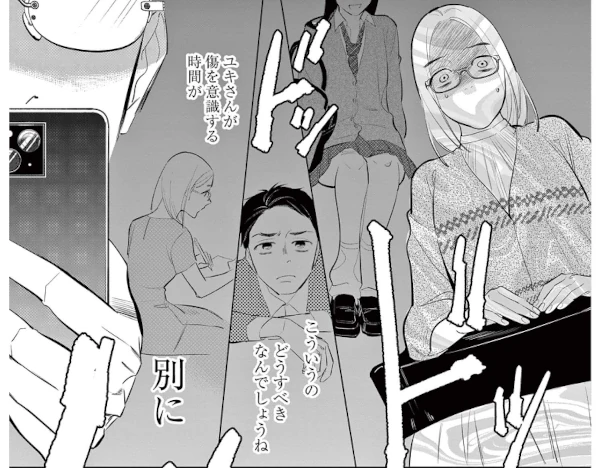
Many of the characters’ struggles, frustrations, and feelings of not fitting into society are portrayed in a serious and emotionally heavy way.
Readers looking for a lighthearted, feel-good story may find it emotionally intense at times.
Work Information
Kimi ga mata kakidasu sen (君がまた描きだす線)<
Author: Katou Uiri
Publisher: SHODENSHA
Amount of text: moderate
Challenge level: ★★
Latest volume : Latest volume : Vol.2(Apr.2026 / Ongoing)
Here’s a safe and convenient way to purchase Japanese manga.
This Blog’s ConceptIn this blog, we are introducing manga that are not only highly captivating but also ideal for Japanese language learners. Studying Japanese through manga is both fun and effective. Manga allows you to understand the subtleties of keigo (honorifics), teineigo (polite speech), and casual conversation in Japanese. We hope you find works that match your interests and use them to enhance your Japanese learning journey.