
This time, we’re introducing Robo no Fujii—a manga that beautifully captures the emotional atmosphere and communication style of modern Japan.
Work Information

Robo no Fujii(路傍のフジイ)
Author: Nabe Kurao
Publisher: SHOGAKUKAN
Amount of text: moderate
Challenge level: ★★
Latest volume : Vol.6(Feb.2026 /Ongoing)
Story overview
A true hero nobody has noticed yet — Fujii!
At work, he seems like an invisible, ordinary single office worker. And yet, the way he lives his life is unbelievably cool.
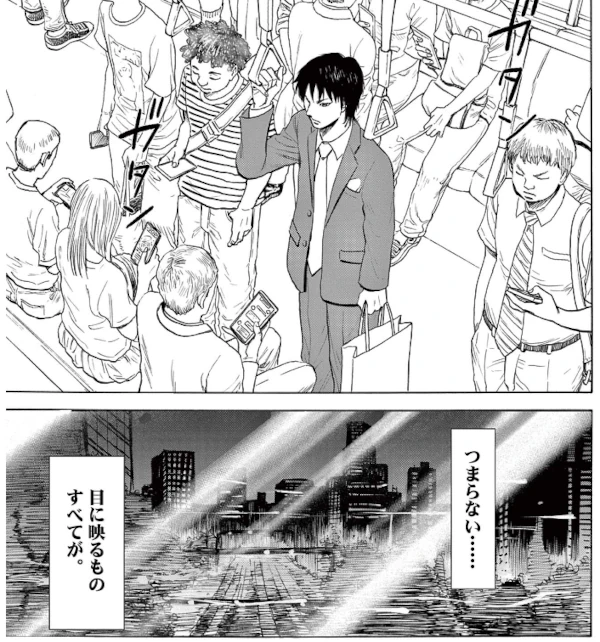
Cost performance, social status, the need for validation — all the things people struggle over somehow start to feel meaningless when faced with him.
Here stands a man living completely outside the value system everyone else is trapped in.
After showcasing his remarkable talent in Reborn no Kishi, author Nabekura Osamu introduces a new kind of Reiwa-era hero: Fujii. Through his quiet but powerful presence, Fujii effortlessly shatters society’s conventional ideas of what “happiness” is supposed to mean.
The Appeal of This Manga
Modern people are constantly aware of appearances and the opinions of others. They compare themselves to others, worry too much about how they are perceived, and gradually begin to feel emotionally suffocated.
At the same time, they become increasingly sensitive to the flaws and behaviors of other people.
But what if someone existed who seemed completely free from all of those pressures? What if the person who appeared the most pathetic by society’s standards was actually the one enjoying life most freely?
This manga follows people like you and me — people trapped inside narrow social expectations — who slowly begin to free themselves after encountering the mysterious young man named Fujii.

Why this manga is suitable for learning Japanese
This manga is not only entertaining but also highly recommended for Japanese learners for several reasons.
A Very High Amount of Polite Japanese
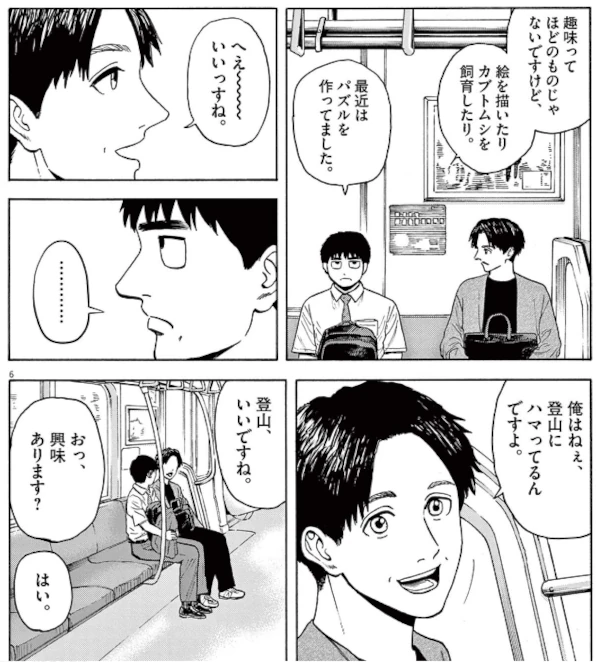
The story mainly focuses on Fujii and his coworkers in adult workplace settings. In addition, Fujii always speaks politely to others, which means the manga contains a very high amount of 丁寧語 (teineigo, polite Japanese).
For Japanese learners who want to become comfortable with polite workplace communication, this makes the series an excellent study resource.
Understanding Modern Japanese Social Distance
In modern Japan, people have become increasingly careful about how they interact with others.
Once people become adults, polite language is commonly used in workplaces and when speaking with new acquaintances. In this manga, Fujii and his coworkers, such as Tanaka and Ishikawa, continue speaking politely to one another without switching to casual speech. In earlier eras of Japan — especially during the Shōwa period or early Heisei era — this kind of language might have been considered distant or overly formal. Today, however, it has become much more normal.
Because of this, the manga offers valuable insight into the atmosphere and interpersonal distance of contemporary Japanese society.

Culture Spotlight
Literary, Dark, and Nostalgic: The Role of Archaic Japanese in Manga Culture路傍のフジイ/路傍の石
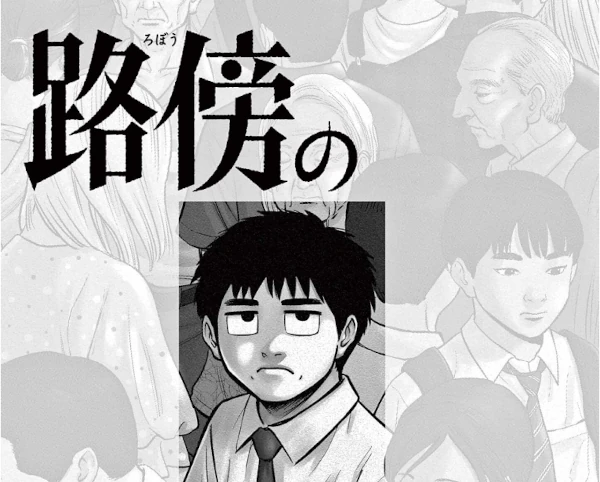
The manga title Robo no Fujii (“Fujii by the Roadside”) may sound unusual to Japanese learners. Part of that feeling comes from the phrase 「路傍の」 (robo no), which has an old-fashioned and literary tone in modern Japanese. In fact, the title is a reference to an older Japanese literary work called Robo no Ishi (“A Stone by the Roadside”).
Understanding this reference helps reveal not only the themes of the manga itself, but also how Japanese creators use retro-sounding language to create atmosphere and emotional depth.
What Is Robo no Ishi?(路傍の石)
Robo no Ishi (“A Stone by the Roadside”) is a famous novel by Japanese author Yamamoto Yūzō.
The title evokes the image of a small stone lying unnoticed beside a road — something ordinary, ignored, and insignificant.
The novel itself deals with themes such as:
- hardship
- loneliness
- personal growth
- quiet perseverance
Even though many younger Japanese people today have never actually read the novel, the phrase 「路傍の石」 still carries a faint literary and nostalgic feeling.
Why Robo no Fujii Uses This Reference
By changing 「石」 (“stone”) into 「フジイ」 (“Fujii”), the manga creates an immediate association with someone overlooked by society.
Fujii appears to be:
- ordinary
- invisible
- socially unremarkable
Much like a “stone by the roadside.”
However, as the story progresses, readers realize that Fujii may actually be freer and happier than the people around him.
The title therefore creates an ironic contrast:
The person society barely notices may be the one who understands life most deeply.
This kind of literary wordplay is common in Japanese manga titles.
Why Use Old-Fashioned Words at All?
Interestingly, most modern Japanese readers — especially younger people — probably know the image of 「路傍の石」 more than the actual story itself. So why would a manga deliberately use such an old-fashioned expression? Because retro or literary-sounding words can create a special emotional effect.
They often give a title a sense of:
- seriousness
- elegance
- mystery
- artistic weight
- lingering emotional atmosphere
Even native Japanese speakers may feel:
“This sounds old… but also meaningful.”
In other words, the unfamiliar or archaic feeling itself becomes part of the title’s appeal.
Other Manga Titles with Similar Effects
Aku no Hana (惡の華:“The Flowers of Evil”)
The Les Fleurs du mal-inspired title Aku no Hana uses the phrase 「〜の花」 in a literary and dramatic way rather than casual modern Japanese.
The manga also intentionally writes “evil” as 「惡」 instead of the modern kanji 「悪」. Today, 「惡」 is a very old-style form that modern Japanese people rarely see in everyday life, which gives the title an archaic, darker, and more artistic feeling.
Together, these choices create an atmosphere of psychological darkness and adolescence before the story even begins.
Mushishi(蟲師)
Mushishi uses the kanji 「蟲」 instead of the more modern 「虫」 for “insect.” Today, 「蟲」 feels archaic and somewhat eerie to Japanese readers.
That single character helps create the manga’s mysterious and folkloric atmosphere.
Kimetsu no Yaiba(鬼滅の刃)
Demon Slayer: Kimetsu no Yaiba also contains a slightly old-fashioned expression. The word 「鬼滅」 (kimetsu) is not something people normally say in everyday Japanese. It sounds severe, classical, and dramatic — almost like the title of an old legend or historical tale.
That tone gives the series a stronger sense of myth and gravitas.
What This Means for Japanese Learners
For learners of Japanese, these titles are a good reminder that language is not only about literal meaning.
Sometimes creators intentionally choose words that feel:
- older
- heavier
- stranger
- more literary
because those sounds create emotional atmosphere before the story even begins.
By noticing these nuances, learners can better understand how Japanese manga titles often communicate mood, genre, and cultural associations in subtle ways.
A Little Warning
The Story Is Very Subtle
Although the manga has a unique sense of humor, the main focus is on the characters’ personal worries and emotional struggles. As a result, the story progression is generally quiet and understated.
Readers looking for fast-paced or highly cathartic entertainment may find the series too subdued.
Work Information
Robo no Fujii(路傍のフジイ)
Author: Nabe Kurao
Publisher: SHOGAKUKAN
Amount of text: moderate
Challenge level: ★★
Latest volume : Vol.6(Feb.2026 /Ongoing)
Here’s a safe and convenient way to purchase Japanese manga.
This Blog’s ConceptIn this blog, we are introducing manga that are not only highly captivating but also ideal for Japanese language learners. Studying Japanese through manga is both fun and effective. Manga allows you to understand the subtleties of keigo (honorifics), teineigo (polite speech), and casual conversation in Japanese. We hope you find works that match your interests and use them to enhance your Japanese learning journey.