
This time, we’re introducing Houkago Kitaku Biyori—a gentle青春 manga full of approachable everyday Japanese and charming after-school moments.
Work Information
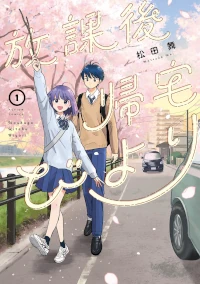
Hokago Kitaku Biyori(放課後帰宅びより)<
Author: Matsuda Mai
Publisher: FUTABASHA
Amount of text: moderate
Challenge level: ★
Latest volume : Vol.5(Oct.2025 /Ongoing)
Story overview
A boy encounters the upperclassman who will change his gray, colorless everyday life.
Shun Satō was once considered a promising young soccer player, but after an injury forced him to give up on his dream, he entered high school unable to find any real hope or motivation. There, he meets Naoki Satō — nicknamed “Chokki-chan” — a strange upperclassman whose favorite phrase is simply: “I want to go home.” Even though he never once said he wanted to join, Shun somehow ends up being dragged into the activities of the suspicious-sounding “Hyper Going-Home Club.” As he gets swept along by Naoki’s unpredictable pace, Shun slowly begins to feel his dull everyday life regain color.
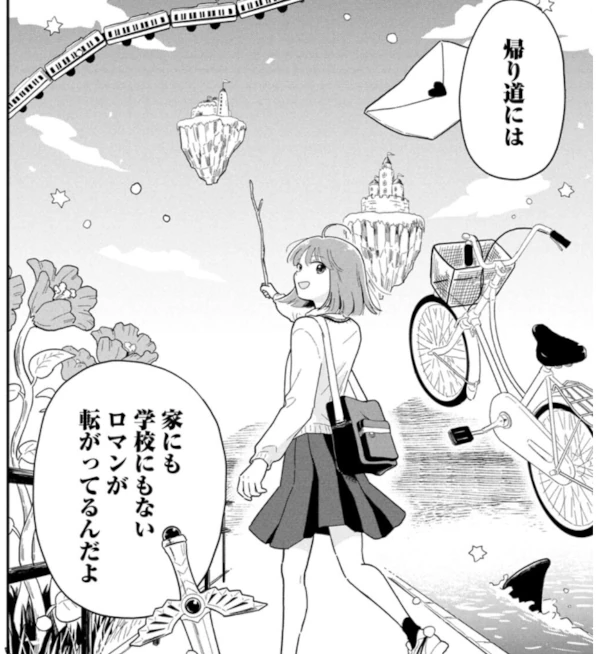
A laid-back youth romantic comedy about a girl who loves detours after school and a freshman boy who has lost his dream.
The Appeal of This Manga
Shun, a first-year high school student, suddenly finds himself walking home every day with an eccentric and somewhat mysterious upperclassman. The manga focuses on the uniquely Japanese experience of “going home after school” — something that is both completely ordinary and somehow emotionally special for students. Together with the strange yet charming Naoki, the characters spend time in quiet everyday settings where nothing especially dramatic happens. And that is exactly what makes the series so appealing.
This is a wonderfully relaxing青春 (seishun, youth) romantic comedy that can be enjoyed both by current students and by adults nostalgic for their school days.
Why this manga is suitable for learning Japanese
This manga is not only entertaining but also highly recommended for Japanese learners for several reasons.
Clear and Standard Polite Japanese
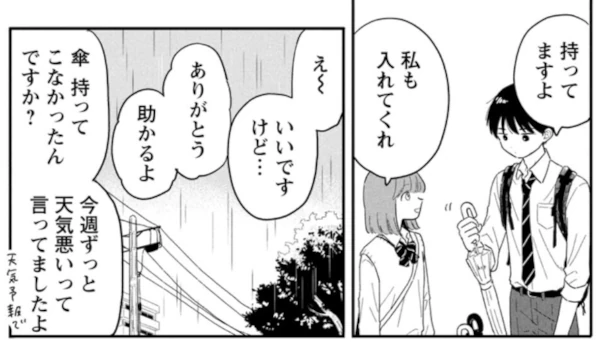
Because Naoki is a second-year student and Shun is a first-year student, Shun speaks to her using polite Japanese.
Importantly, his speech is not overly casual or filled with trendy youth slang. Instead, he uses standard and natural 丁寧語 (teineigo, polite Japanese), making the manga a very good model for beginner Japanese learners.
Everyday Situations and Vocabulary
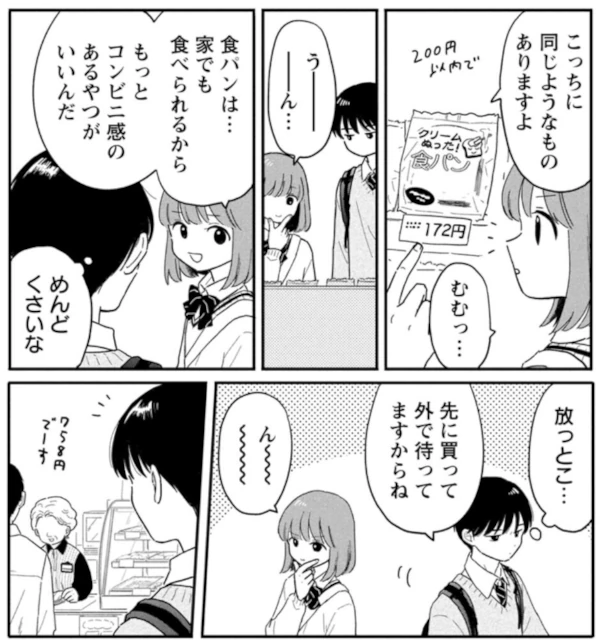
Since the manga focuses on ordinary student life and youthful everyday experiences, both the situations and vocabulary are deeply rooted in daily life. Compared to genres such as fantasy or action manga, this makes the series easier and more approachable for beginner learners of Japanese.
Culture Spotlight
Why Walking Home After School Feels So Emotional in Japan放課後・帰宅時間
In Houkago Kitaku Biyori, much of the story focuses not on dramatic events, but simply on high school students walking home together after school. To many Japanese readers, this “after-school journey home” carries a surprisingly emotional and nostalgic feeling.
For Japanese learners, understanding this atmosphere can help explain why scenes of students walking home appear so often in manga, anime, and dramas.
An Ordinary Time That Feels Extraordinary
On the surface, going home after school is completely ordinary. Students leave school, chat with friends, stop by convenience stores, or slowly head back home before dinner. And yet, in Japanese youth stories, this time often feels emotionally special.
Why?
Because it exists in a strange space between:
- school responsibilities
- family life
- childhood and adulthood
Unlike class time, teachers are gone. Unlike home, parents are not present yet.
For many students, this becomes one of the few moments of freedom in daily life.
Walking Home with Someone You Like
One of the most common romantic manga scenes is: “Walking home together with someone you like.” In Japan, this can feel surprisingly intimate.
Even if two students are not officially dating, simply asking:
「一緒に帰る?」 (“Want to walk home together?”)
can carry romantic tension.
Because Japanese school life often emphasizes group behavior and social restraint, being alone together after school can feel emotionally significant. This is one reason “the walk home” appears so often in青春 (seishun, youth) stories.
Buying Snacks on the Way Home
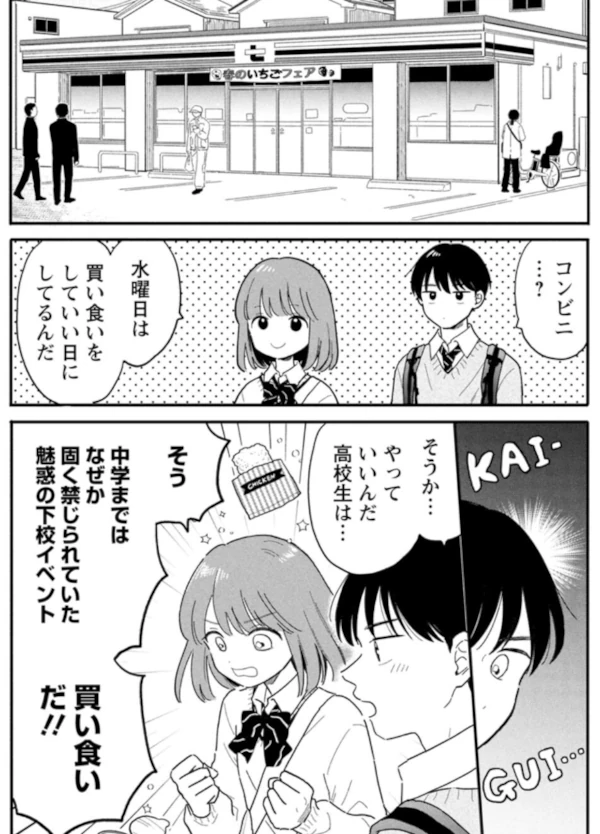
Another classic after-school activity is 買い食い (kuigui) — casually buying and eating snacks while walking home.
Students may stop for:
- convenience store snacks
- nikuman (meat buns)
- croquettes
- ice cream
- cheap fast food
Technically, some schools discourage this behavior. Precisely because of that, it can feel slightly rebellious and exciting in a harmless teenage way.
These tiny moments often become emotionally memorable in Japanese fiction.
The Romance of Sharing an Umbrella
One especially famous manga trope is 相合い傘 (aiai-gasa) — sharing an umbrella. During sudden rain, two students walk closely together under a single umbrella on the way home.
To Japanese audiences, this scene immediately suggests:
- romantic tension
- awkwardness
- emotional closeness
- youthful innocence
Even today, simply sharing an umbrella can still feel surprisingly intimate in Japanese culture.
Why This Atmosphere Feels So “Emotional” in Japan
Many Japanese adults look back on after-school time with strong nostalgia. The setting sun, quiet residential streets, convenience stores, train crossings, and conversations on the walk home all became symbolic parts of青春 (seishun, youth). As a result, modern manga often treats “going home after school” not simply as transportation, but as:
“a temporary emotional space where small but meaningful memories are created.”
That quiet emotional atmosphere — often called “エモい” (emoi, emotionally nostalgic or moving) in modern Japanese — is exactly what works like Houkago Kitaku Biyori try to capture.
A Little Warning
Be Careful with Naoki’s Speech Style
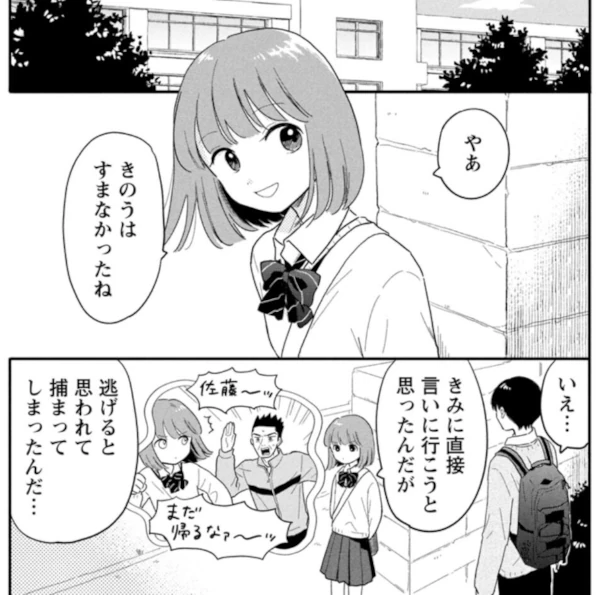
Naoki, the heroine and leader of the “Hyper Going-Home Club,” has a very unusual way of speaking.
Like some fictional characters in Japanese media, she uses an old-fashioned and overly dignified speech style that ordinary modern Japanese girls would almost never use in real life.
If learners imitate Naoki’s way of speaking exactly, people around them may react with awkward laughter — so it is best appreciated as part of her unique character charm rather than as a model for everyday conversation.
Work Information
Hokago Kitaku Biyori(放課後帰宅びより)<
Author: Matsuda Mai
Publisher: FUTABASHA
Amount of text: moderate
Challenge level: ★
Latest volume : Vol.5(Oct.2025 /Ongoing)
Here’s a safe and convenient way to purchase Japanese manga.
This Blog’s ConceptIn this blog, we are introducing manga that are not only highly captivating but also ideal for Japanese language learners. Studying Japanese through manga is both fun and effective. Manga allows you to understand the subtleties of keigo (honorifics), teineigo (polite speech), and casual conversation in Japanese. We hope you find works that match your interests and use them to enhance your Japanese learning journey.