
This time, we’re introducing Oshi ga Budokan Ittekuretara Shinu (Oshi Budo)—a manga perfect for learners who want to explore modern Japanese fandom culture while studying natural polite conversation.
Work Information
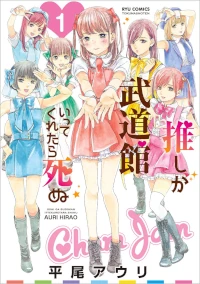
Oshi ga Budokan ittekuretara shinu(推しが武道館いってくれたら死ぬ)
Author: Hirao Auri
Publisher: TOKUMASHOTEN
Amount of text: moderate
Challenge level: ★★
Latest volume : vol.12(Dec.2025 / Ongoing)
Story overview
There is a passionate fan who has devoted her entire life to supporting Maina, the shy and socially awkward least-popular member of ChamJam, a small underground idol group based in Okayama Prefecture. Her name is Eripiyo.
She spends nearly all of her income on supporting her favorite idol, so she still wears the same red tracksuit she had in high school. She loves Maina so much that she once got a nosebleed during a live performance. A true legend among idol fans.
Until the day Maina stands on the stage of the legendary Budokan arena, Eripiyo will continue pouring her heart, soul, and every ounce of energy into her idol fandom activities.
The Appeal of This Manga
The protagonist is a young woman who dedicates herself to supporting one of the least popular members of an already little-known underground idol group—a world that rarely receives attention from mainstream media.
Rather than portraying fans supporting already successful stars, the manga focuses on a uniquely Japanese aspect of idol culture: oshi culture(推し活)—the act of passionately supporting an idol or group that is still growing and far from achieving mainstream success.
Why do fans choose to support an unpopular group? Why would someone spend a large portion of their savings for just a few seconds of conversation or a handshake with their favorite idol?
To people unfamiliar with Japanese idol fandom, these behaviors may seem strange or difficult to understand. Yet this manga offers a surprisingly heartfelt and insightful look into the emotions, motivations, and sense of purpose that drive devoted fans.
By the end, you may find yourself understanding Japanese oshi culture far better than before.
Why this manga is suitable for learning Japanese
This manga is not only entertaining but also highly recommended for Japanese learners for several reasons.
The Unique Distance Between Fellow Fans
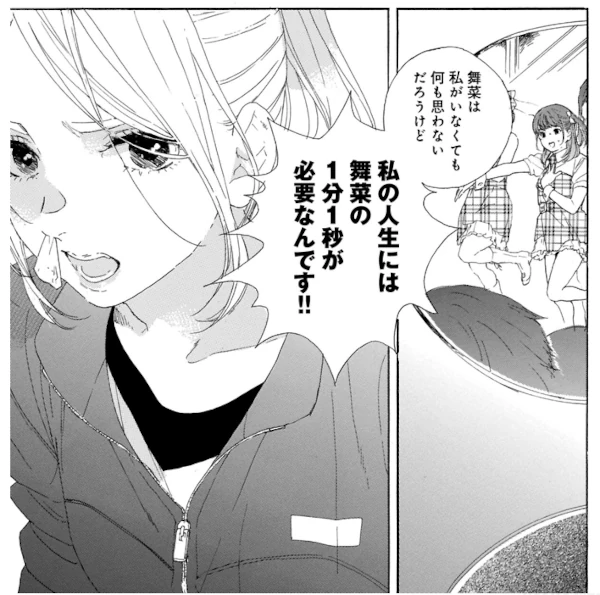
Eripiyo and the other fans who support ChamJam often spend time together and attend events as a group. However, they are not exactly close friends.
Instead, they are connected through a shared passion as oshi-katsu(推し活)companions—people united by their support for the same idols. Because of this, their conversations often use polite language while still feeling friendly and relaxed.
For Japanese learners, this provides an excellent example of how Japanese people can maintain a comfortable social distance without sounding cold or unfriendly.
A High Amount of Polite Japanese
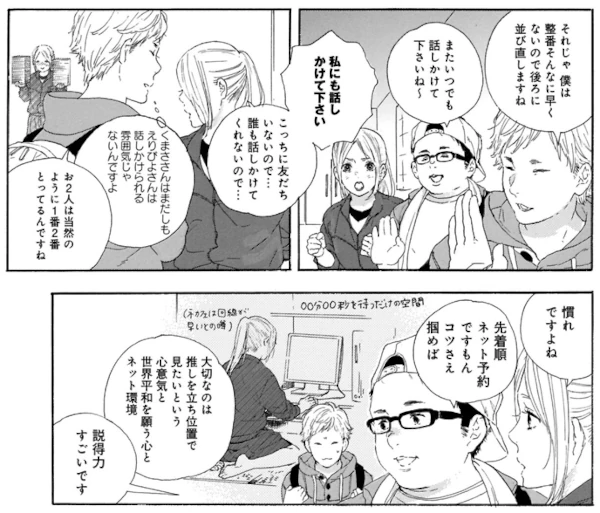
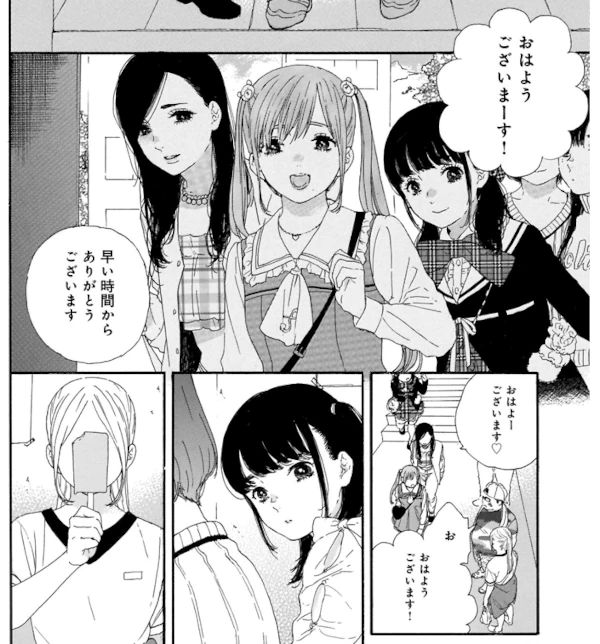
Many idols in the series also speak politely to their fans. (Some idols choose a more casual style to create a sense of closeness, but Maina and others frequently use polite speech.)
As a result, the manga contains a relatively high amount of teineigo (polite Japanese), making it particularly accessible for beginner learners who want exposure to natural, everyday polite conversation.
Culture Spotlight
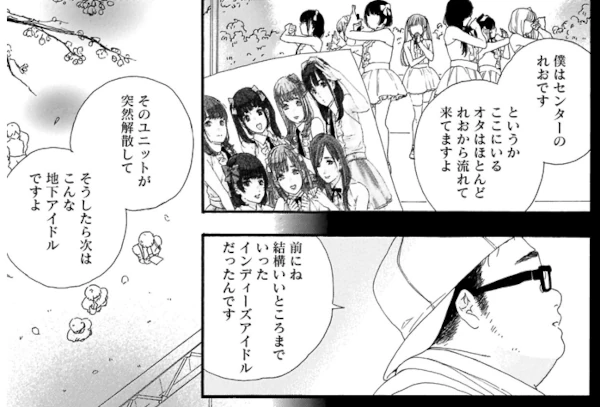
More Than Just Underground: The Hidden Nuance of 地下 in Japanese Culture地下アイドル
In Oshi ga Budokan Ittekuretara Shinu, the main characters support a group known as a 地下アイドル (chika aidoru, underground idol). To Japanese learners, the word 地下 simply means “underground.” However, in Japanese, 地下 often carries a much stronger emotional and cultural nuance than its literal meaning suggests.
Understanding this nuance helps explain why the world of underground idols feels so unique—and why stories about them resonate with many Japanese readers.
The Image of “Underground” in Japanese
In English, underground culture can sometimes sound cool, artistic, or rebellious.
Japanese also uses 地下 to describe activities outside the mainstream, but the word often carries additional feelings of:
- obscurity
- marginality
- instability
- social awkwardness
- lack of recognition
For many Japanese people, 地下 suggests something that exists outside the spotlight.
It is not necessarily illegal or dangerous, but it often feels slightly removed from the “proper” or “official” world.
Examples include:
- 地下ライブ (small underground concerts)
- 地下劇団 (small independent theater groups)
- 地下格闘技 (unofficial fighting events)
- 地下アイドル (underground idols)
- 地下芸人(struggling comedian)
In each case, the activity exists, but without the prestige, visibility, or legitimacy associated with major institutions.
Not Criminal, but Not Quite Mainstream
One interesting aspect of Japanese 地下 culture is that it often occupies a gray area in the public imagination. People do not usually think underground idols are doing anything wrong. However, the word can create a subtle feeling that participants are pursuing something uncertain, unconventional, or difficult to explain to outsiders. A major idol performing at the Budokan arena represents success and social recognition.
A 地下アイドル, by contrast, may perform for a few dozen fans in a small venue. The gap between those two worlds is enormous.
Because of this, the word 地下 often evokes a sense of struggling outside the center of society.
Why Fans Are Drawn to It
Ironically, this lack of status is part of the appeal. Fans are not supporting someone who has already succeeded. They are supporting someone who might succeed one day. The emotional reward comes from watching growth, sharing hardships, and feeling that their support genuinely matters.
This is one reason why the Japanese word 推し (oshi) became so closely connected to underground idol culture. Fans are not merely consumers—they see themselves as active supporters helping someone pursue a dream.
What It Means for Learners
For learners of Japanese, 地下 is a useful example of how words carry cultural associations beyond their dictionary definitions. In many contexts, 地下 does not simply mean “below ground.” It can suggest something hidden, overlooked, unconventional, or struggling outside the mainstream. That is why the title Oshi ga Budokan Ittekuretara Shinu feels so meaningful.
The story is not about famous stars at the top of the entertainment world. It is about people who begin in the “underground”—far from recognition, far from success—and the fans who choose to believe in them anyway.
Understanding that nuance helps explain not only underground idols, but also a broader Japanese fascination with cheering for those who have not yet reached the spotlight.
A Little Warning
Unusual Nicknames
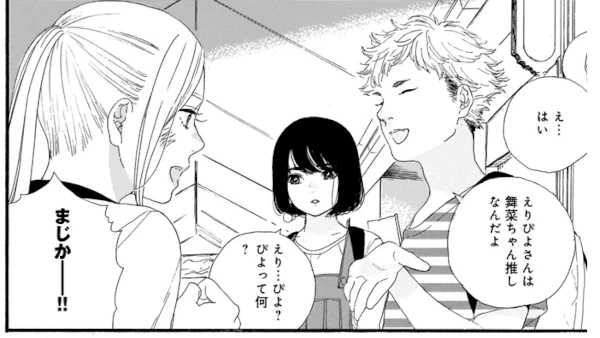
The series features characters with distinctive nicknames such as Eripiyo and Kumasa. The nuances behind these names may be difficult for beginner learners to fully understand. Fortunately, many Japanese readers react to them in much the same way:
“That’s kind of a strange nickname, isn’t it?”
So don’t worry too much about analyzing them. They’re simply part of the quirky charm of the series and its characters.
Work Information
Oshi ga Budokan ittekuretara shinu(推しが武道館いってくれたら死ぬ)
Author: Hirao Auri
Publisher: TOKUMASHOTEN
Amount of text: moderate
Challenge level: ★★
Latest volume : vol.12(Dec.2025 / Ongoing)
Here’s a safe and convenient way to purchase Japanese manga.
This Blog’s ConceptIn this blog, we are introducing manga that are not only highly captivating but also ideal for Japanese language learners. Studying Japanese through manga is both fun and effective. Manga allows you to understand the subtleties of keigo (honorifics), teineigo (polite speech), and casual conversation in Japanese. We hope you find works that match your interests and use them to enhance your Japanese learning journey.