
This time, we’re introducing Sensei, Kongetsu Dō Desu ka?—a gentle romance manga perfect for learning natural polite Japanese and everyday conversation.
Work Information

Sensei Kongetsu Doudesuka? 先生、今月どうですか
Author: Takaesu yaya
Publisher: KADOKAWA
Amount of text: sparse
Challenge level: ★
Latest volume : vol.7(Jul.2025 / Completed)
Story overview
A once-a-month romance between a high school girl and a struggling novelist.
“Apparently, my future husband is a novelist sixteen years older than me who can’t even pay his rent.” Murasaki Sakuma is a high school student who helps manage her family’s apartment building, Corpo Sakuma. Her first love is Banri Shijima, an unsuccessful novelist living in Room 103. Every month, Murasaki finds herself chasing down her perpetually late-paying tenant—whom she respectfully calls “Sensei”—while slowly nurturing her very first love.
A heartfelt and straightforward romance serialized in Harta, beloved by readers for its gentle storytelling.
The Appeal of This Manga
Although it begins with a slightly whimsical premise, this series is, at its core, a refreshingly classic romance manga.
Unlike many modern romance stories that rely on dramatic twists, flashy gimmicks, or heavy comedy, this manga focuses on something much simpler: a young girl slowly and sincerely deepening her feelings for someone she loves.
The setting itself also feels pleasantly old-fashioned. A family-run apartment building, a struggling novelist tenant, handwritten manuscripts, and quiet everyday interactions evoke an atmosphere reminiscent of Japan’s Shōwa era.
Yet that very sense of nostalgia has made the series feel surprisingly fresh to contemporary readers.
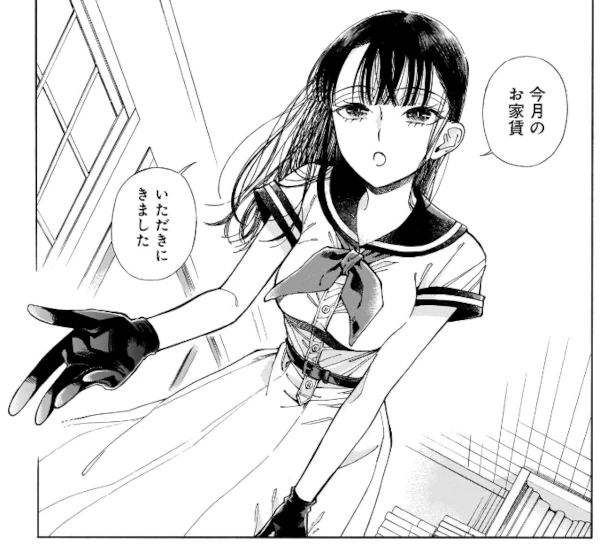
Why this manga is suitable for learning Japanese
This manga is not only entertaining but also highly recommended for Japanese learners for several reasons.
Clear and Honest Polite Japanese
Murasaki always speaks to Sensei using polite Japanese. Her speech is natural, sincere, and free from unusual expressions or slang, making it an excellent model for beginner learners.
Because Murasaki is a serious and courteous person, she often speaks politely not only to Sensei but also to classmates and younger students, resulting in a high amount of everyday 丁寧語 (teineigo, polite Japanese) throughout the series.
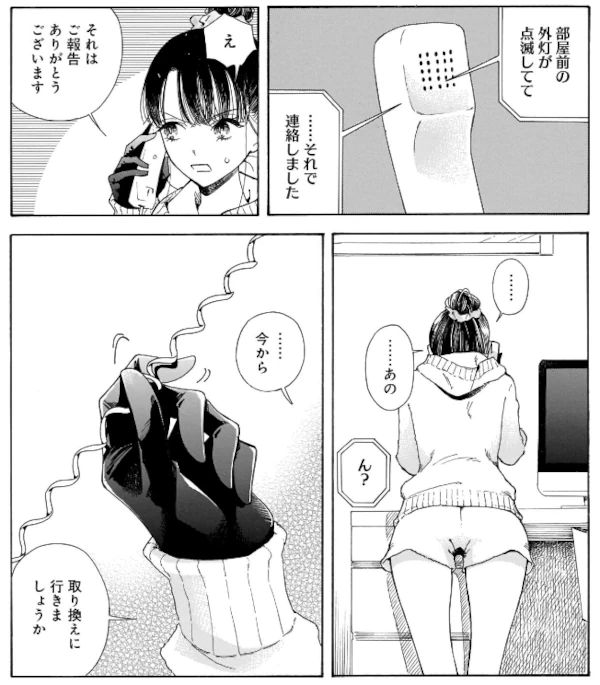
Short and Easy-to-Follow Dialogue
The conversations in this manga are generally simple, realistic, and concise. Long explanations, complicated vocabulary, and abstract discussions are rare. Instead, the dialogue feels like snippets of real everyday conversation.
This low dialogue density makes the manga particularly approachable for beginner Japanese learners who may feel overwhelmed by more text-heavy series.
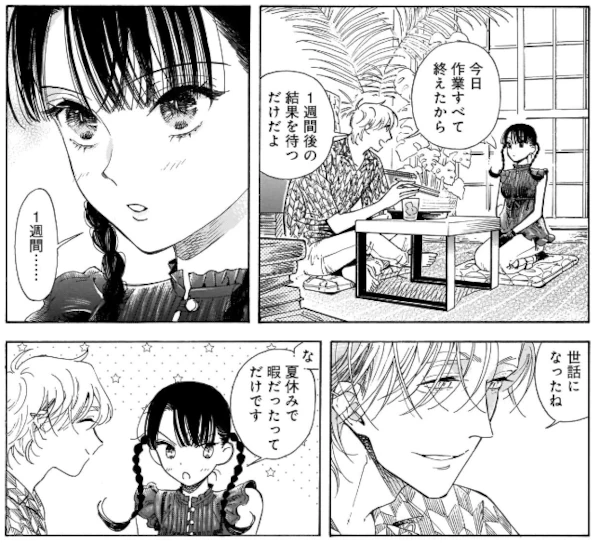
Culture Spotlight
From Dazai to Modern Manga: The Romantic Myth of the Struggling Novelist売れない小説家というロマン
In Sensei, How About This Month?, the heroine falls in love with a novelist who can barely pay his rent. For many modern readers, this setup may feel unusual. Why a novelist? Why not a screenwriter, game creator, or YouTuber?
The answer lies in a long-standing cultural image that exists in Japanese literature and popular culture: the romantic figure of the struggling novelist.
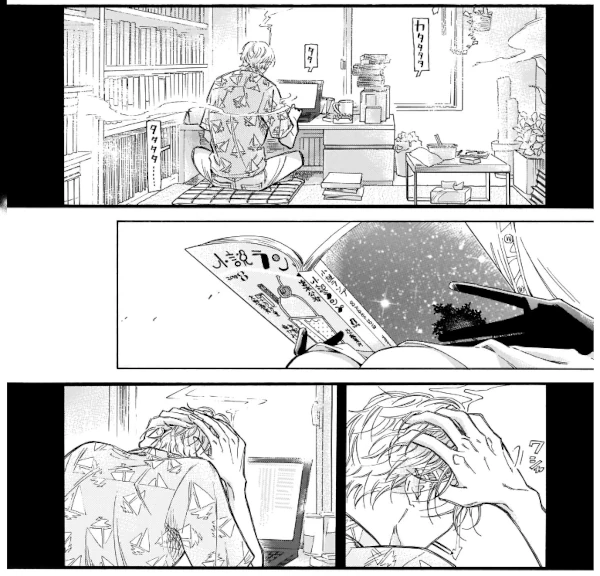
The Novelist as a Romantic Figure
For more than a century, Japanese readers have admired writers not only for their works, but also for the lives they lived.
Figures such as Natsume Sōseki, Ryūnosuke Akutagawa, and Osamu Dazai helped create a particular image of the writer in the Japanese imagination.
The novelist became someone who was:
- Intelligent, but poor
- Talented, but socially awkward
- Bad at everyday life, but gifted with words
In other words, a person whose value could not be measured by money or social success. This image became a recurring character type in Japanese novels, films, and manga.
Why Not a Screenwriter?
In modern fiction, writers are sometimes replaced by screenwriters, manga creators, or other creative professionals. Yet something often changes. A struggling screenwriter may feel realistic, but not necessarily romantic. Part of the reason is that a novelist is traditionally imagined as a solitary figure.
They sit alone, confronting their thoughts and transforming them into words. A screenwriter, by contrast, is usually associated with a larger industry involving producers, directors, television stations, and commercial success. The novelist feels like an individual dreamer. The screenwriter feels more like a professional worker.
That subtle difference affects how audiences perceive them.
The Literary Origins of the Struggling Novelist
The romantic image of the struggling writer has deep roots in Japanese literature. Classic works such as The Dancing Girl of Izu and The Setting Sun helped popularize stories about sensitive young intellectuals, poverty, and romance. Perhaps the most influential figure was Osamu Dazai, whose public image became closely associated with the idea of a brilliant but troubled writer struggling through life.
Even today, many fictional novelists inherit traces of this literary tradition. In that sense, the protagonist of Sensei, How About This Month? belongs to a character type that Japanese readers have recognized and admired for generations.
A Classic Theme That Almost Disappeared
For many years, Japanese romance manga moved toward more contemporary settings. Characters became office workers, celebrities, gamers, influencers, or people with highly marketable professions. As a result, the old-fashioned image of “a girl falling in love with a struggling novelist” gradually became rare.
To younger readers, it can even feel like something borrowed from a Shōwa-era romance novel. That is precisely why Sensei, How About This Month? stands out. Rather than modernizing the premise, it embraces it completely.
- A high school girl.
- A shabby apartment building.
- A novelist who cannot pay his rent.
- A slow and sincere romance.
The setup feels almost timeless.
What It Means for Learners
For learners of Japanese, this manga offers an interesting glimpse into how cultural images survive over time. Even if few people today dream of becoming novelists, the image of the poor but talented writer still carries a certain romantic appeal in Japan. Understanding that appeal helps explain why a series like Sensei, How About This Month? resonates with readers.
It is not simply a love story.
It is also a modern reinterpretation of one of the oldest romantic archetypes in Japanese fiction: the writer whose words are richer than his wallet.
A Little Warning
Occasional Smoking Scenes
Unlike many contemporary manga, this series occasionally depicts characters smoking. These scenes are not a major focus of the story, but readers who strongly dislike seeing smoking portrayed in fiction may find them somewhat distracting.

Work Information
Sensei Kongetsu Doudesuka? 先生、今月どうですか
Author: Takaesu yaya
Publisher: KADOKAWA
Amount of text: sparse
Challenge level: ★
Latest volume : vol.7(Jul.2025 / Completed)
Here’s a safe and convenient way to purchase Japanese manga.
This Blog’s ConceptIn this blog, we are introducing manga that are not only highly captivating but also ideal for Japanese language learners. Studying Japanese through manga is both fun and effective. Manga allows you to understand the subtleties of keigo (honorifics), teineigo (polite speech), and casual conversation in Japanese. We hope you find works that match your interests and use them to enhance your Japanese learning journey.