
This time, we’re introducing Hon nara Uruhodo—a gentle human drama that’s perfect for learning natural business Japanese and exploring Japan’s rich literary culture.
Work Information
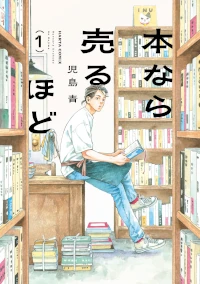
Hon nara Uruhodo (本なら売るほど)
Author: Kojima Ao
Publisher: KADOKAWA
Amount of text: moderate
Challenge level: ★★
Latest volume : Vol.3(Apr.2026 / Ongoing)
Story overview
This is a place where books and people are given a second chance to meet.
Jūgatsudō is a small secondhand bookstore run by a quiet young man with his hair tied back. Drawn by the owner’s gentle personality and carefully curated selection of books, all kinds of customers stop by each day. A loyal bibliophile. A high school girl eager to broaden her horizons. A man looking to dispose of unwanted books. A widow selling her late husband’s treasured library. A single book picked up on a whim becomes the beginning of an unexpected connection.
A heartfelt human drama dedicated to everyone who has loved books—or had their lives changed by them.
The Appeal of This Manga
The story follows the young owner of a secondhand bookstore, unfolding at a gentle, unhurried pace. Through his interactions with customers, readers gain fascinating glimpses into the world of antiquarian books, the unexpected relationships between people and the books they cherish, and the human stories that emerge through them.
Not every episode is directly about books. One memorable story, for example, centers on a young woman with a deep appreciation for traditional kimono. What ties these stories together is their focus on people who choose to embrace a more old-fashioned way of life.
The manga also casually introduces both Japanese and world literary classics, along with lesser-known but highly respected authors, without ever feeling overly academic. For adult readers who enjoy books and literature, it is an especially rewarding read.
Why this manga is suitable for learning Japanese
This manga is not only entertaining but also highly recommended for Japanese learners for several reasons.
Natural Business Polite Japanese
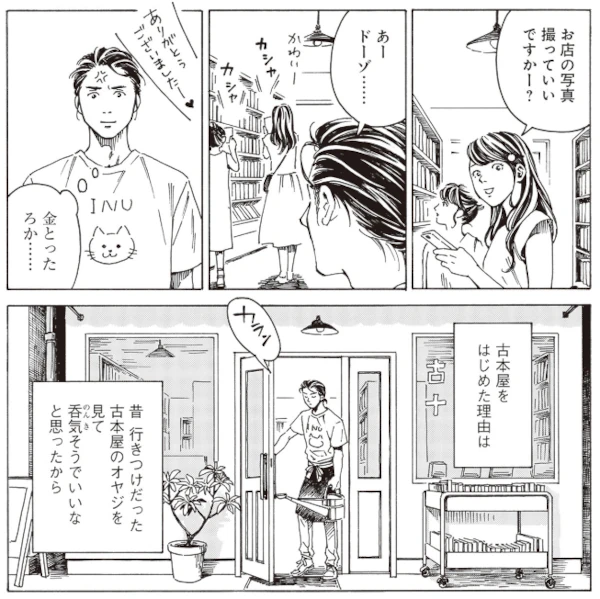
Because the protagonist runs an independent bookstore, much of the dialogue takes place between the shopkeeper and his customers.
Rather than the highly formal language often heard in large companies or luxury stores, the manga features relaxed, natural business Japanese—the kind of polite speech commonly used in small local businesses.
The level of politeness also changes depending on who the owner is speaking with, whether an elderly customer, a young student, or a familiar regular. Occasionally, conversations even shift into casual speech. This variety provides valuable examples of how Japanese speakers naturally adjust their language to different social situations.
References to Japanese Literature
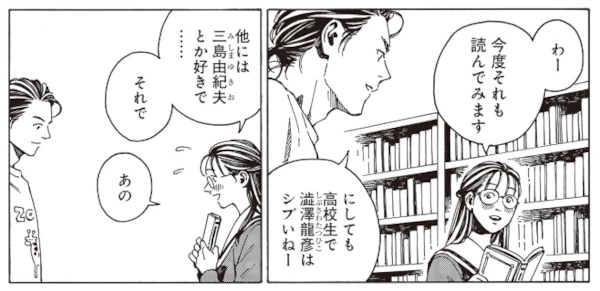
The manga frequently mentions major figures and works from modern Japanese literature, making it an excellent choice for readers interested in Japan’s literary tradition.
Rather than simply listing famous names, the story naturally weaves in each author’s reputation, writing style, and cultural significance, offering insight into how these writers are viewed by Japanese readers today.
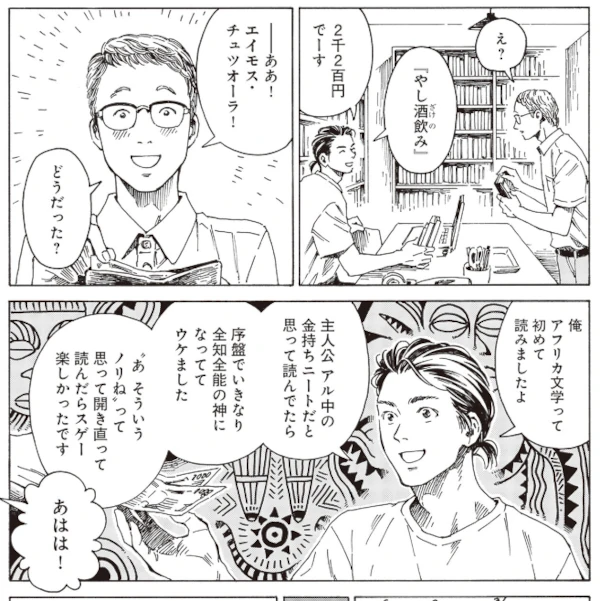
The series also references world literature. In Volume 1 alone, readers will encounter classics such as The Palm-Wine Drinkard and The Brothers Karamazov.
Culture Spotlight
The Rise and Decline of Japan’s Bookstores: Why Secondhand Bookshops Still Matter日本の古書店事情
One of the charms of Hon nara Uruhodo is its setting: a small independent secondhand bookstore.
While these shops have become increasingly rare in modern Japan, they were once a familiar part of everyday life. Understanding their history helps explain why the manga feels both nostalgic and distinctly Japanese.
When Every Town Had a Bookstore
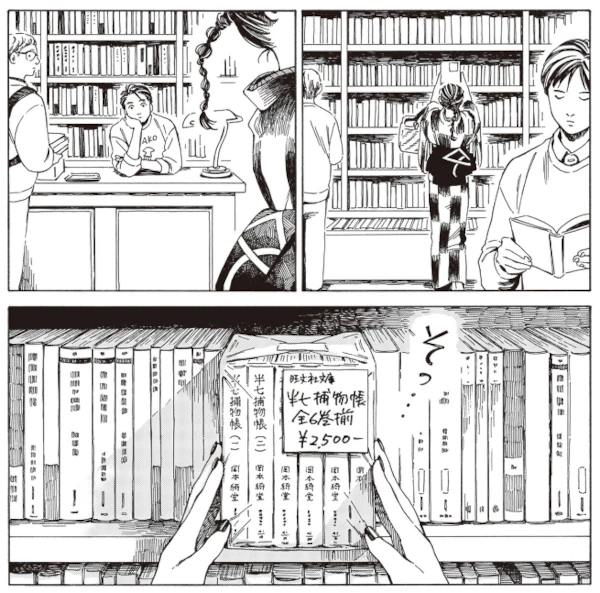
Until the 1990s, it was common for even medium-sized Japanese towns to have both new bookstores (書店 / shoten) and secondhand bookstores (古書店 / koshoten). New bookstores sold the latest releases, while secondhand bookstores offered everything from inexpensive novels to out-of-print classics, academic books, and rare first editions. Many readers regularly visited both. They might buy a new bestseller at one shop, then spend an afternoon browsing older titles at another, never knowing what hidden gem they might discover.
For many Japanese people, bookstores were not simply places to shop—they were places to wander and make unexpected discoveries.
Why So Many Bookstores Disappeared
Over the past two decades, both new and secondhand bookstores have declined dramatically. New bookstores have struggled with Japan’s shrinking population, changing reading habits, online shopping, and digital books.
Independent secondhand bookstores have faced additional competition from large chains such as Book Off, which standardized buying and selling used books, as well as online marketplaces like Amazon and Mercari, where almost any title can be found with a few clicks.
As a result, many of the small family-run bookstores that once defined Japanese neighborhoods have quietly disappeared.
Jimbocho: A Book Town with a New Global Audience
Not every bookstore district has faded away.
Jimbocho, a neighborhood in Tokyo often called Japan’s “book town,” remains one of the world’s largest concentrations of secondhand bookstores. In recent years, it has attracted growing numbers of international visitors looking for Japanese literature, manga, art books, and beautifully printed older editions. Rather than competing with online retailers, many of these bookstores have become destinations where visitors enjoy the experience of browsing shelves, discovering unexpected books, and appreciating the atmosphere itself.
Ironically, while many local bookstores disappeared, one of Japan’s oldest book districts has found new life through global interest.
What It Means for Japanese Learners
For learners of Japanese, this manga offers more than a glimpse into a disappearing profession.
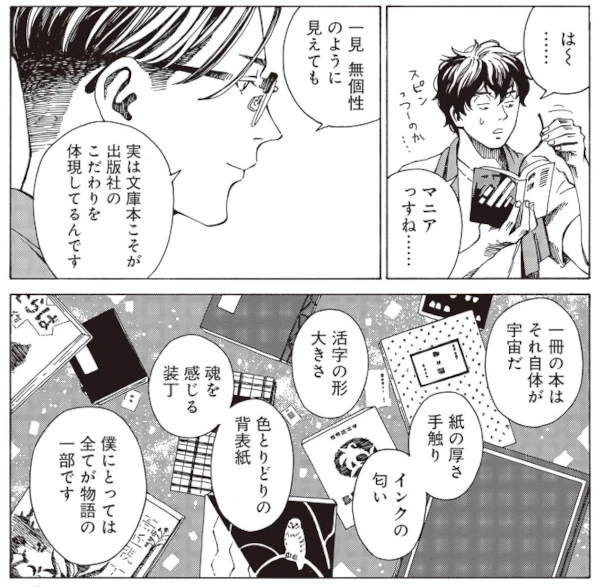
It introduces an aspect of Japanese culture in which books are valued not only for the information they contain, but also for the memories, history, and personal connections they carry.
Learning words such as 古本 (used book), 古書 (rare or antiquarian book), and 古書店 (secondhand bookstore) also provides insight into a literary culture where browsing can be as meaningful as buying.
In that sense, Hon nara Uruhodo is not simply a story about a bookstore—it is a celebration of the enduring relationship between books and the people whose lives they touch.
A Little Warning
A Mature, Literature-Focused Read
Because the series revolves around books, authors, and the world of secondhand bookstores, it has a distinctly literary atmosphere throughout.
If you’re looking for fast-paced action, dramatic romance, or laugh-out-loud comedy, this may not be the best choice. However, readers who enjoy thoughtful storytelling and a quiet appreciation for literature are likely to find it deeply satisfying.
Work Information
Hon nara Uruhodo (本なら売るほど)
Author: Kojima Ao
Publisher: KADOKAWA
Amount of text: moderate
Challenge level: ★★
Latest volume : Vol.3(Apr.2026 / Ongoing)
Here’s a safe and convenient way to purchase Japanese manga.
This Blog’s ConceptIn this blog, we are introducing manga that are not only highly captivating but also ideal for Japanese language learners. Studying Japanese through manga is both fun and effective. Manga allows you to understand the subtleties of keigo (honorifics), teineigo (polite speech), and casual conversation in Japanese. We hope you find works that match your interests and use them to enhance your Japanese learning journey.