This time, we’re introducing The Woebegone Wonder Girl Wants to Be Wicked—a delightful reijo fantasy filled with graceful Japanese.
Work Information
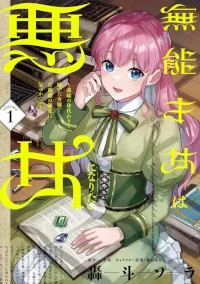
The Woebegone Wonder Girl Wants to Be Wicked(無能才女は悪女になりたい)
Author: Goto Sora / Ichibusaki
Publisher: KADOKAWA
Amount of text: moderate
Challenge level: ★★
Latest volume : Vol.4(Apr.2026 / Ongoing)
Story overview
“I’m going to marry as the infamous villainess.”
Avril is forced to marry an elderly duke known as a shameless womanizer, taking the place of her notorious younger stepsister, who is famous for being a “villainess.” But when she arrives at the duke’s estate, she discovers that Dylan—the man awaiting her—is nothing like the rumors. Instead of a cruel old nobleman, he is a handsome young gentleman. Dylan proposes an unusual arrangement: a contract marriage that will end in divorce after three years. For Avril, who longs for freedom, it’s the perfect deal, and she happily accepts.
As she awkwardly—but earnestly—tries to play the role of a villainess, the people around her gradually begin to see her in a completely different light…
The Appeal of This Manga
Through an unexpected twist of fate, Avril finds herself married into a ducal family under the false reputation of being both untalented and a villainess. In reality, however, she is everything a villainess is not—kind-hearted, modest, intelligent, courteous, compassionate, and charmingly absent-minded.
The story’s greatest appeal lies in its delightful contrast: while Avril sincerely tries to behave like the wicked noblewoman everyone expects, those around her can’t help but admire her genuine kindness instead. The result is a heartwarming romantic fantasy that feels like a gently twisted Cinderella story.
Even among the many reijō (“noble lady”) fantasy series popular today, this one stands out for its straightforward storytelling, lovable characters, and easy-to-follow plot, making it an excellent introduction to the genre.
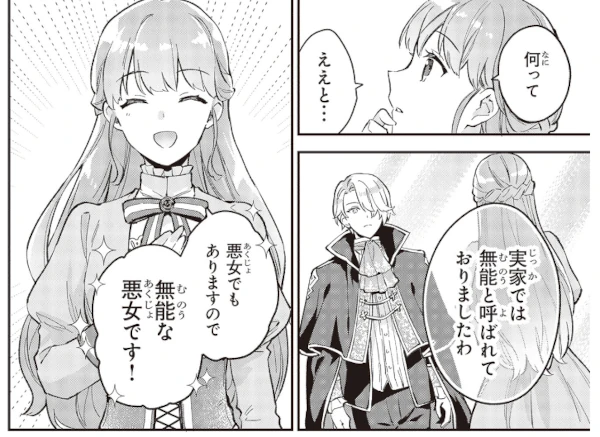
Why this manga is suitable for learning Japanese
This manga is not only entertaining but also highly recommended for Japanese learners for several reasons.
Graceful and Polite Japanese
Despite her fearsome reputation, Avril speaks with remarkable grace and humility. Her Japanese is soft, respectful, and considerate, leaving a positive impression on nearly everyone she meets.
For learners, her speech provides an excellent model of elegant everyday politeness. While it isn’t the formal business Japanese used in offices, it demonstrates how kindness and good manners can be expressed naturally through language.
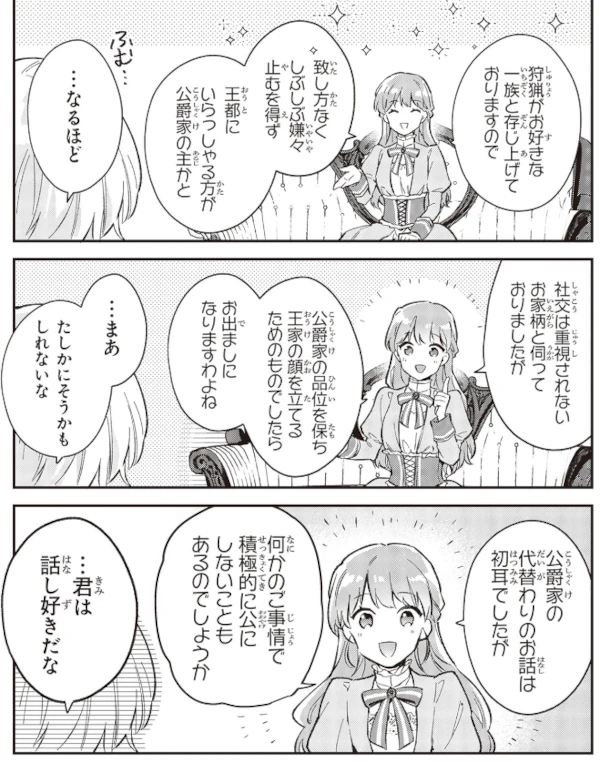
Furigana on Every Kanji
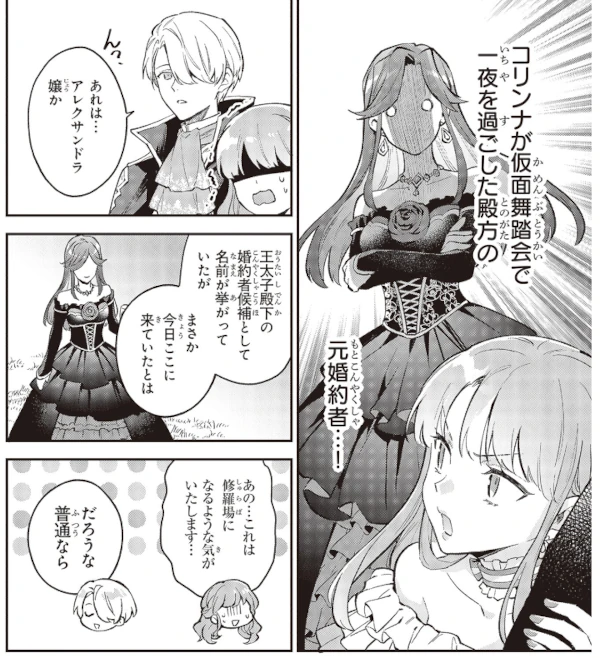
One of the manga’s biggest advantages for Japanese learners is that every kanji is accompanied by furigana. This makes reading much smoother, allowing learners to focus on understanding the story instead of constantly stopping to look up pronunciations.
It’s an especially beginner-friendly feature that makes the series far less intimidating than many other fantasy manga.
Culture Spotlight
The Curious World of 「〜ですわ」: Why Elegant Ladies Still Speak This Way in Japanese Fictionお嬢様系語尾
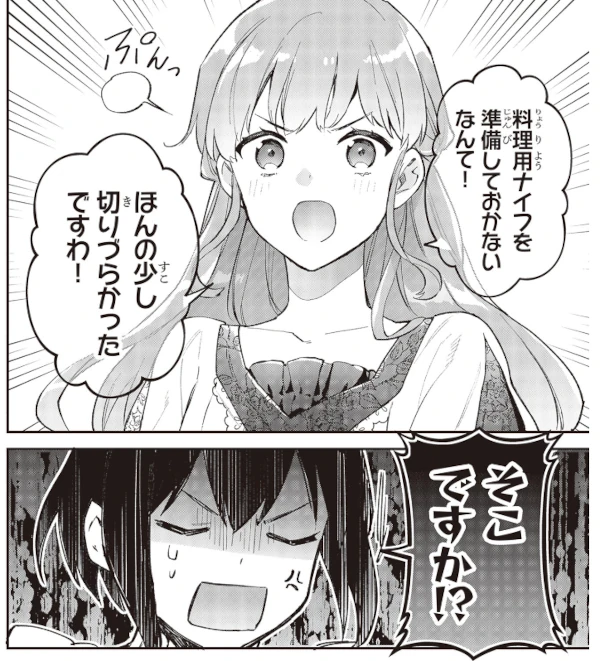
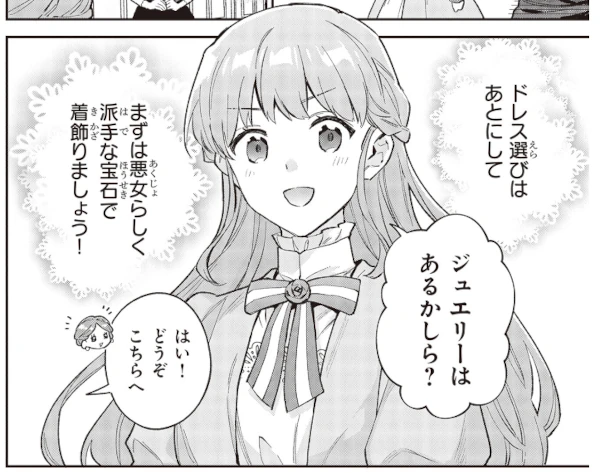
One of the most distinctive features of The Woebegone Wonder Girl Wants to Be Wicked is the heroine’s speech. Because Avril is a noble lady, she frequently ends her sentences with expressions like 「〜ですわ」 and 「〜かしら」.
For Japanese learners, these phrases may sound elegant—or even old-fashioned. The interesting part is that, despite appearing everywhere in manga, anime, and games, almost nobody speaks like this in everyday Japan today.
So why does this style of speech continue to appear so often?
A Language Once Associated with Upper-Class Women
Expressions such as 「〜ですわ」, 「〜ですの」, and 「〜かしら」 originated as refined forms of speech used by women from wealthy or aristocratic families during the late nineteenth and early twentieth centuries. At the time, daughters of elite households often received education at prestigious girls’ schools, where graceful speech was considered an important part of proper etiquette. Not every upper-class woman spoke exactly this way, but these expressions became strongly associated with elegance, refinement, and high social status.
Over time, they came to symbolize the image of the ojō-sama—the refined young lady of a distinguished family.
From Reality to Fiction
As Japanese society became more egalitarian after World War II, this style of speech gradually disappeared from everyday life. Today, it is extremely rare to hear someone naturally say 「〜ですわ」 in ordinary conversation.
Instead, these expressions survive mainly in fiction. Much like the formal language heard in samurai dramas, they immediately communicate a character’s background without any explanation.
The moment a character says:
「そうですわ。」
Japanese readers instantly imagine someone elegant, wealthy, and well educated. In other words, 「ですわ」 has become a storytelling shortcut.
A Language That Creates Character
Modern manga and anime often rely on recognizable speech patterns to make characters memorable.
For example:
- samurai use archaic expressions
- elderly characters speak differently from teenagers
- people from Osaka often use the Kansai dialect
- refined noble ladies may use 「ですわ」
These speech styles are known as yakuwarigo (役割語)—“role language.” Rather than reflecting how real people actually speak, they help audiences immediately recognize a character’s personality, background, or social status.
The “ojō-sama” speech found in reijo fantasy manga is one of the best-known examples of yakuwarigo.
Why Has 「ですわ」 Never Disappeared?
Although almost no one speaks this way in daily life, “ojō-sama speech” has never completely vanished.
In fact, it has found new life online. Many VTubers, livestreamers, and internet personalities deliberately use 「ですわ」 as part of their character. Some play the role sincerely, while others use it humorously or ironically.
Audiences immediately recognize the persona:
“Ah, this character is an elegant young lady.”
Because everyone already understands the cultural image attached to 「ですわ」, creators can use it even in completely modern settings. Rather than being an outdated relic, it has become a shared cultural symbol that continues to evolve.
What It Means for Japanese Learners
For learners, it is important to remember that 「〜ですわ」 is something you should recognize—not imitate in everyday conversation. Unless you’re acting in a play, role-playing an aristocratic character, or joking with friends, using 「ですわ」 yourself would sound unusual to most Japanese people.
However, understanding it is extremely useful because it appears frequently in:
- reijo fantasy manga
- romance manga
- anime
- visual novels
- games featuring noble families
Learning these expressions also helps you appreciate how Japanese fiction uses language to build memorable characters.
Just as English fiction might portray a medieval knight or Victorian noble with distinctive speech, Japanese stories use expressions like 「ですわ」 to instantly evoke a world of elegance, tradition, and aristocratic refinement.
And that is precisely why The Woebegone Wonder Girl Wants to Be Wicked is such an enjoyable read for Japanese learners—it offers a chance not only to study polite Japanese, but also to experience one of the most iconic speech styles in Japanese popular culture.
A Little Warning
Be Careful with “Desu wa(ですわ)”
Because Avril and many of the female characters come from aristocratic families, they often speak in an exaggerated form of ojō-sama Japanese—the refined speech style stereotypically associated with wealthy young ladies. You’ll occasionally hear sentence endings such as ですわ (desu wa) or かしら (kashira).
While these expressions are instantly recognizable in manga and anime, they sound overly theatrical in modern everyday conversation. Unless you’re intentionally imitating an elegant noblewoman, it’s best to admire them as part of the story rather than imitate them in real life.
Work Information
The Woebegone Wonder Girl Wants to Be Wicked(無能才女は悪女になりたい)
Author: Goto Sora / Ichibusaki
Publisher: KADOKAWA
Amount of text: moderate
Challenge level: ★★
Latest volume : Vol.4(Apr.2026 / Ongoing)
Here’s a safe and convenient way to purchase Japanese manga.
This Blog’s ConceptIn this blog, we are introducing manga that are not only highly captivating but also ideal for Japanese language learners. Studying Japanese through manga is both fun and effective. Manga allows you to understand the subtleties of keigo (honorifics), teineigo (polite speech), and casual conversation in Japanese. We hope you find works that match your interests and use them to enhance your Japanese learning journey.