
This time, we’re introducing Otakon no Susume—a heartwarming romantic comedy that’s perfect for learning polite Japanese and exploring modern otaku culture.
Work Information

Otakon no susume(オタ婚のススメ!)
Author: Sunahaki Shinsha
Publisher: KADOKAWA
Amount of text: moderate
Challenge level: ★★
Latest volume : Vol.4(Mar.2026 / Ongoing)
Story overview
Two otaku + one fake marriage = the ultimate married life!
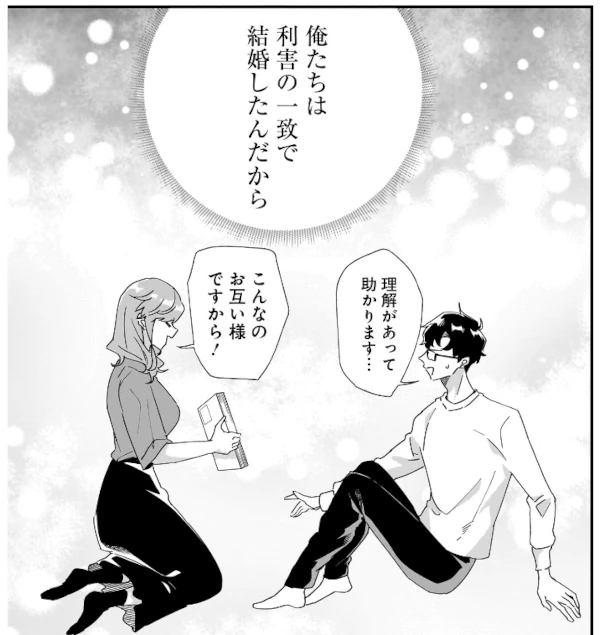
Ryota Shinonome is an aspiring professional manga artist, while Akemi Oda works as an office employee by day and creates dōjinshi (self-published manga) in her spare time. Both are exhausted by the constant pressure from family and friends to find love and get married.
When the two meet through an arranged marriage meeting, they quickly realize their interests perfectly align. Instead of pursuing a traditional romance, they decide to register their marriage on the very day they meet.
Their goal? A fake marriage that allows each of them to continue enjoying their otaku hobbies without interference.
And so begins the unusual married life of two passionate otaku.
The Appeal of This Manga
While the series includes familiar modern romance tropes such as a contract marriage and two otaku falling in love, its greatest strength is how authentically it portrays otaku culture.
The manga has an exceptionally high level of “resolution” when it comes to depicting oshi culture and the unique values shared by dedicated fans. From the joys of discovering new hobbies to the frustrations and awkward moments that only fellow otaku can understand, every aspect of otaku life is portrayed with warmth and humor.
The first volume focuses largely on the newly married couple discovering each other’s passions and exploring entirely new corners of otaku culture together.
As the story progresses, however, there are clear hints that their relationship may gradually become something more than a marriage of convenience.
One of the series’ greatest charms is that it constantly avoids the clichés of typical romance manga. Rather than creating unnecessary misunderstandings or dramatic love triangles, it offers a relaxed, feel-good reading experience where you can simply enjoy watching the characters grow closer.
Why this manga is suitable for learning Japanese
This manga is not only entertaining but also highly recommended for Japanese learners for several reasons.
A Married Couple Who Always Uses Polite Japanese
Although they are legally married, Ryota and Akemi got married without dating first.
Combined with the respectful distance that both naturally maintain as fellow otaku, they continue speaking to each other almost entirely in polite Japanese (keigo).
As a result, the manga contains an unusually high amount of natural, everyday polite speech, making it an excellent resource for beginner and intermediate Japanese learners.

Packed with Otaku Vocabulary
The story is filled with scenes from authentic otaku life, including:
- trading card game tournaments
- collaboration cafés
- dōjin conventions
- fan events
- manga creation
Because of this, readers are exposed to a wide range of vocabulary related to anime, manga, gaming, and fan culture.
If you’re interested in Japanese pop culture, this manga is an enjoyable way to expand the kind of Japanese vocabulary you’re likely to encounter in real-life fan communities.

Phrase Spotlight
From Shrines to Shelves: Why Otaku Call Their Displays 「祭壇」 (Saidan)祭壇
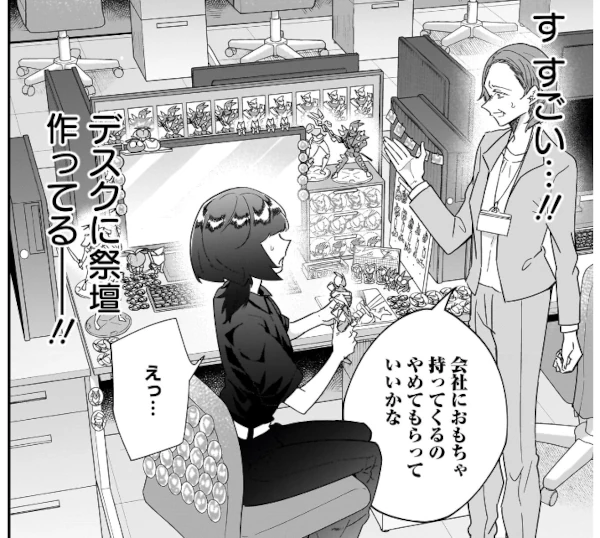
In one memorable scene from Otakon no Susume, an office worker proudly decorates her desk with dozens of figures, acrylic stands, badges, and other merchandise featuring her favorite character.
The display becomes so extravagant that her supervisor can only stare in disbelief:
「デスクに祭壇作ってる!!」
”You built a shrine on your desk!!”
Of course, no religious ceremony is taking place. So why do Japanese fans call this kind of display a saidan (祭壇)—a word that originally means an altar?
The Original Meaning of 「祭壇」
Traditionally, 祭壇 (saidan) refers to an altar prepared for religious ceremonies.
In Japan, the word can describe:
- a Shinto altar used during festivals
- a Buddhist altar for memorial services
- a ceremonial altar decorated with flowers and offerings
In every case, a saidan is a carefully arranged space that expresses respect, gratitude, or devotion toward someone or something.
From Religious Altars to Fan Displays
As anime and idol fandom grew during the 2000s and 2010s, fans began arranging merchandise dedicated to their favorite characters in surprisingly elaborate ways.
A typical display might include:
- figures
- acrylic stands
- plush toys
- badges
- posters
- CDs or Blu-rays
- flowers
- LED lights
Because these collections often resemble the carefully arranged appearance of a ceremonial altar, fans jokingly began calling them 祭壇 (saidan). The comparison is humorous, but it also captures the emotional attachment many fans feel toward their oshi.
No one believes the character is literally a deity. Instead, the word playfully exaggerates the level of admiration and dedication.
A Word Born from Otaku Culture
Today, 「祭壇」 has become a well-established piece of otaku vocabulary.
You’ll often see expressions such as:
- 「祭壇を作る」 to build an oshi display
- 「祭壇写真」 a photo of an elaborate fan display
- 「祭壇完成!」 My shrine display is finished!
These expressions appear frequently on social media after fans attend concerts, anime conventions, or receive new merchandise.
The word has become so common that many Japanese people immediately understand what kind of display is being described—even if no religious context exists.
Why This Metaphor Works So Well
Japanese is full of words whose meanings expand through metaphor.
Just as 推し (oshi) evolved from “someone you recommend” into “your favorite person or character,” 祭壇 expanded from a religious altar into a display celebrating something you deeply love. Rather than replacing the original meaning, the new usage exists alongside it. Whether someone is talking about a Buddhist memorial or a shelf full of anime merchandise, native speakers can easily tell which meaning is intended from the context.
This kind of semantic expansion is one reason modern Japanese is constantly evolving, especially through internet communities and fan culture.
What It Means for Japanese Learners
For learners, 祭壇 is a wonderful example of how vocabulary reflects cultural creativity.
If someone says:
「祭壇を作った。」
they almost certainly do not mean they built a religious altar. Instead, they probably mean they carefully arranged merchandise dedicated to their favorite idol, anime character, VTuber, or game.
Understanding expressions like 祭壇, 推し, and 推し活 will help you follow conversations among Japanese fans and appreciate the playful ways modern Japanese continues to reinvent traditional words.
The next time you see someone proudly posting a beautifully arranged collection of anime goods online, don’t be surprised if they call it their 祭壇—their own little “altar” dedicated to the character they love most.
A Little Warning
Welcome to the Deep End of Otaku Culture
This series doesn’t simply feature characters who casually enjoy anime or manga—it dives deep into the lives of dedicated otaku. If your interest in Japanese pop culture is fairly casual, some of the references and enthusiasm may feel surprisingly intense.
On the other hand…
You may discover an entirely new hobby—or even open the door to a whole new world you never knew existed.
Work Information
Otakon no susume (オタ婚のススメ!)
Author: Sunahaki Shinsha
Publisher: KADOKAWA
Amount of text: moderate
Challenge level: ★★
Latest volume : Vol.4(Mar.2026 / Ongoing)
Here’s a safe and convenient way to purchase Japanese manga.
This Blog’s ConceptIn this blog, we are introducing manga that are not only highly captivating but also ideal for Japanese language learners. Studying Japanese through manga is both fun and effective. Manga allows you to understand the subtleties of keigo (honorifics), teineigo (polite speech), and casual conversation in Japanese. We hope you find works that match your interests and use them to enhance your Japanese learning journey.