
This time, we’re introducing Ikkyū Kenchikushi Kanoko no Sekkei Shikō—a unique professional manga that’s perfect for learning natural business Japanese and exploring Japan’s architectural world.
Work Information

Ikkyu Kenchikushi Kanoko no Sekkei Shiko (一級建築士矩子の設計思考)
Author: Kinohitoshi
Publisher: NIHONBUNGEISHA
Amount of text: plentiful
Challenge level: ★★★
Latest volume : Vol.5(Mar.2026 / Ongoing)
Story overview
A Young Architect’s Life in Tokyo’s Kameido District
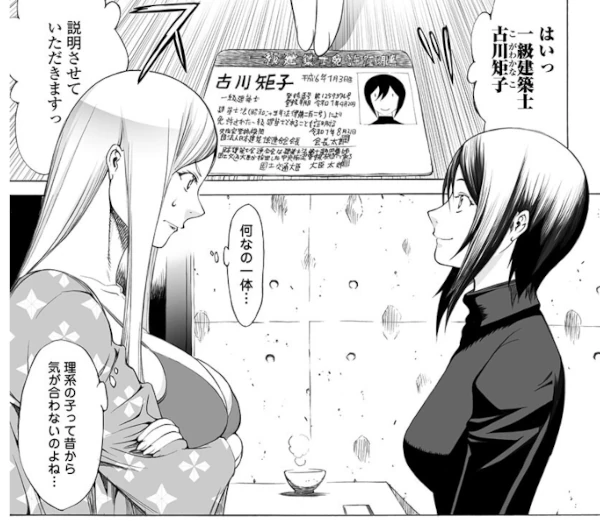
Kanoko Kogawa moved from Aomori to Tokyo when she was just twenty years old. Passionate about both architecture and good drinks, she spent seven years working at an architectural design firm before starting her own business. Now she runs a small independent architecture office in Tokyo’s Kameido district—complete with a standing bar (tachinomi) attached to the office. She may not have much money, but she has plenty of ideals—and plenty of sake. Set your joppari spirit ablaze!
This one-of-a-kind professional manga offers a rare glimpse into the real work of a First-Class Architect (Ikkyū Kenchikushi) in Japan. Written by an author who is himself both a licensed First-Class Architect and a First-Class Construction Management Engineer, the series is a heartfelt tribute to the profession.
The Appeal of This Manga
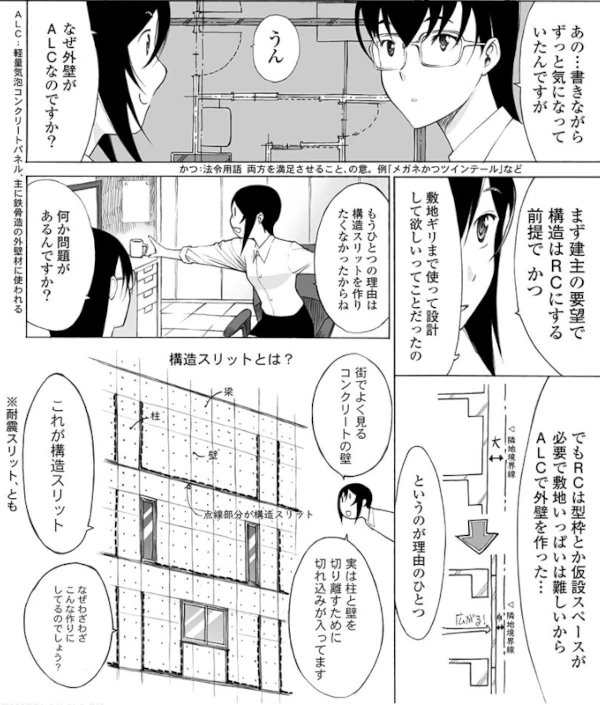
Manga centered on architecture are already uncommon, but this series goes far beyond a typical workplace story. Because the author is a licensed architect, every chapter reflects a deep knowledge of architectural design, building regulations, construction methods, and the philosophy behind creating great spaces.
Although buildings are something we encounter every day, most people rarely consider the enormous amount of expertise, engineering, legal knowledge, and planning required to design and maintain them. This manga opens the door to that hidden world.
At first, you may realize just how little you know about architecture—but don’t worry. Kanoko patiently guides readers through the fascinating world of architectural design, making even complex topics surprisingly approachable.
Why this manga is suitable for learning Japanese
This manga is not only entertaining but also highly recommended for Japanese learners for several reasons.
A Wealth of Real Architectural Vocabulary
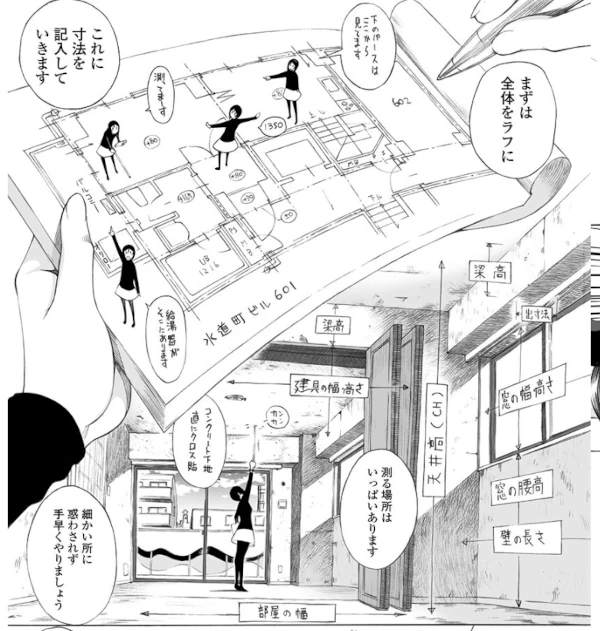
Since most of the story revolves around architectural design and construction (with occasional breaks for delicious food and drinks), the manga is packed with technical terminology.
Even native Japanese readers may find some chapters challenging because of the specialized vocabulary.
However, for anyone interested in Japanese architecture, design, or construction, this series is an unparalleled learning resource.
Natural Business Japanese
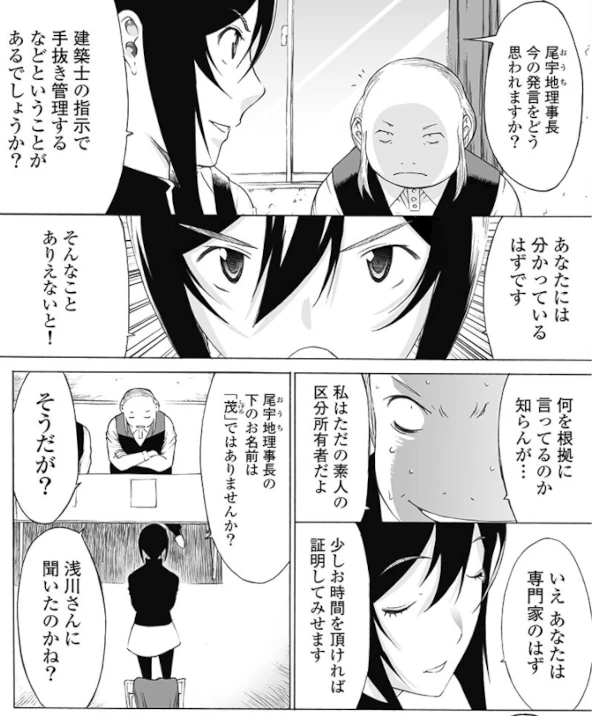
As the owner of her own architectural practice, Kanoko spends much of her time speaking with clients, contractors, and other professionals.
Because of this, the dialogue features a large amount of natural business Japanese (keigo).
Rather than overly formal or excessively casual, the conversations strike the kind of balanced, professional tone that is commonly heard in real Japanese workplaces, making the series an excellent resource for learners interested in business communication.
Culture Spotlight
One Building, Two Professions: Understanding Architects and Builders in Japan設計と施工
One memorable episode in Ikkyū Kenchikushi Kanoko no Sekkei Shikō focuses on the relationship between architects and construction professionals. As the manga explores many different facets of Japan’s building industry, it occasionally shines a spotlight on the tensions that can arise between people responsible for designing a building and those responsible for constructing it.
Although they share the same goal—creating safe and beautiful buildings—they don’t always see projects from the same perspective.
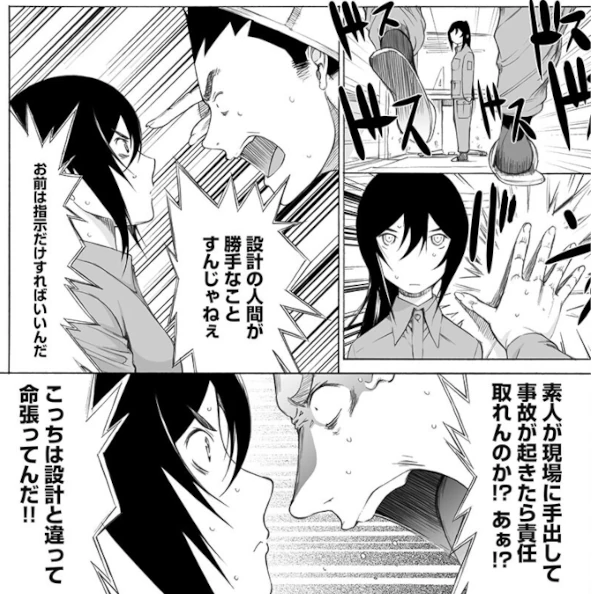
In one scene, a construction supervisor angrily tells Kanoko:
“Architects just give instructions! We’re the ones risking our lives on the construction site!”
The confrontation is dramatic, but it reflects the different responsibilities and viewpoints that coexist on real construction projects.
Two Different Jobs: Designing and Building
In Japan, construction projects generally involve two major groups.
The first is the architect (設計者, sekkeisha). Architects design buildings, prepare drawings, ensure compliance with building regulations, and coordinate with clients. Their job begins long before construction starts.
The second is the builder or contractor (施工者, sekōsha). This includes construction companies, site supervisors, and skilled craftspeople who physically build the structure. They are responsible for turning architectural drawings into reality while managing schedules, budgets, safety, and unexpected problems on site.
Neither role is more important than the other. A successful building requires both careful design and excellent construction.
Why Do Conflicts Happen?
If both sides want the same thing, why do disagreements occur? One reason is that they face different challenges.
Architects often focus on:
- design quality
- functionality
- safety standards
- legal compliance
- the client’s wishes
Construction teams, on the other hand, must consider:
- whether the design can actually be built
- worker safety
- available materials
- construction schedules
- costs
- weather and site conditions
Sometimes, a design that looks perfect on paper turns out to be extremely difficult—or even impossible—to construct as originally planned. In those situations, architects and construction teams must negotiate practical solutions.
”On Paper” Versus “On Site”
A common saying in many construction industries is that drawings never tell the whole story.
Unexpected issues appear almost every day:
- hidden pipes
- uneven ground
- measurement errors
- material shortages
- changing weather
The construction site requires constant judgment and adaptation. Because of this, experienced site supervisors and craftspeople often develop practical knowledge that cannot be learned from textbooks alone.
Likewise, architects possess expertise in structural design, regulations, and planning that construction workers may not have. The two professions rely on different kinds of knowledge.
Cooperation Matters More Than Competition
Although stories sometimes emphasize conflict for dramatic effect, most real projects depend on close cooperation.
In Japanese construction, communication between designers and builders is essential. Many projects involve frequent meetings where architects, contractors, engineers, and clients work together to solve problems before they become serious. Rather than competing, both sides contribute different expertise toward the same goal: creating a building that is safe, functional, and enjoyable to use.
This collaborative spirit is one reason large construction projects can succeed despite their complexity.
What It Means for Japanese Learners
For learners of Japanese, this manga introduces a fascinating set of professional vocabulary, including words such as:
- 設計 (sekkei) — architectural design
- 施工 (sekō) — construction or execution
- 現場 (genba) — the construction site
- 現場監督 (genba kantoku) — site supervisor
- 職人 (shokunin) — skilled craftsperson or artisan
More importantly, it reveals how Japanese workplace conversations often involve negotiation rather than simple agreement. People may share the same objective while approaching problems from different professional perspectives.
By understanding both the language and the relationships behind it, Ikkyū Kenchikushi Kanoko no Sekkei Shikō offers readers a deeper appreciation of how buildings—and teamwork—are made possible in Japan.
A Little Warning
A Flood of Specialized Information
One of the manga’s greatest strengths is also what makes it demanding.
The series carefully explains the hidden world of architecture in a way that general readers can understand, giving it a strong educational, how-to quality. At the same time, the author’s passion for architecture shines through in every chapter, resulting in dense explanations, highly specialized topics, and an enormous amount of detail. For complete beginners to Japanese, this is probably not the easiest manga to start with.
However, if you have an interest in architecture—or simply enjoy learning about highly specialized professions—you’ll find it to be an incredibly rewarding read.
Work Information
Ikkyu Kenchikushi Kanoko no Sekkei Shiko (一級建築士矩子の設計思考)
Author: Kinohitoshi
Publisher: NIHONBUNGEISHA
Amount of text: plentiful
Challenge level: ★★★
Latest volume : Vol.5(Mar.2026 / Ongoing)
Here’s a safe and convenient way to purchase Japanese manga.
This Blog’s ConceptIn this blog, we are introducing manga that are not only highly captivating but also ideal for Japanese language learners. Studying Japanese through manga is both fun and effective. Manga allows you to understand the subtleties of keigo (honorifics), teineigo (polite speech), and casual conversation in Japanese. We hope you find works that match your interests and use them to enhance your Japanese learning journey.