
This time, we’re introducing Ramen Daisuki Koizumi-san—a delicious manga for learning Japanese and discovering the world of ramen.
Work Information
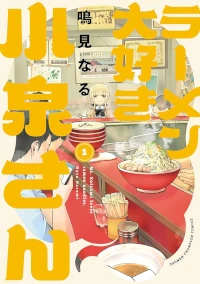
Ramen Daisuki Koizumi-san(ラーメン大好き小泉さん)
Author: Narumi Naru
Publisher: Akita Publishing
Amount of text: moderate
Challenge level: ★★
Latest volume : Vol.15(May.2026 / Ongoing)
Story overview
The hugely popular ramen manga with over 3 million copies in print is back with a fresh new edition and a renewed start!
Koizumi is a cool, quiet, and mysterious transfer student. But behind her reserved personality lies an unexpected secret: she is a true ramen expert who spends every day searching for the perfect bowl of noodles!
From classic favorites to unique creations, get ready for a full-on ramen feast!
The Appeal of This Manga
Ramen Loves Koizumi-san is a laid-back gourmet manga following the ramen-filled life of Koizumi, a beautiful but quiet and mysterious high school girl.
Koizumi’s passion for ramen—and the mouthwatering scenes of her actually eating it—will almost certainly leave you craving a bowl of ramen yourself.
Ramen is constantly woven into Koizumi’s everyday interactions with her friends, creating a unique kind of gourmet manga that feels both familiar and strangely unusual at the same time.
It’s an easygoing series that you can simply sit back and enjoy without having to think too hard.
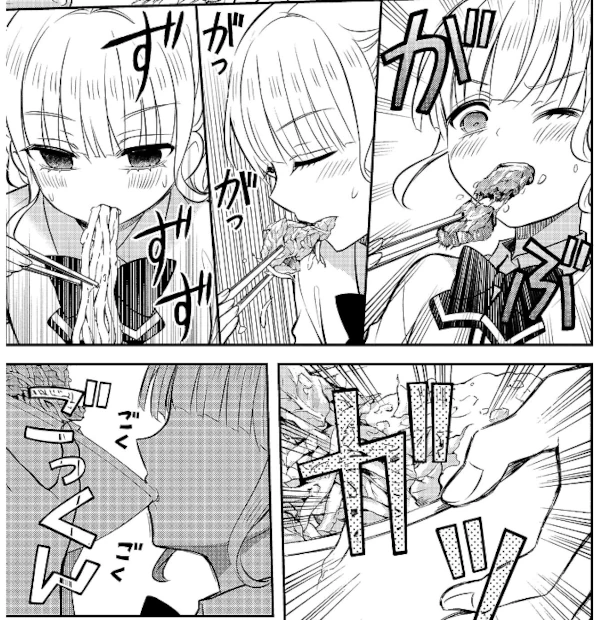
Why this manga is suitable for learning Japanese
This manga is not only entertaining but also highly recommended for Japanese learners for several reasons.
Koizumi Always Uses Polite Japanese
Koizumi isn’t particularly interested in actively communicating with other people, but whenever she does speak to them, she consistently uses polite Japanese (keigo).
This makes the manga especially suitable for beginner Japanese learners.
The subject matter is also very straightforward: it’s mostly about ramen and everyday life. As a result, there are very few difficult words, complicated conversations, or abstract concepts to worry about.
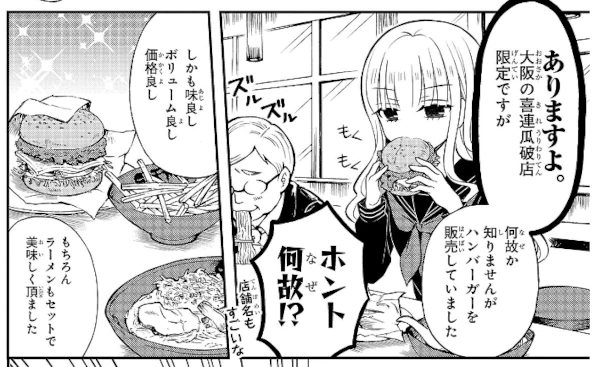
Learn All About Japanese Ramen
The series features famous real-life ramen shops—although their names aren’t always explicitly mentioned, ramen fans will often recognize them—as well as plenty of basic knowledge, trivia, and fascinating facts about ramen.
Simply by enjoying the manga, you’ll naturally learn more about Japanese ramen culture while expanding your vocabulary related to food and ramen.
It’s a particularly fun way to learn Japanese if you’re already interested in Japanese cuisine.
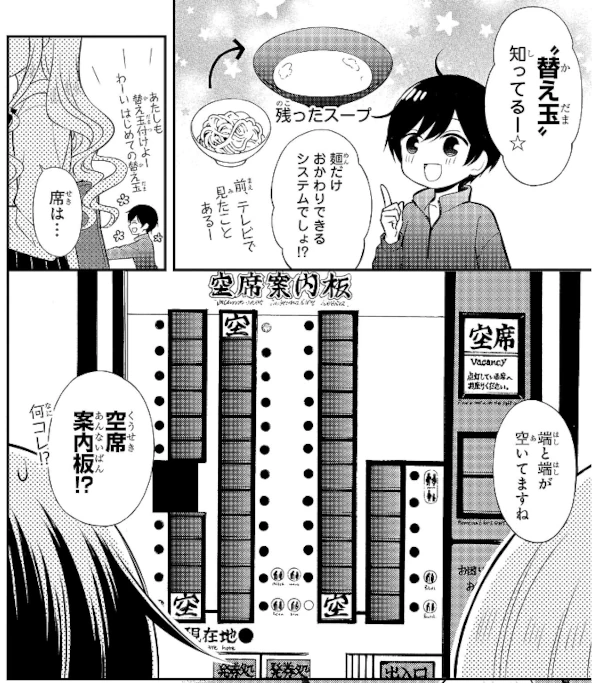
Culture Spotlight
What Makes Japanese Ramen So Special? A Guide to Japan’s Ramen Culture日本のラーメンカルチャー
In Ramen Daisuki Koizumi-san, the protagonist is a high school girl with an extraordinary passion for ramen. For her, ramen isn’t simply a quick and inexpensive meal—it is a world of flavors, traditions, techniques, and local identities.
For many Japanese people, ramen is more than just food. It is often described as a kokuminshoku (国民食), or “national food,” and its culture continues to evolve even today.
For Japanese learners, ramen offers a particularly delicious way to discover how food, geography, language, business, and even popular culture intersect in Japan.
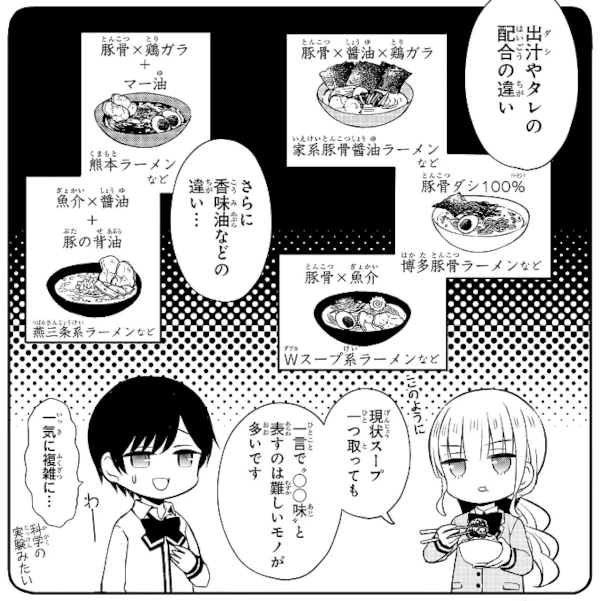
From Chinese Noodles to a Japanese Cultural Icon
Ramen has roots in Chinese-style noodle dishes, but over the course of the twentieth century, it developed into something distinctly Japanese.
The postwar spread of inexpensive ramen shops, the popularity of instant ramen, and the development of countless regional and individual styles helped turn ramen into one of Japan’s most recognizable foods. Today, there is no single thing that can simply be called “Japanese ramen.”
Instead, ramen is an enormous category containing countless variations. And perhaps the most interesting thing about it is that the evolution hasn’t stopped.
New restaurants, new ingredients, new techniques, and new combinations continue to appear.
Regional Ramen: When Geography Becomes Flavor
Ramen culture is also deeply connected to geography. Different parts of Japan have developed their own distinctive ramen traditions. For example, Kitakata Ramen (喜多方ラーメン) from Fukushima Prefecture is famous for its characteristic noodles and regional style.
Other famous regional varieties include:
- Sapporo Ramen — particularly associated with miso ramen
- Hakata Ramen — famous for its thin noodles and tonkotsu broth
- Okinawa Soba — a distinctive noodle dish with its own culinary tradition
These regional names aren’t simply marketing labels. They reflect local ingredients, climate, food traditions, and the history of individual communities. For travelers, trying local ramen can therefore be a way of experiencing the identity of a particular region.
From One Shop to an Entire Ramen “Family”
One of the fascinating aspects of Japanese ramen culture is the way individual restaurants can develop recognizable styles that spread beyond the original shop.
You may hear names such as:
Iekei (家系)
A style of ramen associated with rich pork-and-chicken broth, soy sauce, and distinctive toppings, originating with Yokohama’s Yoshimuraya and spreading through many related shops.
Jiro-kei (二郎系)
Inspired by Ramen Jiro, famous for enormous portions, rich broth, thick noodles, and mountains of toppings.
Taishōken (大勝軒)
Associated particularly with tsukemen, or dipping noodles, and the influential ramen chef Kazuo Yamagishi.
These styles illustrate something unusual about Japanese food culture: a restaurant’s identity can become a kind of culinary lineage.
The Culture of Norenwake
How does one restaurant’s style spread? One important concept is 暖簾分け (norenwake).
Literally meaning something like “dividing the shop curtain,” norenwake traditionally refers to a system in which an experienced shop owner allows an employee or apprentice to open an independent business using the established shop’s name, techniques, or reputation.
In ramen culture, this can create something resembling a family tree.
A famous ramen shop trains an apprentice. The apprentice eventually opens another shop. That shop trains another generation.
Over time, the original style spreads while individual branches develop their own interpretations.
This is one reason Japanese ramen culture can simultaneously feel traditional and constantly innovative.
Ramen Shops Have Their Own Rules
Some ramen shops also have surprisingly specific expectations about how customers should behave. This is particularly noticeable at famous or highly specialized shops.
You may encounter concepts such as:
ロット (rotto)
— a “batch” of bowls prepared and served together.
At certain busy ramen shops, especially those influenced by Jiro-style culture, customers may be expected to avoid slowing down the flow of orders.
This can lead to expressions such as:
「ロットを乱す」
literally, “to disrupt the batch.”
The idea is that one customer’s unusually slow ordering, eating, or departure can interfere with the rhythm of the entire shop. Not every ramen restaurant operates this way, of course. The rules and atmosphere vary enormously from shop to shop.
But these examples show how some ramen restaurants have developed something approaching their own micro-culture, complete with vocabulary, etiquette, and unwritten rules.
Ramen as a “National Food”
Calling ramen a 国民食 (kokuminshoku)—a “national food”—doesn’t mean that every Japanese person loves ramen or that ramen is uniquely Japanese in origin. Rather, the expression captures how deeply ramen has become embedded in everyday Japanese life.
There are cheap ramen shops, luxury ramen restaurants, chain restaurants, neighborhood establishments, roadside shops, convenience-store ramen, instant ramen, regional specialties, and experimental gourmet ramen.
Almost everyone can have their own relationship with it. Someone might have a favorite local shop. Someone else might travel across Japan specifically to try regional ramen. Another person might argue passionately about which type of noodles are best.
This combination of accessibility and endless variation is perhaps one of ramen’s greatest strengths.
What It Means for Japanese Learners
Ramen is an excellent subject for learning Japanese because it connects everyday vocabulary with geography, food culture, business, and popular culture.
Words such as:
- 麺 (men) — noodles
- スープ (sūpu) — soup/broth
- 具 (gu) — toppings/ingredients
- 替え玉 (kaedama) — an additional serving of noodles
- 大盛り (ōmori) — large serving
- こってり (kotteri) — rich/heavy
- あっさり (assari) — light/mild
- 行列 (gyōretsu) — queue/line
can all appear naturally when talking about ramen.
More importantly, ramen teaches learners something about how Japanese culture develops. There isn’t necessarily one “correct” version of ramen.
A regional style can become a local tradition. A restaurant can develop its own identity. An apprentice can inherit a technique and create something new. Fans can develop their own vocabulary and etiquette.
Ramen culture is therefore not a finished tradition—it is a living culture that is constantly being modified, copied, debated, and reinvented. And that’s exactly what makes it such a fascinating subject for Japanese learners.
A Little Warning
Beware of the “Food Attack”!
Work Information
There’s one serious danger to reading this manga:
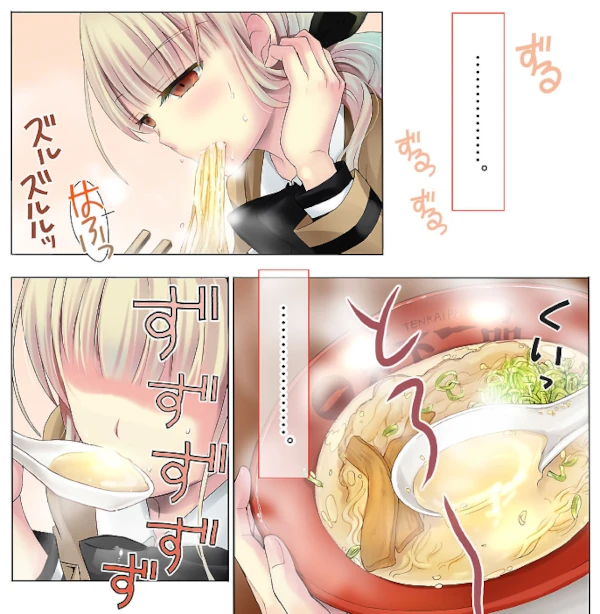
It will make you want to eat ramen.
The detailed depictions of steaming bowls of noodles can be especially dangerous when you’re trying to stick to a diet—or reading late at night.
Don’t say we didn’t warn you!
Ramen Daisuki Koizumi-san(ラーメン大好き小泉さん)
Author: Narumi Naru
Publisher: Akita Publishing
Amount of text: moderate
Challenge level: ★★
Latest volume : Vol.15(May.2026 / Ongoing)
Here’s a safe and convenient way to purchase Japanese manga.
This Blog’s ConceptIn this blog, we are introducing manga that are not only highly captivating but also ideal for Japanese language learners. Studying Japanese through manga is both fun and effective. Manga allows you to understand the subtleties of keigo (honorifics), teineigo (polite speech), and casual conversation in Japanese. We hope you find works that match your interests and use them to enhance your Japanese learning journey.