This time, we’re introducing Kyoko to Tousan—a manga perfect for learning simple, natural Japanese through ordinary family conversations.
Work Information
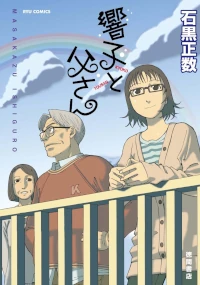
Kyoko to Tousan(響子と父さん)
Author: Ishiguro Masakazu
Publisher: TOKUMASHOTEN
Amount of text: sparse
Challenge level: ★★
Latest volume : Vol.1(Mar.2010/ Completed)
Story overview
Kyoko, the eldest daughter, is an illustrator. While her mother is away on a trip, she can’t help worrying about her father, who seems to live on nothing but instant ramen. As a result, she finds herself constantly nagging him. Her father, meanwhile, can’t stop worrying about his daughter, who is at an age where he’s naturally concerned about her well-being… The younger daughter, Haruka, is currently… missing. Is she safe somewhere out there? The family’s unsettled days continue.
What happens when the uniquely talented Masakazu Ishiguro turns his attention to the subject of “family”? Somehow, it becomes this much fun! A warm and quirky portrait of everyday life between a father and daughter, in Ishiguro’s unmistakable style.
The Appeal of This Manga
This manga takes an unusual look at the ordinary daily lives of a retired couple and their daughter, who lives nearby.
There are no spectacular accidents or dramatic events. Instead, the story finds its charm in the small, seemingly insignificant moments of everyday life: a talkative and moody father, a laid-back and enigmatic mother, and other characters who somehow feel like people you might have met somewhere before.
These ordinary interactions are portrayed with such a distinctive sensibility that they become surprisingly entertaining and rich in flavor.
The story is also set in the same fictional world as the author’s Nemurubaka, making it a particularly good choice for readers who enjoyed that series.
Why this manga is suitable for learning Japanese
This manga is not only entertaining but also highly recommended for Japanese learners for several reasons.
Everyday Family Conversations
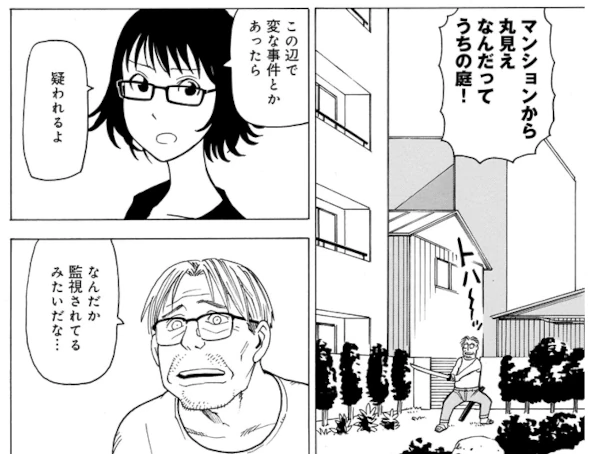
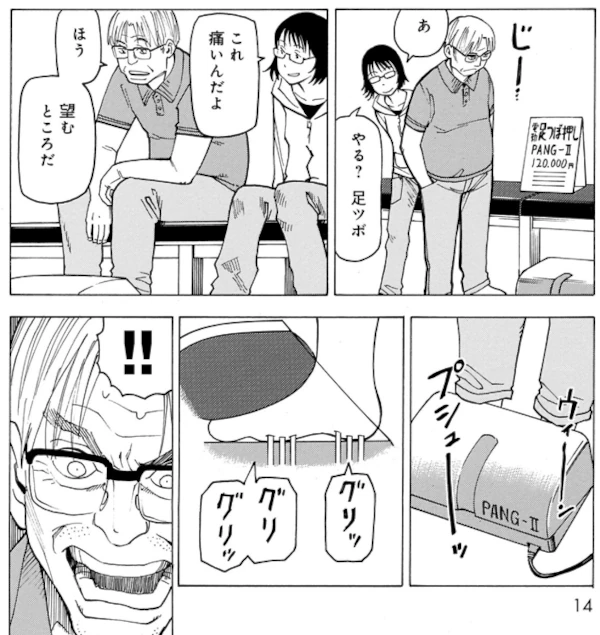
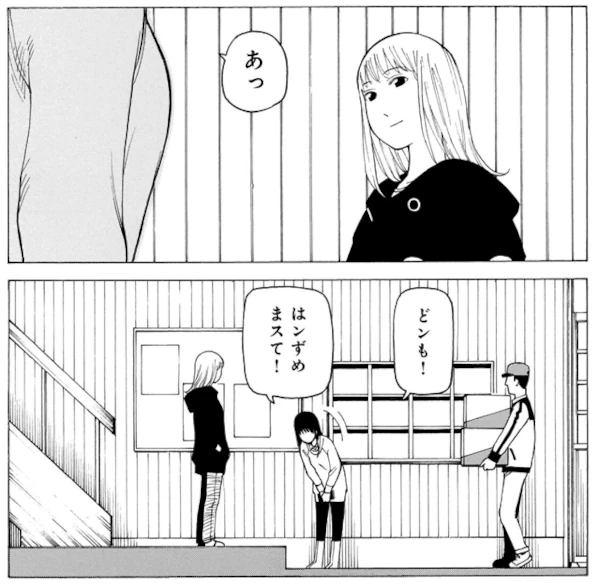
The manga is primarily made up of episodes about family life, with much of the dialogue taking place between the older parents and their daughter, who lives nearby and is approaching marriage.
The conversations themselves are nothing particularly remarkable—which is precisely what gives them their sense of realism.
Rather than dramatic or highly stylized dialogue, learners get to encounter the kind of ordinary Japanese that family members might actually use in everyday life.
A Light and Easy Read
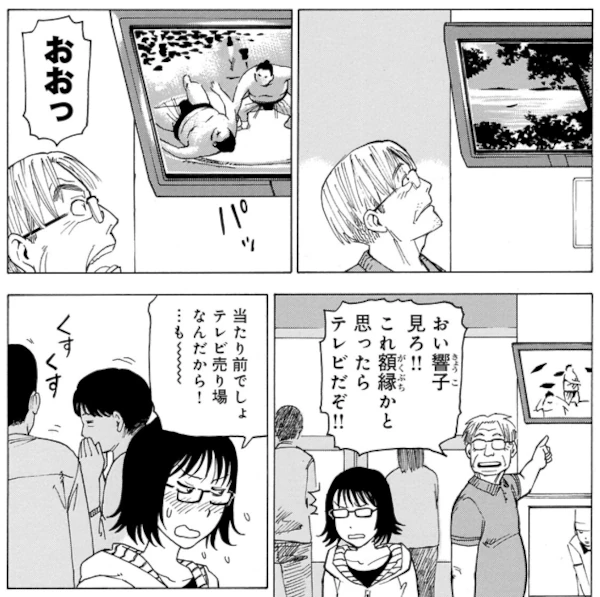
There is relatively little dialogue throughout the series, and the conversations themselves are not particularly difficult. This makes the manga accessible even to beginner Japanese learners, who can read through it without becoming overwhelmed or exhausted.
Culture Spotlight
Dad Retired—Now What? A Peek into Japanese Family Life定年後の父親
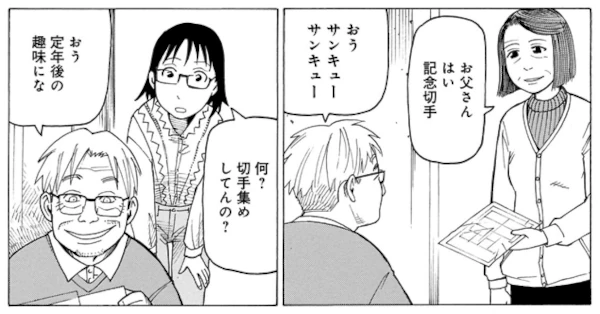
In Kyoko to Tousan, Kyoko’s father has reached retirement age and is enjoying a leisurely life at home. He spends his days pursuing hobbies such as making soba noodles, while his wife goes about her own life. It is a familiar image of the Japanese retiree: after decades of working, the daily rhythm suddenly changes.
For many Japanese families, however, retirement is more than simply the end of a career. It can transform how a husband and wife spend time together, how household roles are divided, and even how a person understands their own place within the family. For Japanese learners, understanding what happens after retirement also offers an interesting glimpse into changing family life in contemporary Japan.
From Company Employee to Retiree
For much of the postwar era, the Japanese “salaryman” model shaped the lives of many families. A husband might spend most of his waking hours at work, while his wife managed the household and children.
Retirement can therefore create a dramatic change in daily life.
A man who once left home early every morning may suddenly spend almost all day at home. Instead of being defined primarily as a company employee, he now has to figure out what to do with his newly available time.
This is one reason the image of the retired Japanese father pursuing hobbies, watching television, gardening, cooking, or simply relaxing at home has become so familiar.
When the Husband Is Suddenly Always Home
Retirement can also change the relationship between husband and wife.
During their working years, a couple may have spent relatively little time together during the day. After retirement, however, they may suddenly be sharing the same space almost constantly.
For some couples, this is an opportunity to enjoy a new stage of life together. They may travel, develop shared hobbies, or simply spend more time talking.
For others, the transition can be surprisingly difficult.
A husband who was rarely home may suddenly become involved in household routines that his wife has managed independently for decades. Even seemingly small things—when to eat, how to spend the day, or who does which household task—can become sources of friction.
This is sometimes humorously captured in Japanese expressions such as 「亭主元気で留守がいい」—roughly, “It’s nice when your husband is healthy and out of the house.” The phrase is often used jokingly, but it reflects a recognizable aspect of long-term married life.
Retirement Can Reveal an Unequal Household Relationship
There is another important dimension to this transition.
In traditional households, the husband may have been the primary breadwinner while the wife took responsibility for domestic life. After retirement, however, the husband’s authority or identity as “the one who goes to work” may weaken, while the wife’s established control over the household may remain.
As a result, retirement can force couples to renegotiate roles that had previously required little discussion.
Who makes decisions? Who cooks? Who cleans? Who plans the day?
These questions may suddenly become much more visible once both people are at home.
Of course, modern Japanese families are far more diverse than this traditional model. Dual-income households, changing gender roles, and different approaches to marriage mean that there is no single “Japanese retirement experience.” Nevertheless, the older household model remains an important cultural background for understanding many depictions of retired fathers in Japanese fiction.
The “Retired Father” as a Character Type
Japanese popular culture has repeatedly turned this transition into comedy and drama.
The retired father who spends his days at home, becomes obsessed with a hobby, doesn’t quite know what to do with himself, or gets underfoot in the household is a recognizable character type.
But there is often warmth beneath the humor.
After decades of working to support a family, retirement can be portrayed as a moment when a father finally has the opportunity to become simply “himself” rather than “someone’s company employee.”
That is part of what makes the father in Kyoko to Tousan feel so familiar. His leisurely lifestyle and hobbies are not merely background details—they represent a particular stage of life in modern Japanese society.
What It Means for Japanese Learners
For Japanese learners, stories about retired parents are useful because they reveal aspects of Japanese family life that textbooks rarely explain.
Words such as 定年 (teinen, mandatory retirement age), 退職 (taishoku, retirement/leaving a job), 再雇用 (saikoyō, re-employment after retirement), 趣味 (shumi, hobby), and 生きがい (ikigai, sense of purpose) appear in conversations about this stage of life.
More importantly, however, understanding retirement helps explain the relationships between generations, husbands and wives, work, and the home.
The retired father relaxing at home may look like a simple comedic character—but behind him lies a much larger story about how Japanese people have traditionally organized work, family, and everyday life, and what happens when the structure of working life finally disappears.
A Little Warning
You May Want More
The story is complete in a single volume, which may leave you wishing you could spend more time with this family. If you find yourself wanting more, try Nemurubaka, another work set in the same fictional world.
Work Information
Kyoko to Tousan(響子と父さん)
Author: Ishiguro Masakazu
Publisher: TOKUMASHOTEN
Amount of text: sparse
Challenge level: ★★
Latest volume : Vol.1(Mar.2010/ Completed)
Here’s a safe and convenient way to purchase Japanese manga.
This Blog’s ConceptIn this blog, we are introducing manga that are not only highly captivating but also ideal for Japanese language learners. Studying Japanese through manga is both fun and effective. Manga allows you to understand the subtleties of keigo (honorifics), teineigo (polite speech), and casual conversation in Japanese. We hope you find works that match your interests and use them to enhance your Japanese learning journey.