
This time, we’re introducing Hyōyomi no Victoria—a manga perfect for learning polite Japanese while exploring the fascinating world of Japanese elections.
Work Information

Hyōyomi no Victoria(票読みのヴィクトリア)
Author: Suzuki KOichi / Okimoto Shu
Publisher: KODANSHA
Amount of text: plentiful
Challenge level: ★★★
Latest volume : Vol.7(Jul.2026 / Ongoing)
Story overview
From presidential elections to PTA elections, every election has a winning strategy!
Tsubasa Akagi is a brilliant election consultant who can turn any election into thrilling entertainment. With her expertise, even the most unlikely candidates can have a chance at victory. Read this manga, and you’ll discover how elections really work—and maybe even find yourself wanting to vote!
A brand-new kind of election-themed entertainment manga begins!
The Appeal of This Manga
Election-themed manga are relatively rare, making this a particularly unusual premise.
Tsubasa, a highly skilled election consultant, uses a wide range of strategies and techniques to help seemingly disadvantaged candidates win. Watching her work offers a fascinating glimpse into the little-known world of election campaigning, almost as if you’re being given a behind-the-scenes look at a hidden side of society.
The story is made easier to follow by a straightforward young man who dreams of becoming a politician but knows virtually nothing about elections. He serves as a focal character, allowing readers to discover the world of electioneering alongside him.
At the same time, several storylines unfold in parallel—the outcome of each election, the candidates’ struggles, and the mystery surrounding Tsubasa herself. These multiple threads keep the story engaging and make you want to find out what happens next.
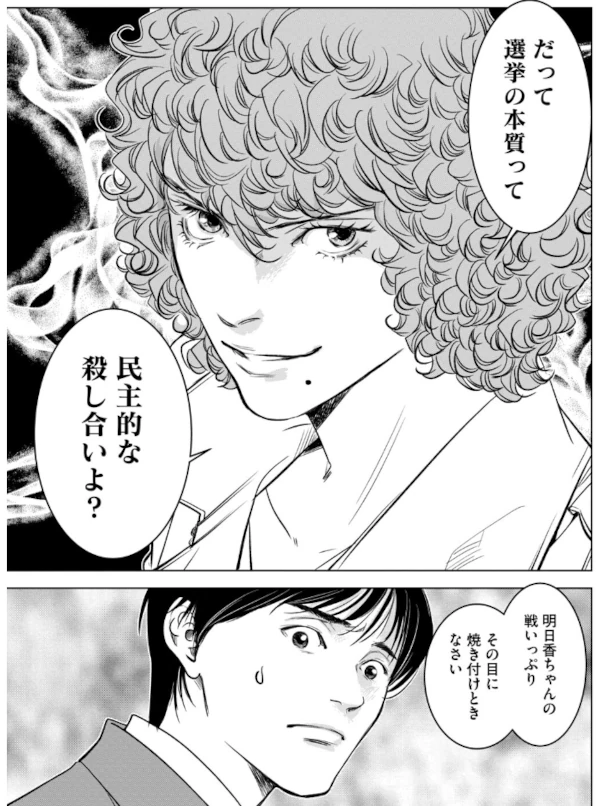
Why this manga is suitable for learning Japanese
This manga is not only entertaining but also highly recommended for Japanese learners for several reasons.
Polite Japanese Used by Election Candidates
Candidates running for office use polite and respectful language in a wide range of situations, including campaign speeches, conversations with voters, and media interviews.
The language includes elements of general business keigo, but you’ll also encounter vocabulary, expressions, and speech patterns that are particularly associated with elections and political campaigning.
This makes the manga a useful way to learn how Japanese changes depending on the social and political context.
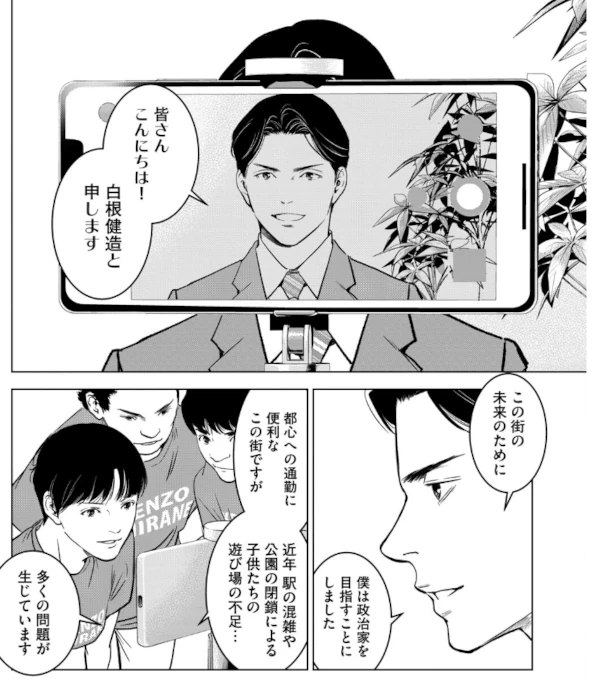
Build Your Political and Economic Vocabulary
Young people who dream of becoming politicians talk passionately about how they want to make society better, discussing current problems as well as their hopes for the future.
As a result, the manga contains plenty of conversations about social issues, politics, economics, and people’s everyday lives. Reading it can therefore provide more than just Japanese practice—it can also give you a chance to learn about contemporary Japanese society while following an entertaining story.
Culture Spotlight
Inside Japanese Elections: Candidates, Campaigns, and Political Change日本の選挙事情
In Hyōyomi no Victoria, brilliant election consultant Tsubasa Akagi helps seemingly disadvantaged candidates fight their way to victory. The manga shows a fascinating side of Japanese elections: good intentions and political ideals are important, but winning also requires strategy, public appeal, and an understanding of how voters actually think.
At the same time, Japanese politics is changing. Traditional, experienced politicians still have considerable influence, but younger and female candidates are increasingly gaining attention. For Japanese learners, elections offer an interesting window into both Japanese political culture and a society in transition.
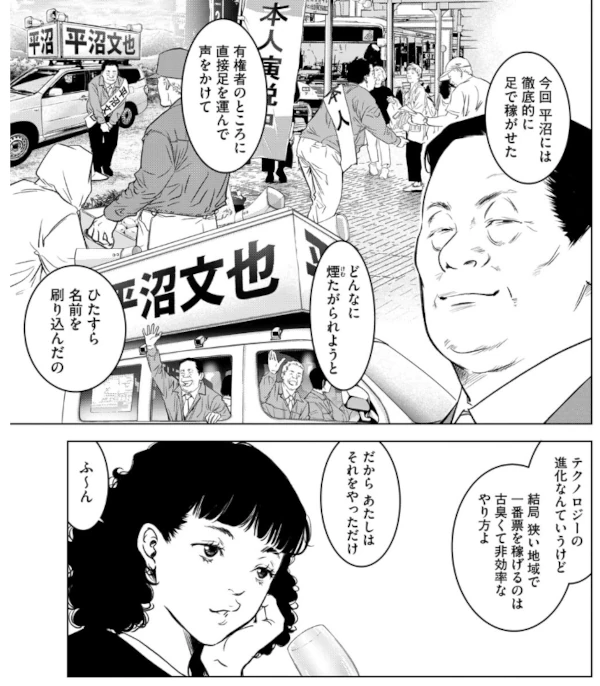
Why Experience and Connections Still Matter
Japanese elections have traditionally favored established politicians with years of experience, name recognition, and strong local support networks. For a newcomer, simply having good ideas is rarely enough to overcome these advantages.
This creates one of the central tensions seen in Hyōyomi no Victoria: how can an idealistic candidate turn a vision for a better society into actual votes? The manga makes this gap between political ideals and electoral reality part of its entertainment.
A New Generation of Candidates
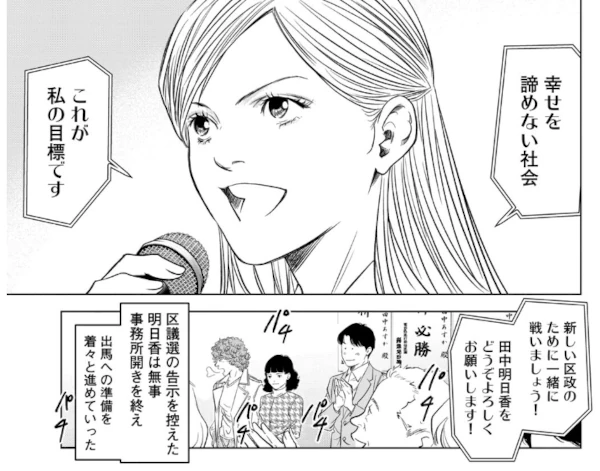
However, the traditional political landscape is gradually changing. In local elections, particularly mayoral races, there have been striking examples of young candidates defeating more established politicians. Younger candidates can appeal to voters who want a fresh perspective rather than another familiar political figure.
Social media has also made it easier for newcomers to communicate directly with voters, reducing their dependence on traditional political networks.
Why Female Candidates Are Attracting Attention
The growing visibility of female candidates is another part of this change. One reason is that some voters are looking for politicians who seem more closely connected to everyday life and the concerns of ordinary citizens.
There is also a strong desire among some voters for a political image that feels clean, transparent, and less associated with traditional political scandals or corruption. Female candidates can sometimes benefit from this perception, although it is important not to assume that all women in politics share the same image or that voters choose candidates simply because they are women.
The broader trend reflects a desire for something different from the established political culture—and that desire can create opportunities for new candidates.
What This Means for Japanese Learners
Election-related Japanese is useful because it combines polite speech with vocabulary about politics and society. You will encounter words such as 選挙 (senkyo) “election,” 候補者 (kōhosha) “candidate,” 立候補 (rikkōho) “running for office,” and 有権者 (yūkensha) “voter.”
Campaign speeches and conversations with voters also provide examples of highly polite Japanese, while discussions about social problems, economics, education, and people’s everyday lives introduce a wide range of useful vocabulary.
Through Hyōyomi no Victoria, learners can therefore discover not only how elections work, but also how Japanese society is changing—and how those changes are reflected in the language of politics.
A Little Warning
Watch Out for “Fictional Speech Patterns”
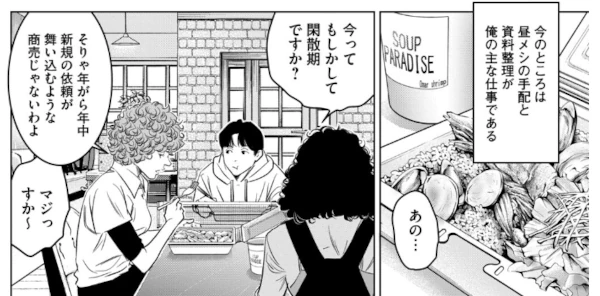
Tsubasa, the skilled election consultant at the center of the story, often ends her sentences with expressions such as 〜わよ and 〜かしら, giving her speech a distinctive, somewhat stylized character.
These are examples of what can be called “fictional speech patterns” (fictional endings): ways of speaking commonly used in manga, anime, and other fiction to make a character’s personality immediately recognizable.
They are probably used here to emphasize Tsubasa’s unique character. However, these speech patterns are not commonly used in everyday real-life Japanese, so learners should be careful about copying them too closely when speaking Japanese themselves.
Work Information
Hyōyomi no Victoria(票読みのヴィクトリア)
Author: Suzuki KOichi / Okimoto Shu
Publisher: KODANSHA
Amount of text: plentiful
Challenge level: ★★★
Latest volume : Vol.7(Jul.2026 / Ongoing)
Here’s a safe and convenient way to purchase Japanese manga.
This Blog’s ConceptIn this blog, we are introducing manga that are not only highly captivating but also ideal for Japanese language learners. Studying Japanese through manga is both fun and effective. Manga allows you to understand the subtleties of keigo (honorifics), teineigo (polite speech), and casual conversation in Japanese. We hope you find works that match your interests and use them to enhance your Japanese learning journey.