This time, we’re introducing Horyo Eiyuu—a manga perfect for learning polite Japanese while following a former slave’s journey from despair to becoming a hero.
Work Information
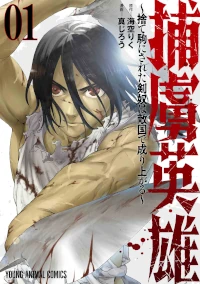
Hryo Eiyuu (捕虜英雄)
Author: Shinjiro / Misora Riku
Publisher: HAKUSENSHA
Amount of text: moderate
Challenge level: ★★
Latest volume : Vol.3(Aug.2026 / Ongoing)
Story overview
The hero of the war was once a slave.
In the Kingdom of Eustacia, anyone without magical powers is considered an “inferior race.” Dino, a young man forced to fight as a gladiatorial slave for public entertainment, is drafted into the war against the neighboring Kingdom of Sandaria.
But what awaits him on the battlefield…?
A powerful battle fantasy about the world’s strongest slave finding a reason to live in a new land—and reclaiming his life.
The Appeal of This Manga
Dino has lived through hell, stripped of both hope and dignity as a slave. This action-packed story vividly depicts his journey of recovery as he rises from the lowest position in society to become a hero.
Burdened by a painful past, Dino eventually encounters someone who helps him rediscover what it means to live as a human being—and someone for whom he is willing to devote his entire life. This emotional turning point is sure to leave a lasting impression on readers.
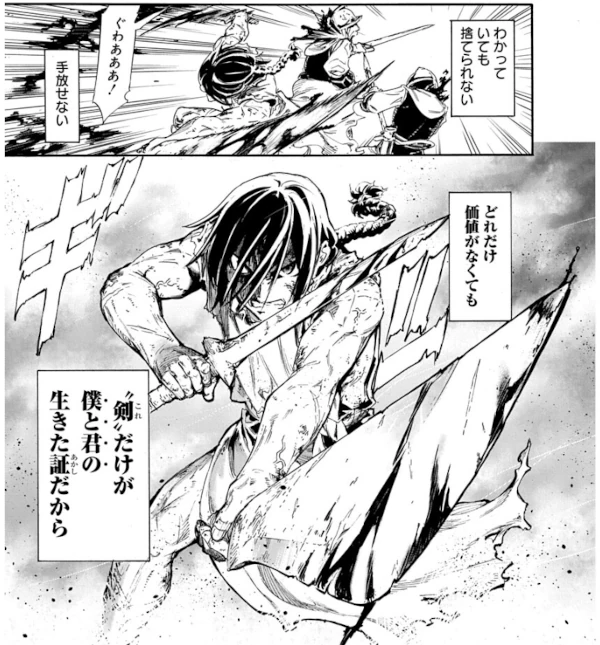
Why this manga is suitable for learning Japanese
This manga is not only entertaining but also highly recommended for Japanese learners for several reasons.
A Polite and Gentle Protagonist
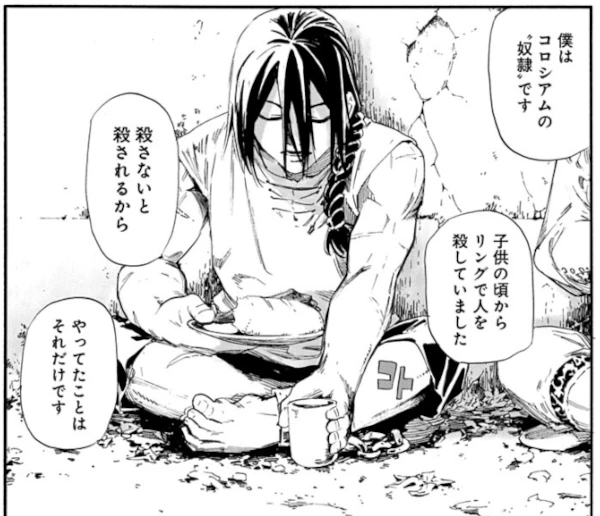
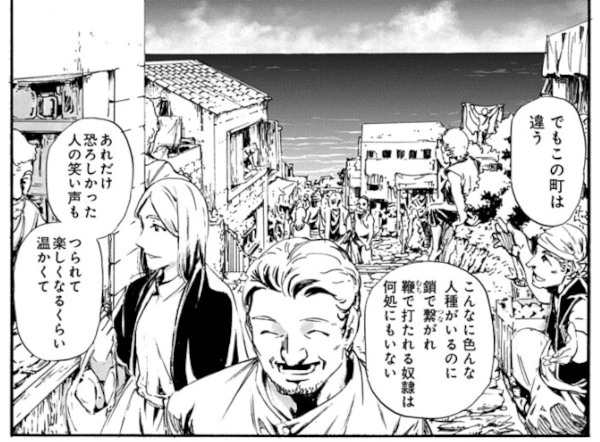
Dino is born into the lowest social class in his world and is later enslaved by an enemy nation. Because of his low social standing, he consistently uses polite Japanese (keigo) when speaking to those around him.
Outside of battle scenes, Dino has a calm and gentle personality, making his speech a good example of polite, mild-mannered Japanese.
A Well-Developed World
Although it is a fantasy story, the manga has a carefully constructed world where society is portrayed in considerable detail. Set in a grounded, believable world, it offers an entertaining mix of action, battle, and military storytelling while allowing readers to naturally engage with Japanese.
Phrase Spotlight
From Mythical Beast to “Prodigy” in Japanese麒麟児
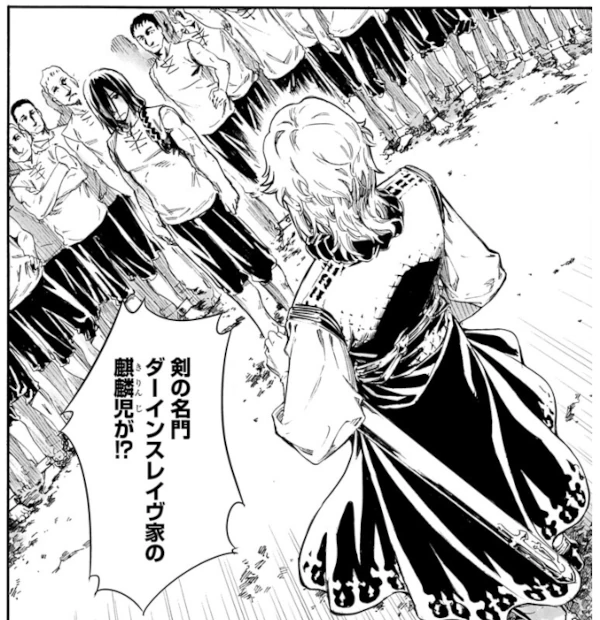
In Captive Hero, one of the aristocratic commanders who faces Dino is described as a 麒麟児 (kirinji)—a word that can be translated roughly as “prodigy” or “young genius.” But the expression carries much more nuance than either English word suggests. Its origins go back to classical Chinese literature and the mythical 麒麟 (kirin), a sacred creature associated with extraordinary people and an ideal age of peace.
From a Sacred Beast to a Gifted Young Person
The 麒麟 in 麒麟児 is not the giraffe. It refers to the legendary creature of ancient Chinese tradition, often depicted with the body of a deer, the tail of an ox, and a single horn. It was regarded as a 瑞獣 (zuijū), an auspicious or sacred beast said to appear when a wise ruler or saintly figure emerged and the world was at peace.
麒麟児 literally means “the child of the 麒麟.” The expression became famous through the Tang-dynasty poet Du Fu, who used the phrase in his poem Xu Qing’s Two Sons (徐卿二子歌) to praise two exceptionally talented children as “heavenly 麒麟 children.” From there, 麒麟児 came to mean a young person with remarkable talent and great promise.
So when someone is called a 麒麟児, the implication is not simply “This person is talented.” It suggests something closer to: “This is an extraordinary young talent who may grow into something remarkable.”
That combination of exceptional ability + youth + expectations for the future is an important part of the word’s nuance.
A Word for Exceptional Talent—and Expectations
Today, dictionaries define 麒麟児 as a young person who is exceptionally talented and shows great promise. It can be used for someone outstanding in sports, academics, the arts, military affairs, or other fields.
For example:
- 将棋界の麒麟児 — “a prodigy of the shogi world”
- 若き麒麟児 — “a young prodigy”
- ○○の麒麟児と呼ばれる — “to be known as the prodigy of ○○”
Unlike the everyday words 天才 (tensai, genius) or 秀才 (shūsai, highly gifted person), 麒麟児 has a distinctly literary and classical flavor. It often sounds grand, dramatic, or slightly old-fashioned.
There is also an interesting implication of expectation. Calling someone a 麒麟児 is not merely describing their present ability; it suggests that they are a person to watch—a young talent who may accomplish something great in the future. That makes the word especially appropriate for historical fiction, fantasy, period dramas, and stories about exceptional young warriors.
Not the Giraffe: The Many Faces of 麒麟
For Japanese learners, 麒麟 can be confusing because the same word きりん (kirin) is also used for the giraffe.
The two are culturally distinct. The mythical 麒麟 existed in Chinese tradition long before the giraffe was known in Japan. The modern animal name became associated with the giraffe much later. In Japan, the giraffe was officially given the name キリン when the animal arrived at Ueno Zoo in 1907.
There is, however, a fascinating historical connection: in fifteenth-century China, giraffes brought back from East Africa during the voyages of Zheng He were identified with the legendary 麒麟. This helped create an association between the two creatures in East Asian history, even though the mythical 麒麟 and the African giraffe are obviously very different animals.
And this mythical 麒麟 is also the creature you see on Kirin Beer labels. The beer’s predecessor adopted the 麒麟 as its trademark in 1888, drawing on its associations with good fortune and the sacred beast.
The word has even appeared in modern Japanese popular culture. The 2020 NHK historical drama 『麒麟がくる』 (Kirin ga Kuru, “The Kirin Comes”) used the mythical 麒麟 as its central image. NHK describes it as a sacred beast said to appear when a ruler governs with benevolence, asking when and over whose head the 麒麟 will appear.
What “麒麟児” Means for Japanese Learners
麒麟児 is a good example of a Japanese expression whose meaning cannot be fully understood by translating each word individually.
When you encounter it, think of a young person of exceptional ability who is expected to accomplish something great. Depending on the context, “prodigy,” “rising star,” or “young genius” may work in English, but none captures all of the word’s classical and auspicious associations.
In Captive Hero, describing the aristocratic commander as a 麒麟児 therefore does more than praise his ability. It gives the character a sense of rare talent, youth, prestige, and enormous potential—the kind of grand description that fits perfectly with the dramatic, almost legendary atmosphere of the story.
A Little Warning
The Arrogant Speech of a Young Princess
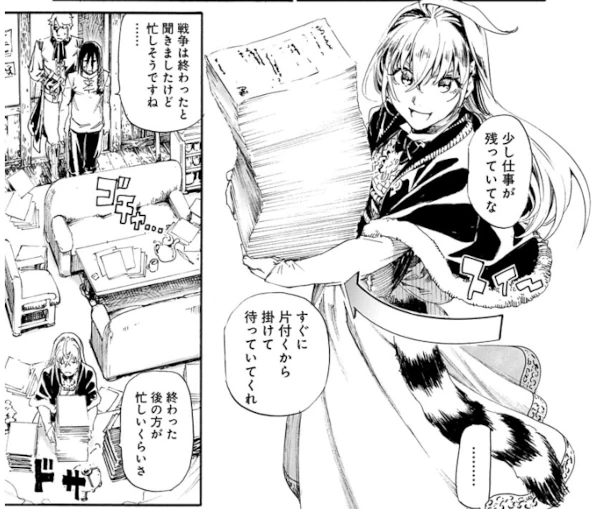
Raffine, one of the key characters in the story, speaks in a grandiose and haughty manner as part of her characterization.
This kind of speech is a deliberate fictional device used to emphasize her status and personality. Young women in real-life Japan would not normally speak this way, so learners should avoid imitating her speech in everyday conversation.
Work Information
Hryo Eiyuu (捕虜英雄)
Author: Shinjiro / Misora Riku
Publisher: HAKUSENSHA
Amount of text: moderate
Challenge level: ★★
Latest volume : Vol.3(Aug.2026 / Ongoing)
Here’s a safe and convenient way to purchase Japanese manga.
This Blog’s ConceptIn this blog, we are introducing manga that are not only highly captivating but also ideal for Japanese language learners. Studying Japanese through manga is both fun and effective. Manga allows you to understand the subtleties of keigo (honorifics), teineigo (polite speech), and casual conversation in Japanese. We hope you find works that match your interests and use them to enhance your Japanese learning journey.