
his time, we’re introducing My Wife Has No Emotion—a manga full of everyday Japanese and polite expressions, told through the heartwarming relationship between a man and his household robot.
Work Information
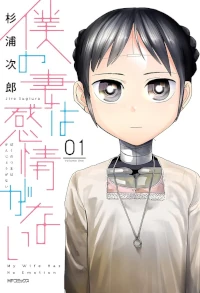
My Wife Has No Emotion (僕の妻は感情がない)
Author: Sugiura Jiro
Publisher: KADOKAWA
Amount of text: moderate
Challenge level: ★★
Latest volume : Vol.8(Sep.2024/ Ongoing)
Story overview
The girl who makes his meals every day turns out to be a household robot.
From rising manga creator Jiro Sugiura comes a heartwarming cohabitation story about a robot with no emotions and the human who lives with her. It’s a modest, touching tale of an overworked salaryman and his household robot, one that will make you want to keep cheering for the two of them as their relationship slowly develops.
The Appeal of This Manga
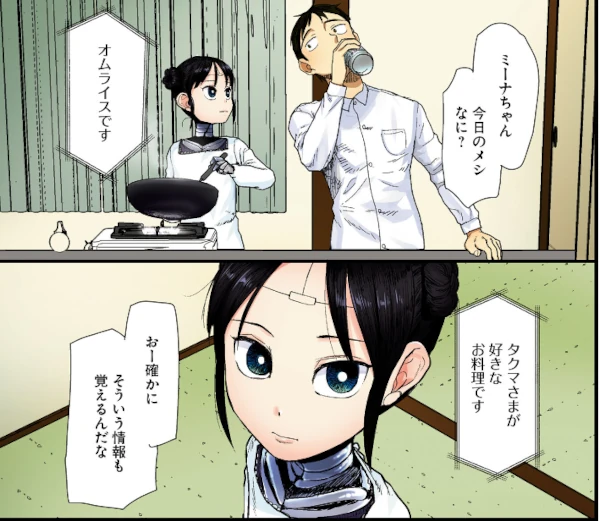
Takuma is an exhausted office worker who buys a secondhand household robot named Mina. Since robots have no emotions, forming a genuine emotional connection with one should be impossible. Yet, as Takuma begins to develop feelings for Mina that seem almost romantic, her behavior and responses gradually start to change—as if she were somehow reacting to his affection.
The story simply follows the quiet, uneventful routines of their everyday life. And yet, somehow, it touches your heart and keeps you turning the pages.
At first, the premise might seem like pure science fiction. However, with the commercialization of humanoid robots becoming an increasingly realistic prospect in the real world, this manga feels especially timely. It’s a story to enjoy at a moment when dreams once confined to science fiction are beginning to take shape in reality.
Why this manga is suitable for learning Japanese
This manga is not only entertaining but also highly recommended for Japanese learners for several reasons.
Consistent Use of Polite Language
As a household robot, Mina consistently uses polite Japanese when speaking to Takuma, her owner and master.
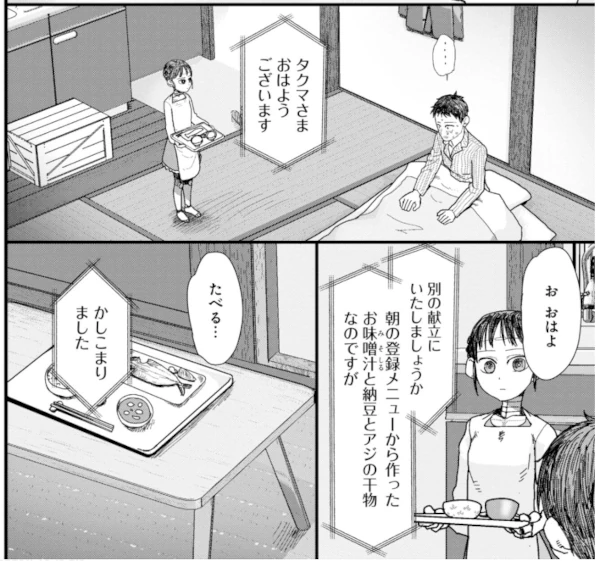
Since much of the manga consists of conversations between the two, you’ll find plenty of examples of keigo (Japanese honorific language). This makes the series a useful way to observe how polite expressions are used in everyday interactions.
Everyday Conversations You Can Use in Real Life
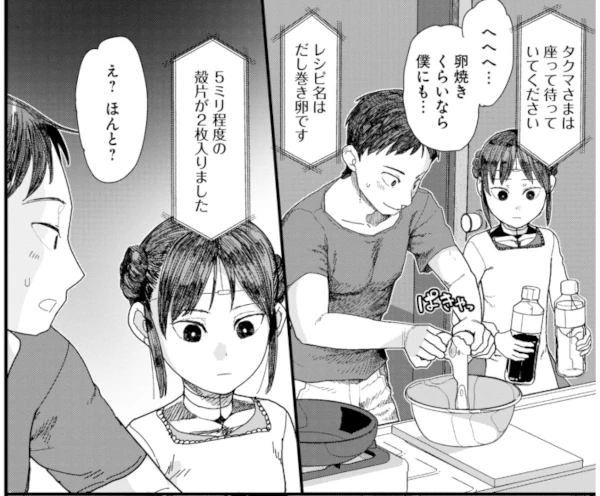
The story revolves around an ordinary person and his household robot, so most of the scenes depict familiar, everyday situations. Naturally, their conversations are also rooted in daily life, offering plenty of practical phrases that you could use in real-world situations.
Culture Spotlight
What Is a Long Can? Understanding a Familiar Part of Japanese Drinking Cultureロング缶
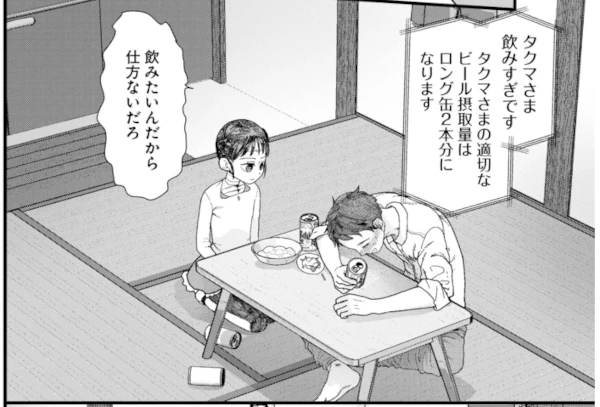
In My Wife Has No Emotion, household robot Mina expresses concern about her owner Takuma’s drinking habits with a rather precise statement:
「タクマさまの適切なビール摂取量はロング缶2本分になります」
“Takuma, your recommended beer intake is equivalent to two long cans.”
But what exactly is a long can? In Japan, the term ロング缶 (rongu-kan) usually refers to a 500 ml can of beer or another alcoholic drink, such as chūhai. It’s a familiar sight in Japanese supermarkets and convenience stores, but the long can is more than just a larger container. Its popularity reflects changes in Japan’s drinking habits, as well as a particular sense of value and satisfaction associated with getting more drink for your money.
From Bottles to Cans: The Changing Face of Drinking at Home
For a long time, bottled beer was the standard choice for drinking at home in Japan. Cans were introduced in 1958, but initially they were more expensive than bottled beer and were mainly used for outings and leisure activities.
That began to change in the 1970s. Cans were lightweight, easy to carry, and convenient to store and dispose of. They also made it easy to pick up a cold beer on the way home from work.
The first 500 ml beer can in Japan appeared in 1972. At the time, canned beer accounted for only a small share of total beer consumption. However, as more manufacturers introduced larger cans and canned beer became increasingly convenient, its popularity grew. By 1995, canned beer had overtaken bottled beer in Japan.
Today, cans are an ordinary part of drinking at home, and the 500 ml long can has become one of the standard sizes.
Why Choose a Long Can? More Than Just Extra Volume
A 500 ml can contains considerably more beer than a standard 350 ml can. And because the larger size has often offered better value per milliliter, choosing a long can can feel like a smarter purchase.
This is part of its appeal: you get more beer in a single can, without having to open another one. For people who enjoy a drink after work, a long can can feel like a satisfying, substantial way to unwind.
There is also a certain appeal to the size itself. A 500 ml can looks and feels more substantial than a regular one. In everyday conversation, saying 「今日はロング缶にしよう」 (“I’ll get a long can today”) can suggest that you’re in the mood for a bigger drink. The term can evoke a small sense of indulgence or a proper drinking session at home.
Of course, this is a cultural impression rather than a fixed meaning. Not everyone associates long cans with a special treat, but the size has become familiar enough to carry these everyday nuances.
The Strong Chūhai Boom: Getting More Alcohol for Less
The long can became especially popular with the rise of strong chūhai (ストロング系), high-alcohol canned drinks that gained popularity in Japan during the 2010s. Often containing 7–9% alcohol, these drinks offered a relatively inexpensive way to consume a substantial amount of alcohol.
For budget-conscious drinkers, a single 500 ml can could deliver a surprisingly strong effect at a low price. This combination of high alcohol content and affordability became a major selling point, and by 2017, high-alcohol RTD products accounted for more than half of Japan’s RTD market.
However, concerns about excessive drinking and health risks have grown, and some major manufacturers have since shifted away from high-alcohol products.
What This Means for Learners of Japanese
ロング缶 is a useful example of how an everyday Japanese word can carry more cultural meaning than its literal definition suggests.
Here are a few expressions you might hear:
- 「ロング缶を一本買ってきた。」 – “I bought a 500 ml can.”
- 「今日はロング缶にする。」 – “I’ll go for a large can today.”
- 「ロング缶二本は飲みすぎじゃない?」 – “Isn’t two large cans a bit too much?” You may also come across related terms:
- レギュラー缶 (regyurā-kan): A standard 350 ml can.
- ロング缶 (rongu-kan): A 500 ml can.
- ストロング系 (sutorongu-kei): High-alcohol canned drinks, especially chūhai.
- 晩酌 (banshaku): Having an alcoholic drink at home, usually with a meal or in the evening. So when Mina calculates that Takuma’s recommended beer intake is “two long cans,” the joke lies partly in her robotic precision—and partly in how naturally she uses a familiar unit of measurement from Japanese drinking culture. It’s a small detail that gives the scene a distinctly Japanese everyday feel.
A Little Warning
Mina’s Language Can Be Rather Formal
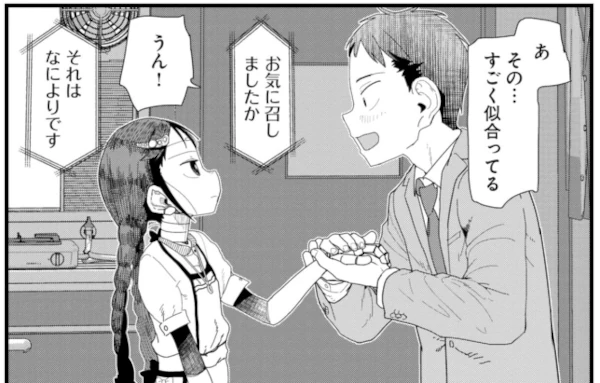
Because Mina is a household robot, the way she speaks to Takuma has something of a traditional maid-and-master dynamic to it.
Her Japanese may therefore be more formal and deferential than what you’d normally use in everyday conversation. While it’s useful for studying polite language, you may not want to imitate all of her expressions in your own daily interactions.
Work Information
My Wife Has No Emotion (僕の妻は感情がない)
Author: Sugiura Jiro
Publisher: KADOKAWA
Amount of text: moderate
Challenge level: ★★
Latest volume : Vol.8(Sep.2024/ Ongoing)
Here’s a safe and convenient way to purchase Japanese manga.
This Blog’s ConceptIn this blog, we are introducing manga that are not only highly captivating but also ideal for Japanese language learners. Studying Japanese through manga is both fun and effective. Manga allows you to understand the subtleties of keigo (honorifics), teineigo (polite speech), and casual conversation in Japanese. We hope you find works that match your interests and use them to enhance your Japanese learning journey.